-
by sayum
28 October 2026 3:34 PM







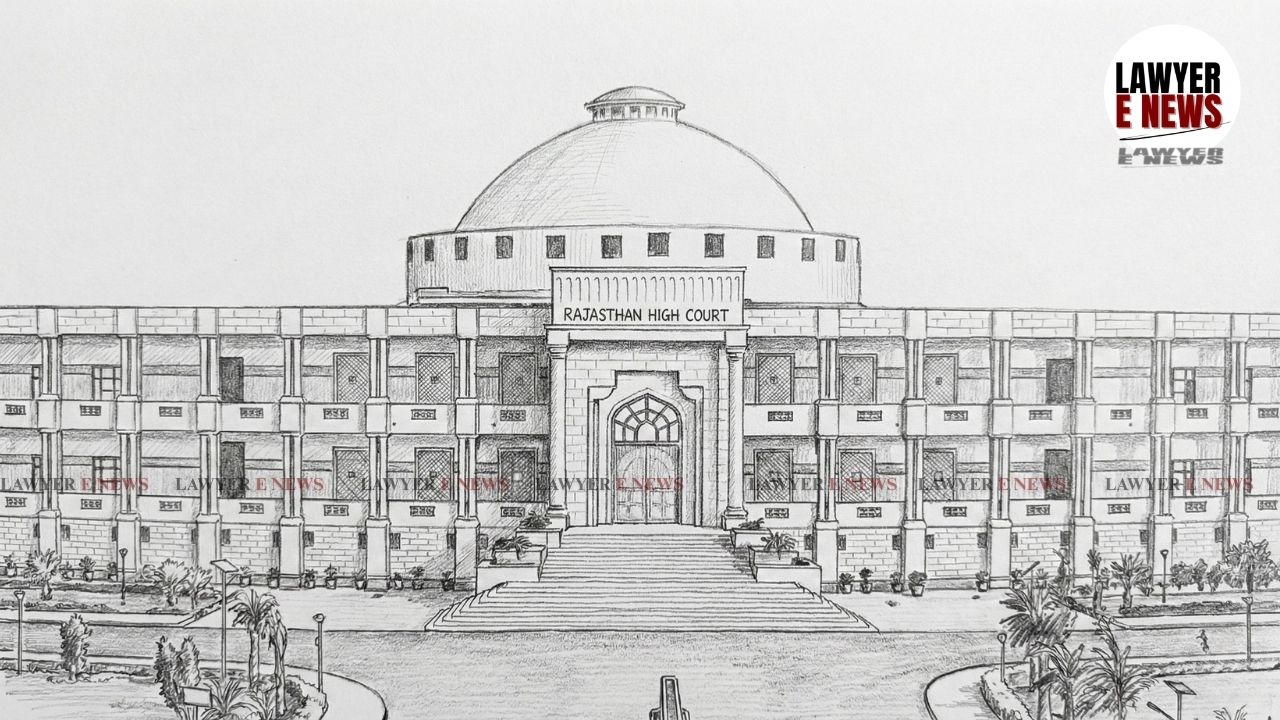
"The grant of maternity leave cannot be made contingent solely upon the nature or tenure of employment. Whether a woman is employed on a regular, temporary, ad hoc, urgent temporary, or contractual basis, she cannot be denied maternity leave merely on the ground of the nature of her employment, provided that the applicable legal requirements are satisfied and the period of maternity leave falls within the subsistence of her employment." Rajasthan High Court, in a significant ruling pronounced on October 16, 2026, held that statutory maternity benefits cannot be denied to a contractual employee by enforcing restrictive service conditions stipulated in an appointment letter.
A single-judge bench of Justice Bipin Gupta ruled that maternity relief is an inalienable statutory and constitutional protection rooted in human dignity, observing that "maternity benefit is not merely a service-related concession or an ordinary leave facility" and that by virtue of Section 27 of the Maternity Benefit Act, 1961, statutory maternity entitlements override inconsistent contractual terms.
The petitioner was selected and appointed as a Consultant (AEE) on a consolidated remuneration of Rs. 40,000 per month by the Rajasthan State Pollution Control Board for a one-year tenure commencing from August 4, 2022. During the subsistence of her contract, she applied for six months of maternity leave starting December 26, 2022, on medical advice, which was rejected by the Member Secretary, SEAC-I, vide letter dated December 16, 2022, citing Condition Number 5 of her appointment order that permitted only declared State Government holidays and barred any additional leave. Aggrieved by the non-consideration of her legal notice seeking relief under the Maternity Benefit Act, 1961, and Rule 103 of the Rajasthan Service Rules, 1951, the petitioner approached the High Court under Article 226 of the Constitution of India.
The primary question before the court was whether a contractual employee's request for maternity leave could lawfully be rejected solely on the strength of a contractual clause restricting admissible leave to declared government holidays. The court was also called upon to determine whether the nature and tenure of contractual engagement can extinguish or override the statutory protection conferred under the Maternity Benefit Act, 1961.
Maternity Protection Rooted In Articles 14, 21, And 42 Of The Constitution
The High Court commenced its analysis by underscoring the fundamental nature of maternity rights, explaining that maternity benefits are not gratuitous concessions granted at the employer's discretion. The bench observed that maternity protection is intended to safeguard the health, dignity, and well-being of women during pregnancy and post-childbirth, ensuring that childbearing does not adversely impair an employee's livelihood. The court remarked that such safeguards give practical meaning to the constitutional ideals of equality, dignity, and social justice embodied under Articles 14, 21, and 42 of the Constitution of India.
"The object of maternity benefit legislation is to enable a woman to discharge her maternal responsibilities without being compelled to choose between motherhood and her livelihood."
Contractual Stipulations Subservient To Section 27 Of Maternity Benefit Act
Examining the statutory scheme, the court adverted to Sections 5, 12, and 27 of the Maternity Benefit Act, 1961, alongside Rule 103 of the Rajasthan Service Rules, 1951, which grants 180 days of maternity leave to female government servants. The bench held that Section 27 of the 1961 Act explicitly accords overriding effect to the statute over any inconsistent law, award, agreement, or contract of service. Consequently, an employer cannot circumvent welfare legislation by incorporating restrictive clauses within an appointment letter to bar leaves.
"Any contractual condition inconsistent with the applicable provisions of the Maternity Benefit Act, 1961, would be subject to Section 27 of the said Act."
Nature Of Tenure Irrelevant When Leave Falls Within Subsisting Contract
The court highlighted that the petitioner had applied for six months of leave commencing December 26, 2022, terminating on June 25, 2023, while her contractual engagement was subsisting until August 3, 2023. The entire period of maternity leave sought by her fell squarely within the active contractual tenure. The bench observed that the respondent authorities summarily rejected her plea based on Condition Number 5 without undertaking any independent statutory assessment of her entitlement, rendering the rejection unlawful and contrary to public policy.
Binding Precedents On Muster Roll And Contractual Workers Reiterated
Justice Gupta extensively drew support from the Supreme Court's landmark judgment in Municipal Corporation of Delhi v. Female Workers (Muster Roll), which held that maternity benefits cannot be restricted solely to regular employees and must extend to muster-roll and casual workers. The court also cited the apex court's ruling in Dr. Kavita Yadav v. Ministry of Health and Family Welfare Department, where it was authoritatively established that maternity benefits can travel even beyond the contractual term, as Section 12(2)(a) prohibits discharge during pregnancy. The court noted that contractual cessation during maternity leave attracts a legal fiction treating the woman in employment to confer statutory relief.
"Women who constitute almost half of the segment of our society have to be honoured and treated with dignity at places where they work to earn their livelihood. Whatever be the nature of their duties, their avocation and the place where they work, they must be provided all the facilities to which they are entitled."
High Court Reaffirms Inalienable Right To Motherhood Under Article 21
The bench further relied upon coordinate bench decisions of the Rajasthan High Court in Minakshi Chaudhary v. RSRTC, Hemlata Saraswat v. State of Rajasthan, and Rani Tanwar v. State of Rajasthan. In Minakshi Chaudhary, the court had ruled that maternity benefit is an integral facet of a woman's identity and dignity under Article 21 and aligns with international conventions such as CEDAW and UDHR. Justice Gupta affirmed that creating arbitrary classifications based on consolidated pay or contract terms to withhold maternity benefits constitutes impermissible discrimination under Articles 14 and 16.
"The law laid down by Hon'ble Apex Court as well as by Co-ordinate Bench of this Court is to the effect that the benefit of maternity leave cannot be denied merely on account of the nature of employment, provided that the person fulfils the prescribed eligibility requirements."
Final Directions And Monetary Relief Ordered
Concluding that the impugned denial was wholly unsustainable in law, the High Court allowed the writ petition and quashed the rejection letter dated December 16, 2022. The court directed the respondents to sanction and extend maternity benefits to the petitioner for a period of 180 days commencing from December 26, 2022. The respondents were further commanded to disburse her admissible consolidated salary for the said period within three months from the receipt of the certified copy of the judgment.
The Rajasthan High Court reaffirmed that statutory maternity relief is an inviolable constitutional entitlement that cannot be superseded by restrictive clauses in employment contracts. By mandating the release of 180 days' remuneration to a contractual consultant, the judgment decisively settles that employers in public establishments cannot deploy contractual caveats to defeat Section 27 of the Maternity Benefit Act, 1961.
Date of Decision: 16 October 2026