-
by sayum
05 August 2026 6:43 AM







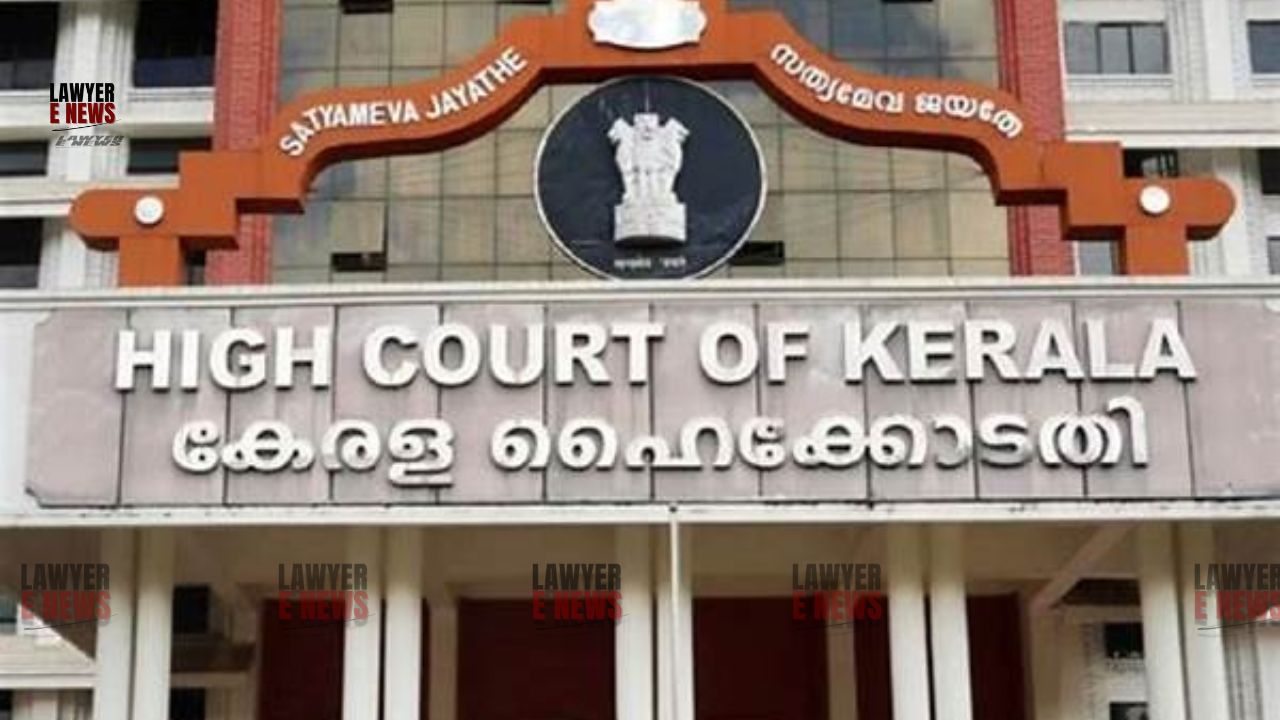
“The overwhelming oral and documentary evidence establishes the prior marriage… the petitioner’s marriage cannot be recognised in the face of a subsisting valid marriage” — In a significant ruling Kerala High Court, comprising Justice Sathish Ninan and Justice P. Krishna Kumar, upheld the principle that “a marriage validly performed as per customary rites does not require registration to be legally binding.”
The Court dismissed two interconnected matrimonial appeals filed by parties challenging the judgment of the Family Court, Kottarakkara, which had rejected the claim of K.N. Syamala—the petitioner who sought declaration of her marital status, partition of properties belonging to her deceased alleged husband Madhuprasannan D.G., and recovery of treatment expenses.
Confirming the findings of the Family Court, the High Court observed, “The evidence on record is overwhelming to find that there was a valid marriage between the first respondent Jayasree and late Madhuprasannan… Consequently, the marriage with the petitioner cannot be recognised.”
A Battle of Marriages: The Background
The case had its roots in a contested marital claim over the estate of Madhuprasannan D.G., who passed away during the pendency of the dispute. The petitioner, K.N. Syamala, claimed that she was married to Madhuprasannan on 11 February 2007 and sought a declaration of her marital status along with partition and possession of his immovable properties. She also claimed reimbursement of ₹16 lakhs allegedly spent on his medical treatment.
On the other side, the first respondent, Jayasree, countered this claim by asserting that she was the legally wedded wife of Madhuprasannan based on a marriage solemnised on 21 August 1989 at the Mishra Vivaha Samithi, followed by a customary marriage on 1 October 1989. Supporting her claim further, Jayasree stated that their son, Akhil, was born from this marriage.
The Family Court had accepted Jayasree’s version, dismissed Syamala’s plea for declaration of marital status and partition, but partially allowed her claim for recovery of medical expenses. Both sides appealed — Syamala challenging the denial of marital status and property rights, and Jayasree challenging the decree awarding any medical expenses.
“Documentary and Oral Evidence Paint Only One Truth — The Prior Marriage Was Valid” — Court’s Finding on Marital Status
The Kerala High Court undertook an exhaustive analysis of the evidence and concluded that the marriage between Jayasree and Madhuprasannan stood proved beyond any reasonable doubt.
The Court noted, “The first respondent’s marriage with late Madhuprasannan was solemnised at the Mishra Vivaha Samithi by tying a ‘thali’ and exchanging garlands. This was followed by a customary religious marriage at her house on 1 October 1989. The oral testimony of RW1 and RW2, as well as the documentary evidence, remains unshaken.”
Referring to the argument that the absence of registration nullifies the marriage, the Court observed in clear terms, “It is settled law that the absence of registration does not invalidate a marriage solemnised in accordance with custom. Nothing was brought out in cross-examination to discredit the evidence of RW1 and RW2.”
The judgment extensively referred to a series of documents, including the marriage register extract (Ext.X1) from Mishra Vivaha Samithi, maintenance proceedings (Ext.B1 and Ext.B3) where Madhuprasannan acknowledged Jayasree as his wife, as well as birth certificates, passports, electoral ID cards, community certificates, and even personal letters from Madhuprasannan referring to his wedding anniversary with Jayasree.
The Court held that these records form a “consistent chain of evidence” that not only prove the marriage but also its social recognition over the years.
Rejecting the petitioner’s argument that the nature of customary rites was not elaborately pleaded, the Court noted, “The evidence of RW1 that on 01.10.1989 the marriage was conducted at her house as per the religious custom of her community was not even challenged in cross-examination. The finding of the Family Court is impeccable.”
“No Marriage Can Be Recognised When A Valid Prior Marriage Exists” — Relief of Declaration and Partition Denied
With the prior marriage conclusively proved, the High Court was unequivocal in stating, “The marriage between the petitioner and Madhuprasannan cannot be recognised. The prayer for declaration of marital status and partition was rightly declined by the Family Court.”
The judgment leaves no ambiguity about the legal principle that a second marriage during the subsistence of a valid first marriage is void in the eyes of law under Hindu personal law.
“Medical Bills Alone Can Speak — Other Claims Fall Flat” — Court on Monetary Relief
On the claim for ₹16 lakhs towards treatment expenses, the Court partially upheld the Family Court’s decree.
Referring to the evidence, the Court recorded, “It is not in dispute that Madhuprasannan was suffering from a critical illness. Ext.A4 series consist of the medical bills. Among them, some are original and some are copies. The Family Court has rightly decreed only the amounts supported by original bills. We find no reason to differ.”
The Court rejected the petitioner’s further claim that her gold ornaments were sold to meet medical expenses, remarking, “There is no evidence whatsoever to substantiate this allegation.”
“The Law Protects A Legitimate Marriage; Not A Relationship That Cannot Stand In Its Shadow”
Concluding the judgment, the Kerala High Court declared, “On the above discussions, we find that the decree and judgment of the Family Court warrant no interference. Resultantly, the appeals fail and are dismissed.”
The ruling underscores a vital legal principle — a marriage validly solemnised as per custom does not require registration to be legally enforceable, and a second marriage during the lifetime of a legally wedded spouse carries no legitimacy under the law.
At the same time, the judgment also reinforces that monetary claims based on personal contributions — like medical expenses — can be adjudicated independently if supported by proper evidence.
Date of Decision: 27 June 2025