-
by sayum
27 August 2026 7:40 AM







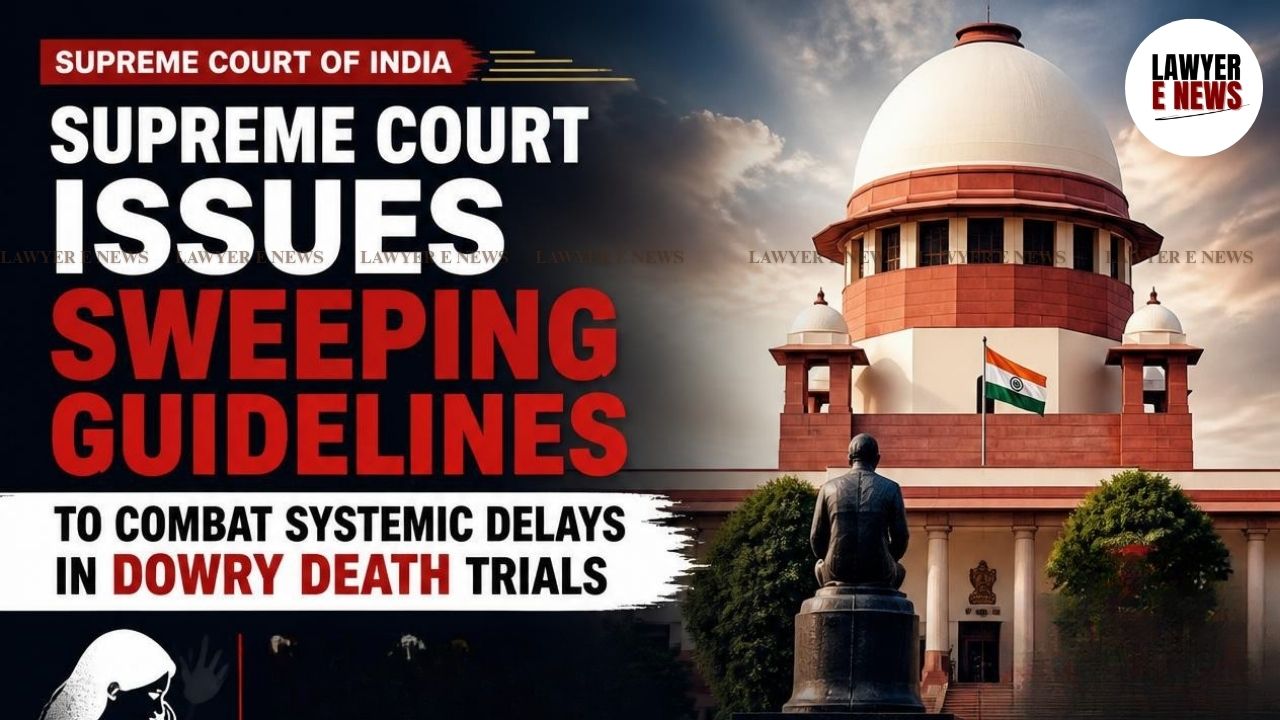
“Parties Have Weaponised Litigation — Courts Cannot Be Used to Settle Personal Scores”, In an emphatic invocation of its extraordinary constitutional powers, the Supreme Court of India on January 20, 2026, exercised Article 142 of the Constitution to dissolve a marriage that survived just 65 days in cohabitation but over a decade in relentless, acrimonious litigation. The judgment came in Neha Lal vs Abhishek Kumar, where the Court, instead of merely deciding a Transfer Petition, chose to put an end to the decade-long matrimonial warfare, calling it a textbook case of irretrievable breakdown of marriage.
The Court did not mince words. “They have indulged in filing more than 40 cases against each other. Warring couples cannot be allowed to settle their scores by treating courts as their battlefield and choke the system,” observed Justice Rajesh Bindal, writing for the Bench also comprising Justice Manmohan.
“This Is Not a Marriage, It Is Prolonged Warfare”: Article 142 Trumps Statutory Silence
While the Hindu Marriage Act, 1955 does not recognise “irretrievable breakdown” as a ground for divorce, the Supreme Court reaffirmed that its plenary powers under Article 142 are not so constrained. Relying heavily on the Constitution Bench ruling in Shilpa Sailesh v. Varun Sreenivasan (2023) 14 SCC 231, the Court ruled:
“This Court, in exercise of power under Article 142(1) of the Constitution of India, has the discretion to dissolve the marriage on the ground of its irretrievable breakdown… where the facts established show that the marriage has completely failed and there is no possibility that the parties will cohabit together, and continuation of the formal legal relationship is unjustified.”
Even though the respondent-husband strongly objected, accusing the petitioner-wife of using litigation to harass him, the Court was not persuaded to keep a “broken bond alive on paper”.
“The couple stayed together only for 65 days after their wedding in 2012. Since 2012, they have been litigating continuously, in multiple courts and on multiple fronts. They have been separated for more than a decade. There is no hope of rehabilitation, let alone reconciliation.”
“Litigation as a Weapon, Not Remedy” – SC Slams Misuse of Judicial Process in Matrimonial Fights
A powerful part of the judgment is the Court’s stern message on the misuse of court processes in matrimonial disputes. Taking note of the 40-plus cases filed by the couple against each other in Delhi, Uttar Pradesh and in the High Courts of Delhi and Allahabad, the Court stated:
“Courts cannot be converted into battlegrounds for settling personal scores. Such litigation chokes the judicial system and extinguishes any possibility of reconciliation.”
The judgment also denounces the rising trend of criminalising matrimonial disputes, especially mechanical invocation of Sections 498A, 323, 504 IPC and others. Reiterating its concerns from earlier judgments like Achin Gupta v. State of Haryana, the Court warned:
“The first thing that comes to mind is the police — as if the police is the panacea of all evil. Once the matter reaches the police, even if there were chances of reconciliation, they get destroyed.”
“No Child, No Alimony, No Hope”: Court Orders Final Closure, But Allows Perjury Proceedings to Continue
The wife made no claim for alimony, and the Court noted that all prior financial disputes stood settled. The marriage was thus dissolved with finality and without any financial liability. However, the Court issued a significant caveat — pending perjury proceedings will continue.
“No one can be permitted to pollute the stream of justice.”
Accordingly, five identified cases under Section 340 CrPC and Section 379 r/w 215 BNSS were directed to continue. The rest — including multiple criminal cases, domestic violence complaints, maintenance applications, and execution petitions — were all ordered to stand disposed of.
The Court also directed that any undisclosed case, if pending, shall also be quashed upon production of a copy of this judgment.
“Both Parties Deserve to Be Penalised for Abusing the System” – Costs Imposed
In a rare rebuke of mutual abuse of process, the Court imposed ₹10,000 costs on each party, calling it a token penalty for dragging the system for a decade.
“The parties stayed together only for a period of 65 days and have indulged in numerous litigations for more than a decade, apparently with a view to settle scores. In our opinion, both of them deserve to be penalised.”
The amount is directed to be deposited with the Supreme Court Advocates-on-Record Association.
“Clock Cannot Be Turned Back”: SC Sends a Message on Failed Marriages and Failed Remedies
The Court recognised that “no one is perfect”, and young couples often need time and space to adjust. But this case had gone past the point of no return.
“It may be impossible now to put the clock back and live together after forgetting the bitterness created over the last more than a decade.”
Emphasising the urgent need for pre-litigation mediation, counselling and restraint, the judgment underlined the role of lawyers and families in de-escalating rather than escalating matrimonial disputes.
“The preparation starts as to how to teach a lesson to the other side. Evidence is collected and, in some cases, even created. False allegations are rampant, especially in the era of artificial intelligence.”
“Justice for Individuals — And for the System”: A Landmark Use of Article 142
This case is a landmark demonstration of judicial pragmatism, where the Court chose not to remain confined to technicalities but delivered “complete justice” under Article 142. The message is clear — when marriages collapse beyond repair, the legal system must not be the theatre for endless revenge.
Date of decision: 20/01/2026