-
by sayum
27 July 2026 3:39 PM







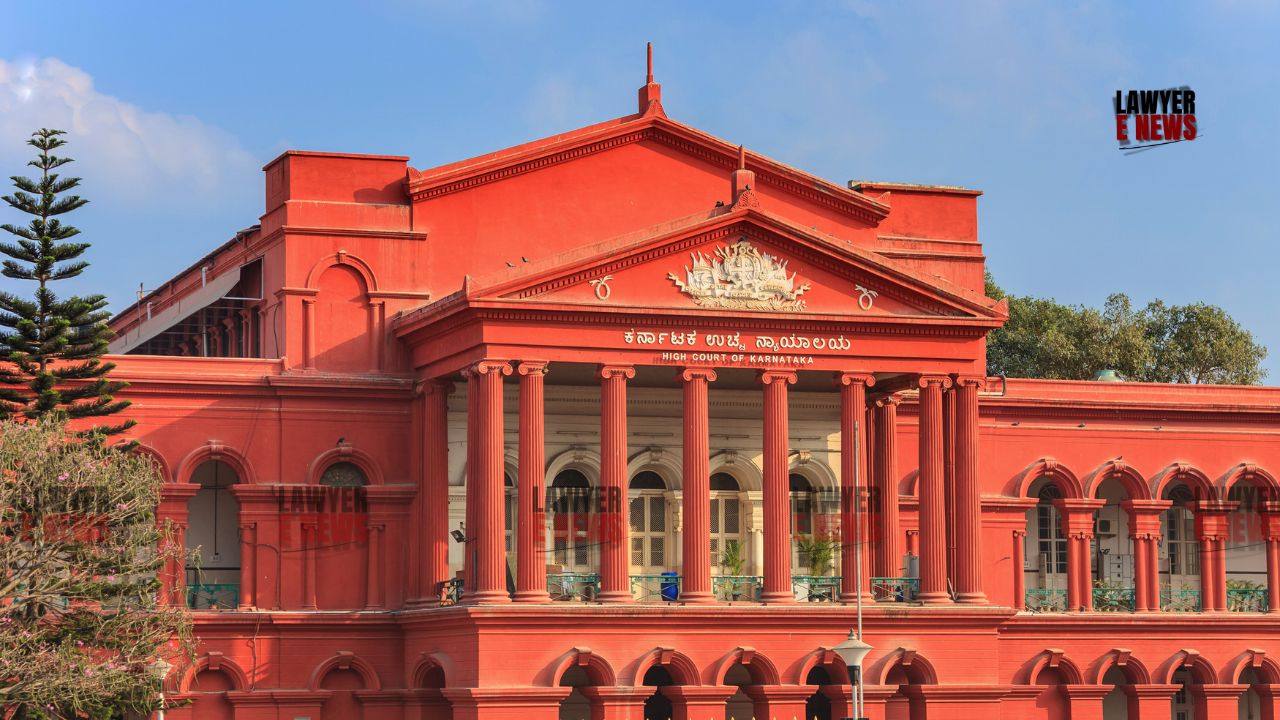
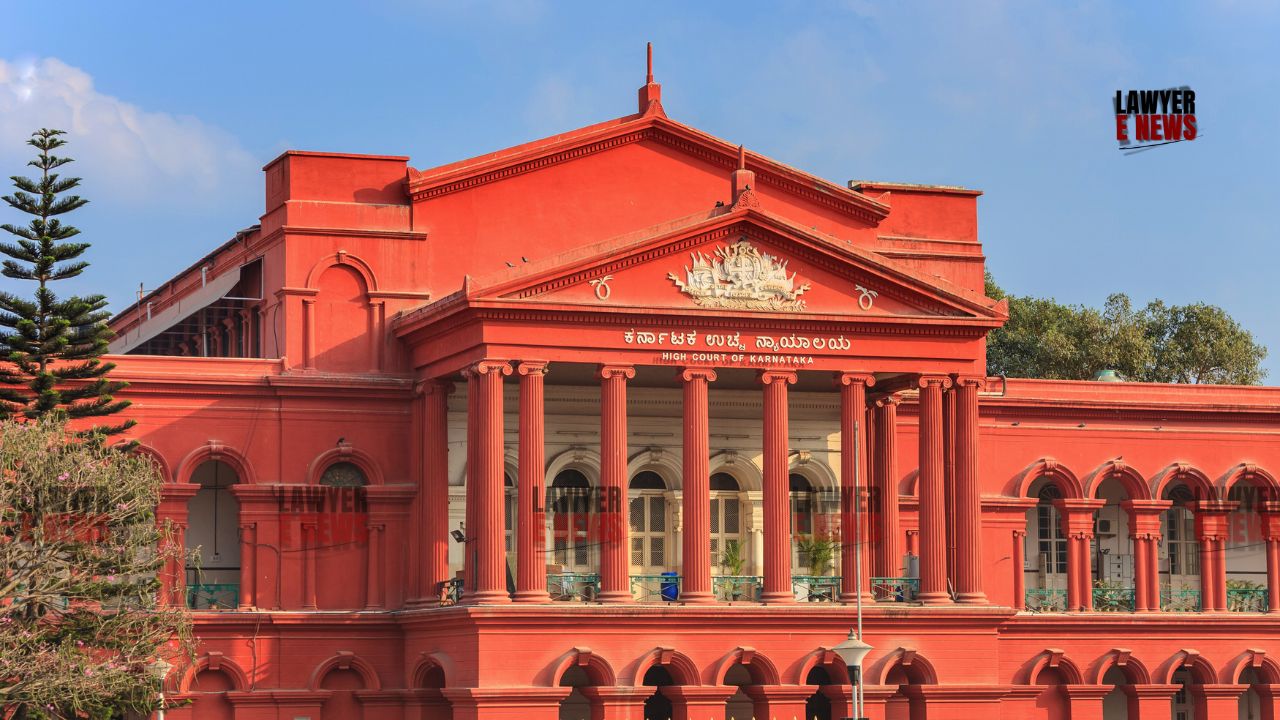
"Having thus accepted the Commissioner report, the First Appellate Court could not have issued the mandatory injunction in favour of plaintiff directing the defendant to close the window in the first floor portion and removal of chajja. Said reasoning would not stand to reasons or logic," High Court of Karnataka, in a significant judgment, held that a decree for mandatory injunction directing the closure of windows or removal of sunshades (chajjas) cannot be sustained when there is a concurrent finding of fact that no encroachment has occurred on the plaintiff's property.
A bench of Justice V Srishananda observed that if a defendant constructs within their own boundaries, the plaintiff cannot object to the opening of windows, especially when such openings existed in the older structure on the same site.
The dispute arose between two neighbors in Holenarasipura Town regarding alleged encroachments and the construction of a new house by the defendant, Vishnupadachar. The plaintiff, M.A. Rajaiah, filed suits for declaration of title and mandatory injunction, claiming the defendant encroached upon a municipal lane (oni) and a portion of his property. While the Trial Court dismissed the suits for lack of evidence regarding encroachment, the First Appellate Court partially reversed these findings, leading to the present second appeals before the High Court.
The primary question before the court was whether the First Appellate Court was justified in granting a mandatory injunction for the removal of windows and sunshades despite a finding that there was no encroachment. The court also examined whether the First Appellate Court could reconcile varying descriptions of the suit property across different litigations between the same parties. Additionally, the court considered the validity of relying on a Court Commissioner’s report that was alleged to be tainted by the plaintiff.
Burden Of Proof Lies On Plaintiff To Establish Encroachment
The Court emphasized that in a suit for declaration and mandatory injunction, the primary burden lies on the plaintiff to establish the exact measurements of the property and the extent of the alleged encroachment. The bench noted that the plaintiff failed to provide clarity regarding the measurements mentioned in his sale deed versus what was available on the spot. It was observed that when a party approaches the court for a discretionary relief like a mandatory injunction, they must prove their case with precision.
Validity Of Court Commissioner's Report
The High Court scrutinized the arguments regarding the Court Commissioner’s report, which the plaintiff claimed was influenced by the defendant. The bench noted that although the Commissioner admitted to receiving some documents from the defendant's counsel, the plaintiff had simultaneously failed to provide any documents to substantiate their own claims during the inspection. The court held that since the Commissioner was cross-examined in detail and the report was accepted by the lower courts, it served as a vital piece of evidence in determining the non-existence of encroachment.
"The entire burden was on the plaintiffs to establish the fact of encroachment with measurements in the sale deed."
No Injunction Against Construction Within Own Boundaries
Justice Srishananda pointed out that once it is established that the defendant has constructed a wall within their own property limits, the plaintiff loses the right to seek a mandatory injunction against the opening of windows. The court found that the defendant had replaced an old mud wall with a thinner brick wall, thereby gaining internal space without encroaching outward. Since the windows were placed on the defendant's own wall, the court held that no cause of action arose for the plaintiff to demand their closure.
"When there is a specific finding that there is no encroachment and there is an admission that there existed the window in the ground floor in the old house... plaintiffs cannot have any objection for opening the window."
Discrepancy In Property Measurements
The court highlighted the discrepancies in the measurements provided by the plaintiff and his witnesses, including his wife. It was noted that the existence of a public gutter and a petty shop had been suppressed in the initial pleadings. The bench observed that such variances in oral testimony and documentary evidence created a doubt regarding the actual measurement of the property in the plaintiff's occupation. Consequently, the court found the First Appellate Court’s attempt to "reconcile" these variations without solid evidence was improper.
Limited Scope Of Civil Court In Municipal Disputes
Regarding the existence of the municipal lane (oni), the High Court noted that the municipality was not made a party to the suit. The bench held that the civil court could not finalise the status of the lane in the absence of the local authority. The court maintained that while the plaintiff’s title to his own property was not disputed, the mandatory injunction for demolition could not be granted in a vacuum of proof regarding the exact boundary line and the alleged encroachment.
The High Court concluded that the First Appellate Court’s direction to remove the sunshades and close the windows was legally unsustainable given the finding of no encroachment. While it upheld the declaration of the plaintiff's title to his property as per actual measurements, it set aside the order for mandatory injunction. The court dismissed the plaintiff's appeal for further demolitions and allowed the defendant's appeal regarding the first-floor constructions.
Date of Decision: 19 June 2026