-
by sayum
23 October 2026 1:16 PM








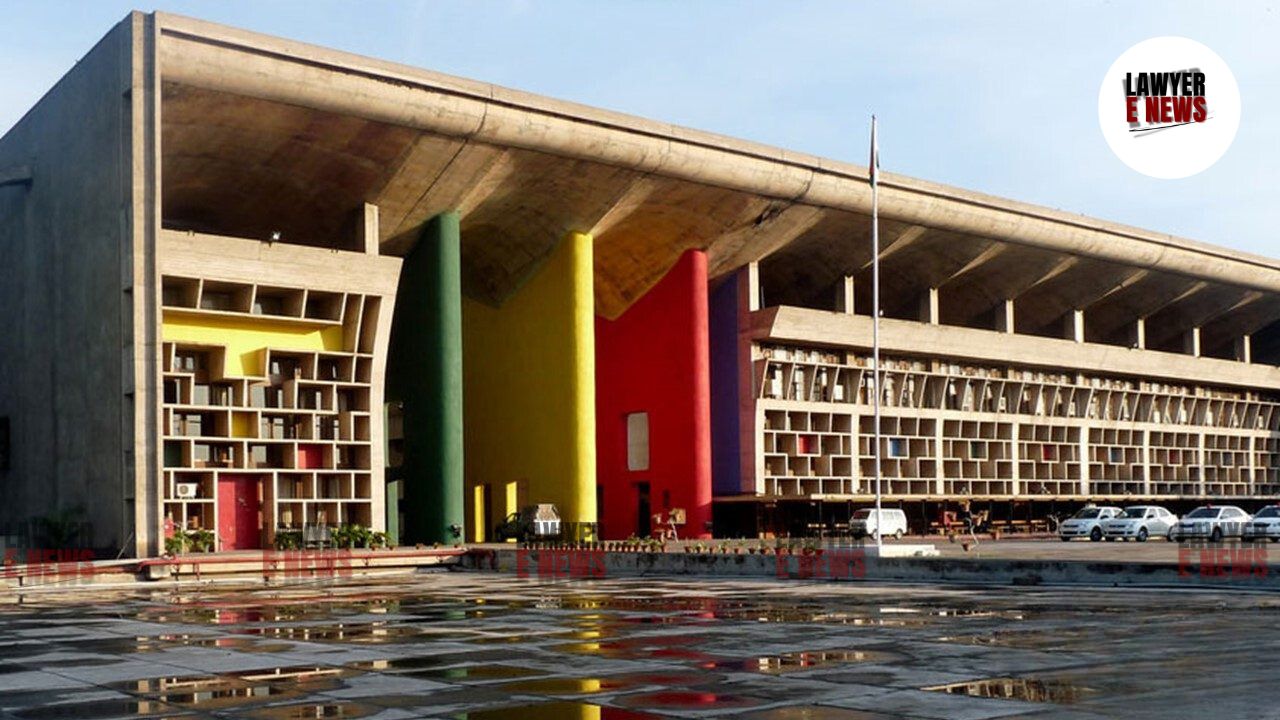
"The inability of the subordinate Court to recall its order does not, by itself, preclude this Court from exercising its inherent powers in an appropriate case to prevent abuse of the process of Court or otherwise to secure the ends of justice." Punjab and Haryana High Court has held that while a Magistrate lacks the jurisdiction to review or recall an order dismissing a cheque dishonour complaint in default, such a statutory limitation does not bar the High Court from exercising its inherent powers under Section 528 of the Bharatiya Nagarik Suraksha Sanhita, 2023 (BNSS) to restore the proceedings.
In a ruling dated October 13, 2026, Justice Neerja K. Kalson held that "the limitation upon the powers of the learned Magistrate stands on a different footing from the inherent jurisdiction vested in this Court under Section 528 of the BNSS," clarifying that procedural defaults must not routinely defeat substantive rights.
The petitioner had instituted a complaint under Section 138 of the Negotiable Instruments Act, 1881 before the Judicial Magistrate 1st Class, Malerkotla, alleging the dishonour of a cheque issued to discharge an admitted liability of Rs. 2,00,000. On September 16, 2024, the trial court dismissed the complaint in default due to the non-appearance of the complainant, and subsequently, on September 15, 2026, dismissed the restoration plea for lack of jurisdiction to review its own final order. Aggrieved by both orders, the complainant approached the High Court seeking the invocation of its inherent powers.
The primary question before the court was whether the High Court can invoke its inherent powers under Section 528 BNSS to restore a cheque bounce complaint dismissed in default when the trial Magistrate is legally barred from recalling the order. The court was also called upon to determine whether an inadvertent procedural lapse regarding the hearing date should permanently deprive a complainant of an adjudication on merits.
Magistrate Barred From Recalling Final Orders But High Court's Inherent Powers Remain Unaffected
The High Court observed that it is a well-settled principle of criminal jurisprudence that a criminal court cannot review or recall its final orders except where expressly permitted by statute. Consequently, the trial Magistrate had rightly declined the complainant's application for restoration on the jurisdictional bar.
However, the bench drew a clear legal boundary between the statutory incapacity of the trial court and the plenary powers preserved in the High Court. Justice Kalson explained that the subordinate court's inability to recall its own dismissal does not impede the High Court under Section 528 BNSS (the equivalent of erstwhile Section 482 of the Code of Criminal Procedure) from intervening to advance substantial justice.
Inherent Jurisdiction Governed By Securing Ends Of Justice Rather Than Litigant's Identity
Relying on the decision in Mahindra & Mahindra Financial Services Limited v. Balwinder Singh, the bench reiterated that the exercise of inherent powers is not dictated by the nature or identity of the litigant who knocks on the doors of the court. Rather, it is activated by the institutional necessity to prevent an abuse of the judicial process.
The Court also referred to the Supreme Court's landmark ruling in Prabhu Chawla v. State of Rajasthan, reaffirming that the availability of an alternative revisional remedy does not operate as an absolute legal bar against the High Court exercising its inherent jurisdiction. The bench noted that such powers must be exercised with judicial circumspection wherever intervention is necessitated, keeping in view the legal principles laid down in Yatendra Singh v. State of U.P.
Procedural Defaults Must Not Invariably Extinguish Substantive Rights In Cheque Dishonour Trials
Addressing the factual controversy, the bench noted that the complainant attributed his non-appearance to an inadvertent error in noting the hearing date as November 4, 2024, instead of September 16, 2024. Although the petitioner had also remained unrepresented on an immediately preceding date, the court took note of the promptness with which the restoration application was moved on November 5, 2024.
The bench emphasized that while the trial court's prior indulgence and the inconvenience to the accused cannot be brushed aside, the overarching purpose of legal proceedings is to secure an effective determination of substantive controversies. A technical default, if satisfactorily explained, should not result in shutting out a litigant permanently without a trial on the merits.
"The object of judicial proceedings is to secure a fair determination of the controversy, and procedural defaults, where sufficiently explained, need not invariably defeat substantive rights."
Restoration Granted As An Exceptional Measure Without Condoning Negligence
Clarifying the contours of such relief, the High Court underscored that extending judicial indulgence is an exceptional measure and must not be misconstrued as an unrestricted licence to condone chronic negligence. The bench observed that the relief was extended strictly to secure justice while safeguarding the procedural rights of the accused from unending delay.
Accordingly, the High Court quashed the trial court's dismissal and rejection orders, directing the restoration of the Section 138 NI Act complaint to its original number and requiring the petitioner to appear before the trial Magistrate within 15 days to pursue the prosecution expeditiously.
Allowing the petition, the High Court reaffirmed that procedural lapses must yield to the cause of substantive justice, ensuring that bona fide complainants are not non-suited on technicalities. The ruling reinforces that Section 528 BNSS remains a potent safeguard to revive complaints dismissed in default where the trial court is statutory disabled from recalling its orders.
Date of Decision: 13 October 2026