
-
by sayum
20 October 2026 1:07 PM







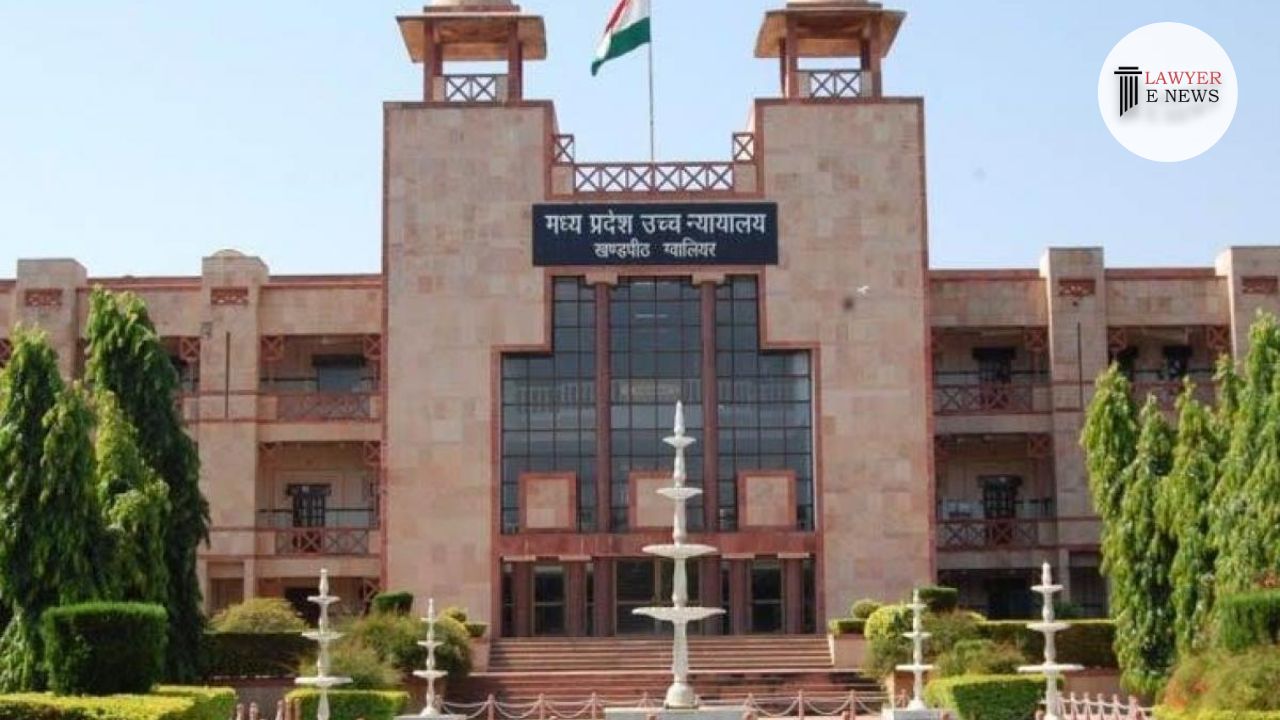
In a significant legal development, the Madhya Pradesh High Court, headed by Hon’ble Shri Justice Sanjeev S Kalgaonkar, has delivered a landmark ruling, ordering the registration of an FIR in a case involving alleged financial misappropriation. The decision, rendered on August 31, 2023, highlights the importance of judiciously exercising discretion while ordering police investigations under Section 156(3) of the Criminal Procedure Code (Cr.P.C).
The case at the heart of the ruling was brought by Motilal Oswal Home Finance Limited, which sought the registration of an FIR against its former Credit Manager, Manish Saxena. The company alleged that Saxena had misappropriated funds and manipulated financial records during his tenure. Initially denied by the Judicial Magistrate First Class, Gwalior, the company’s request for FIR registration led to the High Court’s intervention.
Justice Sanjeev S Kalgaonkar emphasized the significance of the Magistrate’s role in ordering police investigations. He stated, “Where not only does the Magistrate find the commission of a cognizable offence alleged on a prima facie reading of the complaint but also such facts are brought to the Magistrate’s notice which clearly indicate the need for police investigation, the discretion granted in Section 156(3) can only be read as it being the Magistrate’s duty to order the police to investigate.”
The High Court examined previous legal precedents, including Sakiri Vasu v. State of U.P. (2008) 2 SCC 409 and XYZ v. State of M.P. 2022 SC 1002, to underscore the importance of a balanced approach in directing investigations. The Court pointed out that the Magistrate’s discretion should be guided by judicial reasoning and the necessity for police involvement, especially in cases where evidence lies beyond the complainant’s control.
The Court found that the allegations made by Motilal Oswal Home Finance Limited indicated offences of cheating, criminal misappropriation, and forgery. Criticizing the Magistrate’s decision to decline forwarding the complaint for investigation, the High Court held that it went against established legal principles. In light of this, the High Court set aside the impugned order and directed the Magistrate to reconsider the application, ensuring adherence to guidelines established by the Supreme Court in Priyanka Srivastava Vs. State of U.P. (2015) 6 SCC 287.
This ruling underscores the judiciary’s commitment to upholding principles of justice and ensuring a thorough investigation process, especially in cases involving financial irregularities and documentary evidence. By delivering this verdict, the Madhya Pradesh High Court has clarified the exercise of discretion in cases requiring police investigations and reaffirmed the importance of following guiding principles established by higher courts.
Date of Decision: 31st August 2023
MOTILAL OSWAL vs MANISH SAXENA