-
by sayum
25 August 2026 11:37 AM







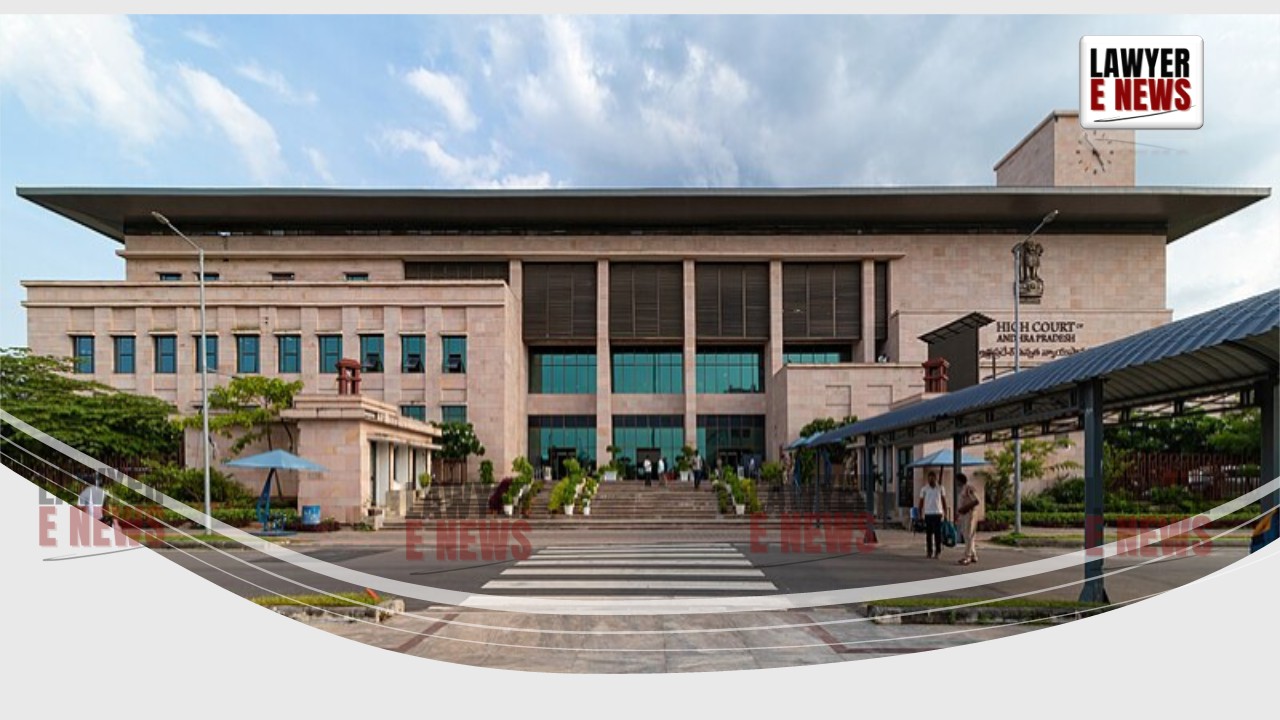
University Failed to Justify Seat Allocation, Court Terms Action 'Illegal and Arbitrary - Andhra Pradesh High Court ruled in favor of Revuru Venkata Asritha, a 19-year-old NEET-qualified student who was wrongfully denied an MBBS seat under the NCC Female Open Category due to mismanagement by Dr. NTR University of Health Sciences. The court not only quashed the admission of a lower-ranked candidate but also awarded ₹7 lakh in damages, acknowledging the irreversible loss of a medical career opportunity caused by the University’s actions.
Delivering the judgment in W.P. No. 38795 of 2022, a division bench comprising Chief Justice Dhiraj Singh Thakur and Justice R. Raghunandan Rao slammed the University’s failure to justify its allocation process, stating: “The actions of the respondent-University have caused the petitioner to lose her rightful chance at pursuing a medical career. Denial of an MBBS seat due to administrative lapses is unacceptable. It is not just a mistake; it is an act of injustice.”
Petitioner’s Case: Merit Overlooked in Favor of a Lower-Ranked Candidate
Revuru Venkata Asritha, a qualified NEET (UG-2022) candidate, had applied for an MBBS seat under the NCC Female Open Category. She contended that despite her higher merit and NCC ranking, the seat in Narayana Medical College, Nellore, was wrongfully allotted to a lower-ranked candidate (Respondent No. 4).
The University attempted to justify the allocation of the seat to Respondent No. 4, who belonged to the BC-D category, claiming that another student, Ms. Jakkala Jahnavi, vacated the seat after securing admission elsewhere. According to the University, once Ms. Jahnavi moved to Sri Venkateswara Medical College, Tirupati, her vacated seat in Narayana Medical College had to be given to a BC-D candidate rather than the petitioner, who belonged to a different category.
However, Asritha challenged this version, arguing that Ms. Jahnavi was never allotted the NCC-Female Open Category seat in Narayana Medical College in the first place, meaning that her vacated seat could not have been converted into a BC-D reserved seat.
High Court’s Findings: University’s Justification is Unsupported by Evidence
The High Court examined the University’s counter-affidavits and the seat allotment process, ultimately concluding that the authorities had failed to provide documentary proof that Ms. Jahnavi was ever allotted an MBBS seat in Narayana Medical College. The court noted: “The 2nd respondent, despite multiple adjournments, has not produced any material or document to show that Ms. Jakkala Jahnavi was allotted a seat in Narayana Medical College or that she had even joined the college before moving to Sri Venkateswara Medical College.”
Rejecting the University’s claims, the court held that the seat vacated by Ms. Jahnavi did not belong to the BC-D category and should have been offered to the petitioner based on merit in the NCC-Female Open Category. The court declared the allotment of the seat to a lower-ranked BC-D candidate as illegal and ruled:
“In the absence of proof that the NCC-Female Open Category seat in Narayana Medical College was ever allotted to Ms. Jakkala Jahnavi, the University’s justification collapses. The admission of Respondent No. 4 was made without legal basis and must be held as unsustainable.”
Court’s Verdict: Compensation for Irreversible Career Loss
Acknowledging the grave injustice suffered by the petitioner, the High Court pointed out that while she was rightfully entitled to an MBBS seat in 2022, two academic years had already passed, making it impossible to offer her the seat now. To compensate for her lost opportunity, the court imposed ₹7 lakh in damages on the University, stating: “The petitioner has lost the chance to pursue a career in medicine due to the arbitrary actions of the respondent-University. Though she was legally entitled to an MBBS seat in 2022, more than two academic years have passed, making it impossible to accommodate her now. The University must compensate her loss by paying ₹7 lakh in damages.”
Additionally, the court ordered the University to pay ₹25,000 in litigation costs within two weeks.
Universities Must Adhere to Transparent Admission Processes
This judgment sets an important precedent for admission disputes in professional courses, emphasizing that merit must prevail over administrative irregularities. The High Court reminded educational institutions of their duty to uphold transparency, warning that failure to do so can lead to serious legal and financial consequences.
With this ruling, the Andhra Pradesh High Court has reaffirmed that students cannot be deprived of their rightful educational opportunities due to negligence, mismanagement, or arbitrary decision-making by authorities.
Date of Decision: 20 February 2025