-
by sayum
27 October 2026 2:43 PM







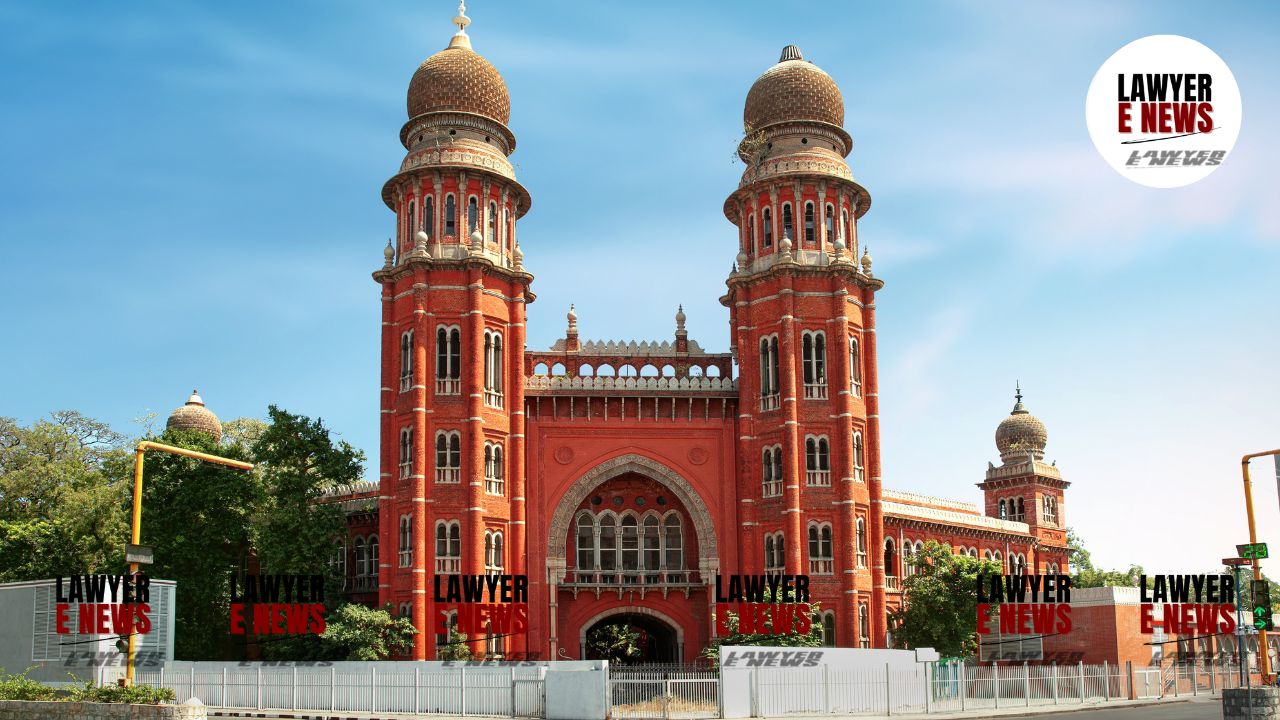
"The accused was fully aware that his speech would reach all sections of society through social and electronic media. Therefore, he deliberately and maliciously outraged religious feelings and insulted the religion and religious beliefs of Hindus with the intention of tarnishing and degrading a class of people." Madras High Court, in a significant ruling dated July , 2026, held that a speech delivered within closed premises can still attract criminal charges for hate speech if it is subsequently circulated on social media to a wider audience.
A single-judge bench of Justice G.K. Ilanthiraiyan observed that the digital dissemination of offensive remarks brings the act within the ambit of penal provisions governing the promotion of communal enmity and the outraging of religious feelings. The court dismissed a revision petition filed by former Minister K. Ponmudi, who challenged the cognizance taken by a Metropolitan Magistrate for his alleged offensive remarks against the Hindu religion.
The petitioner, K. Ponmudi, challenged an order passed by the III Metropolitan Magistrate, George Town, Chennai, which took cognizance of a private complaint filed by the respondent, Uma Anandan. The complaint alleged that during a centenary celebration on April 6, 2025, at the DMK Youth Wing Head Office, the petitioner delivered a speech that was later uploaded to YouTube and viewed by the general public. It was alleged that the speech contained malicious words intended to promote hatred towards the Hindu religion and outrage the religious feelings of its followers.
The primary question before the court was whether a speech delivered in a closed-door meeting to a specific audience could attract offences under Sections 196(i)(a), 299, and 302 of the Bharatiya Nyaya Sanhita (BNS). The court was also called upon to determine whether the Magistrate could take cognizance of such offences without obtaining prior sanction from the government under Section 217 of the Bharatiya Nagarik Suraksha Sanhita (BNSS).
Court Defines Scope of Hate Speech Under Section 196(i)(a) BNS
The court analyzed the ingredients of Section 196(i)(a) of the BNS, which penalizes promoting enmity between different groups on grounds of religion or race. Justice Ilanthiraiyan noted that for a speech to amount to hate speech, the words spoken should have no purpose other than exposing an intention to attack another religion by instigating a group of persons. The bench found that the petitioner’s speech promoted ill will between atheists and those belonging to the Hindu religion by attacking religious practices and customs.
Social Media Circulation Negates "Closed-Door" Defense
The petitioner argued that the speech was delivered in a closed hall to a particular group and thus did not attract Section 302 of the BNS, which requires uttering words within the hearing or sight of the aggrieved person. Rejecting this contention, the court held that the accused was fully aware of the consequences of his speech in the digital age. The bench observed that the subsequent circulation through social media meant the speech reached all sections of society, thereby satisfying the requirement of the words being "heard and viewed" by the public.
"The accused clearly attracted the offence under Section 196(i)(a) of the BNS by his intentional, malicious speech, signs, and visible representations, which promoted hatred by degrading Hindu religious practices."
Intentional Insult To Religious Beliefs Attracts Section 299 BNS
The court further held that the speech satisfied the essential ingredients of Section 299 of the BNS, which is the equivalent of Section 295A of the repealed Indian Penal Code (IPC). The bench remarked that the petitioner committed acts amounting to outraging religious feelings by making disrespectful references to customs and beliefs with deliberate and malicious intention. The court emphasized that such demeaning words cause emotional harm to those who profess the faith being targeted.
Higher Responsibility For Ministers And Public Servants
Justice Ilanthiraiyan pointed out that the petitioner, as a Member of the Legislative Assembly and a Minister at the relevant time, owed a greater responsibility toward the general public. The court noted that instead of maintaining harmony, the petitioner delivered a speech that implied an intention to embolden followers of atheist ideology to make verbal attacks against the Hindu religion in a demeaning manner. The bench stressed that holding public office necessitates a higher standard of conduct regarding sensitive communal issues.
"His speech promoted hatred and ill will by degrading and attacking Hindu religious practices, customs, and culture in the presence of a gathering of persons professing atheist ideology."
Prior Sanction Not Mandatory After High Court’s Suo Motu Cognizance
On the issue of procedural requirements under Section 217 of the BNSS, the petitioner contended that the Magistrate could not have taken cognizance without prior government sanction. However, the High Court observed that it had already taken suo motu cognizance of the matter in a previous writ petition (W.P.Crl. No. 610 of 2025) and had directed the complainant to file a private complaint after the police filed a closure report. The bench held that once the High Court had intervened suo motu, the trial court was not required to await further sanction.
Late Grant Of Sanction Does Not Invalidate Proceedings
Relying on the Supreme Court's dictum in Shivendra Nath Verma v. Union of India, the bench observed that even if sanction is obtained after the order of cognizance, it would not necessarily invalidate the proceedings. The court noted that the petitioner’s status as a sitting member of the ruling party had previously stalled the decision on the respondent’s sanction application. Therefore, the lack of a formal sanction order from the government did not prevent the Magistrate from proceeding with the summons.
"Once this Court had taken suo motu cognizance of the alleged hate speech, the trial Court was not required to await sanction under Section 217 of BNSS before proceeding with the complaint."
The Madras High Court concluded that the offences under Sections 196(i)(a), 299, and 302 of the BNS were prima facie made out against the petitioner. Finding no illegality or infirmity in the Magistrate’s order, the court dismissed the revision petition and directed the trial court to complete the proceedings within six months. The ruling underscores that digital dissemination of speech is a critical factor in determining the reach and impact of communal provocation in modern jurisprudence.
Date of Decision: 02 July 2026