
-
by sayum
25 August 2026 12:32 PM







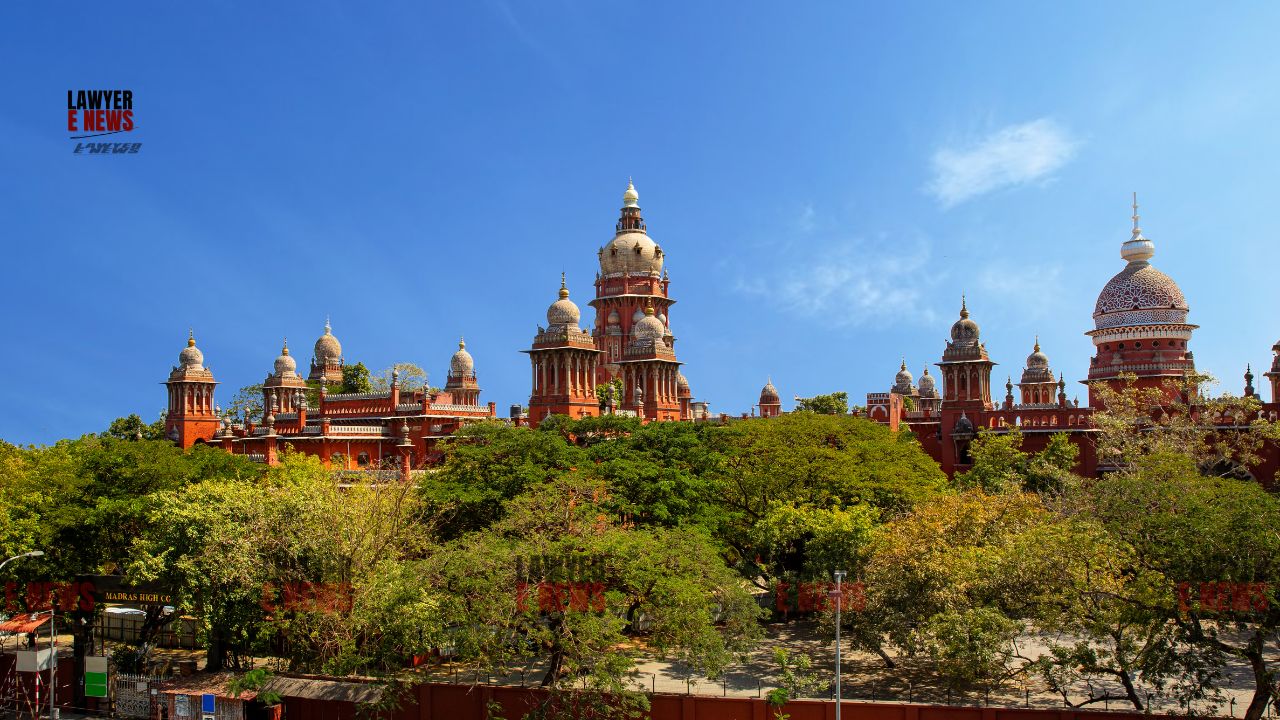
Madras High Court delivered a pivotal judgment in Muthulakshmi & Ors. vs. S. Parthiban & United India Insurance Co., wherein it overturned a lower Tribunal's dismissal of a compensation claim in a fatal road accident case. The Court awarded Rs. 8,32,000 in compensation to the wife and daughters of the deceased, Kittu @ Krishnan, challenging the Tribunal’s finding that the deceased was solely responsible for the accident.
The appellants—Muthulakshmi (wife of the deceased) and their two minor daughters—filed a compensation claim following the death of Kittu @ Krishnan in a motorcycle accident on 31st May 2014. Kittu was driving a two-wheeler when he allegedly lost control, fell, and sustained serious injuries that led to his death on 6th June 2014. The appellants sought Rs. 9,00,000 in compensation for the loss of the deceased.
The Tribunal dismissed the claim, stating that the accident was self-inflicted, based on an entry in the Accident Register and a delayed FIR. It held that the deceased's negligence caused the accident, thus relieving the insurance company from liability.
The key legal issue was whether the insurance company could be held liable to compensate the claimants, given the contradictory reports surrounding the accident, particularly the Accident Register, which noted that the deceased fell from his own vehicle, and the delayed filing of the FIR.
The insurance company argued that the accident was caused by the deceased’s own negligence and that they were not liable to compensate under these circumstances. They also pointed to inconsistencies, such as the deceased being admitted to the hospital by a friend (Vijay), while the FIR named another person (Anand) as the driver. The Tribunal accepted these arguments and dismissed the petition.
However, the appellants argued that the Tribunal’s reliance on procedural delays, like the late filing of the FIR, was misplaced, especially given the lack of direct eyewitness testimony and other evidence.
"The doctor who made the endorsement as 'self-driven' in the Accident Register of the hospital has not been examined. But that alone cannot be put against the claimants."
The Court ruled that while there was a delay in filing the FIR, this did not justify dismissing the entire claim, especially in the absence of clear evidence proving the deceased's sole responsibility. The Court noted that the investigation was presumed fair, and the claimants should not be penalized for procedural irregularities.
The Court reassessed the compensation, noting that while the appellants claimed the deceased earned Rs. 15,000 per month as a carpenter, no documentary proof was provided. Consequently, the Court estimated the deceased’s monthly income at Rs. 6,000. Applying the multiplier method as per the Sarla Verma case.
The total award amounted to Rs. 8,32,000, with 7.5% interest from the date of the petition until the amount is deposited. The Court ordered the insurance company to pay the sum within four weeks.
The Madras High Court's ruling underscores that delays in filing FIRs or procedural inconsistencies should not result in the outright dismissal of compensation claims, particularly in cases where the deceased’s dependents are entitled to relief. The Court emphasized that the Tribunal had erred in relying heavily on the FIR delay and Accident Register entry without corroborating evidence.
Date of decision: 13/10/2023
Muthulakshmi Vs S. Parthiban





