
-
by sayum
25 August 2026 12:32 PM







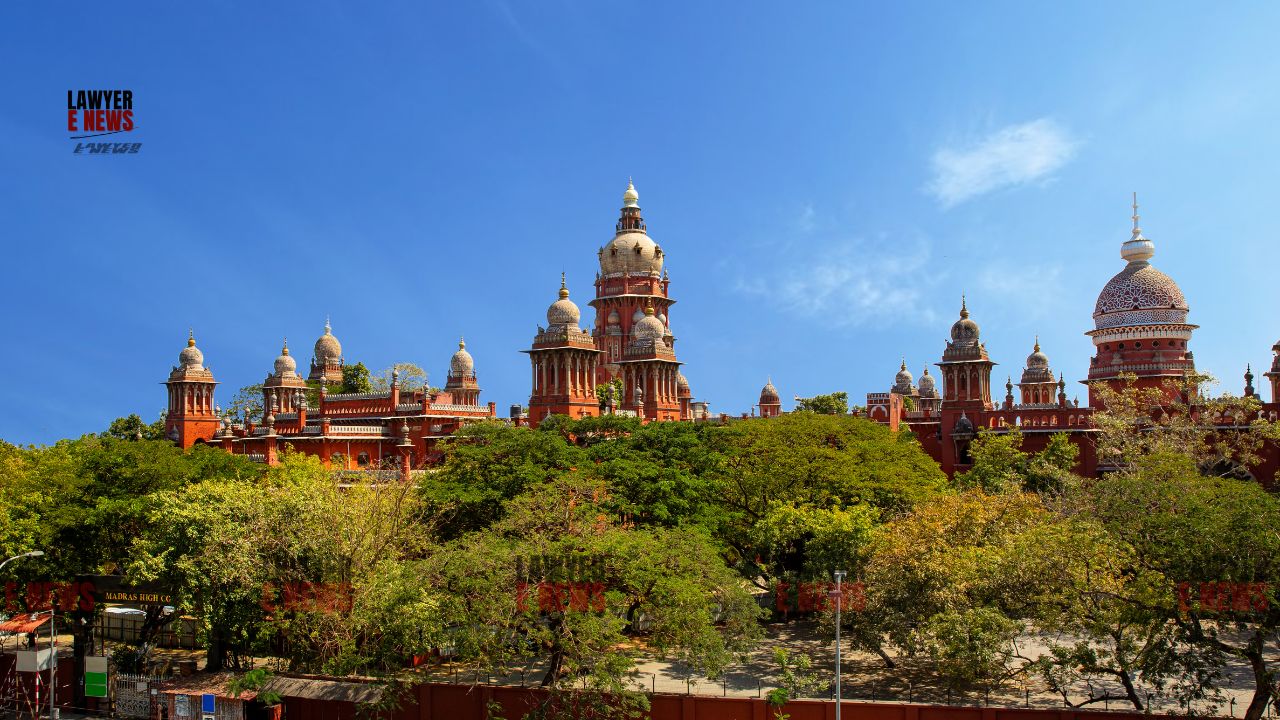
"Taking into account that the appellant has been in judicial custody from 30.04.2026 and also considering the nature of allegations, this Court is inclined to grant bail to the appellant subject to certain conditions," Madras High Court, in an order, has granted bail to an accused person allegedly involved in a wordy quarrel involving casteist slurs and physical assault.
A single-judge bench of Justice M. Nirmal Kumar observed that considering the period of incarceration since April 2024 and the fact that the investigation has been completed, the appellant was entitled to be enlarged on bail. The Court set aside an earlier order passed by the Vacation Sessions Judge, Nagapattinam, which had denied the petitioner relief.
The appellant, Appalam @ Anbazhagan, was arrested following a complaint regarding an incident on April 24, 2026, at the Aarukattuthurai Liquor Shop. It was alleged that the appellant questioned the de facto complainant about his voting preference, leading to a wordy altercation. During the quarrel, the appellant allegedly insulted the complainant using his caste name, slapped him, and pushed him down. The appellant had been in judicial custody since April 30, 2026.
The primary issue before the Court was whether the appellant was entitled to bail under Section 14(A)(2) of the Scheduled Castes and the Scheduled Tribes (Prevention of Atrocities) Act, 1989. The Court also examined the nature of the allegations under the newly enacted Bharatiya Nyaya Sanhita (BNS), 2023, specifically involving the use of casteist remarks in a public setting.
Appellant Claims False Implication and Absence of Legal Ingredients
The counsel for the appellant argued that the entire dispute arose out of a spontaneous political disagreement regarding the casting of votes. It was submitted that both parties were known to each other and the alleged assault occurred "at the spur of the moment" without premeditation. The appellant's counsel further contended that the legal requirements for an offence under the SC/ST Act were not fully met.
Court Considers Necessity Of Public View For SC/ST Act Offences
The appellant's representative highlighted that for an offence involving casteist insults to be made out, the act must occur in a public place and within public view. While public presence was noted in the complaint, the defense argued that the incident was a private dispute turned physical. The Court took note of the submission that the appellant had already spent over two months in judicial custody.
"If that is taken to be true, then no offence made out calling caste name causing insult in public place, in public view, both are required."
Investigation Completed In Offences Under BNS and Atrocities Act
During the proceedings, the Government Advocate (Criminal Side) informed the Court that the investigation into Crime No. 123 of 2026 had been completed. The charges against the appellant included Section 296(b) and Section 115(2) of the BNS, 2023, alongside Section 3(1)(s) and 3(1)(r) of the SC/ST Act. The State confirmed that the de facto complainant had been duly informed about the hearing in person.
No Objection From Complainant Noted By The Bench
The Court observed that despite being served with private notice, Court notice, and notice through the Jurisdictional Inspector of Police, the de facto complainant failed to appear. The bench noted that sufficient opportunity had been afforded to the third respondent. Consequently, the Court inferred that the complainant had no serious objection to the setting aside of the lower court’s order.
"This Court is of the view that the 3rd respondent has no serious objection to setting aside the order passed in Crl.M.P.No.349 of 2026."
Bail Granted With Stringent Conditions To Prevent Tampering
While allowing the appeal, Justice Nirmal Kumar imposed several conditions to ensure the integrity of the trial. The appellant was directed to execute a bond for Rs. 5,000 with two sureties and to appear before the trial court on all hearing dates without fail. The Court explicitly warned that any breach of these conditions would allow the Trial Court to take appropriate action in accordance with the law.
Court Cites Precedent On Breach Of Bail Conditions
The bench referred to the Supreme Court’s ruling in P.K. Shaji vs. State of Kerala to reiterate the authority of the Trial Court to act upon violations of bail terms. Additionally, the Court noted that if the accused absconds after release, a fresh First Information Report (FIR) could be registered under Section 229A of the Indian Penal Code (IPC).
The High Court concluded that the nature of the allegations, combined with the completion of the investigation, did not warrant further preventive detention. By setting aside the order of the Nagapattinam Sessions Court, the High Court emphasized the balance between the rights of the accused and the procedural requirements of the SC/ST Act. The appeal was allowed, and the appellant was ordered to be released on bail.
Date of Decision: 02 July 2026





