
-
by sayum
25 August 2026 12:32 PM







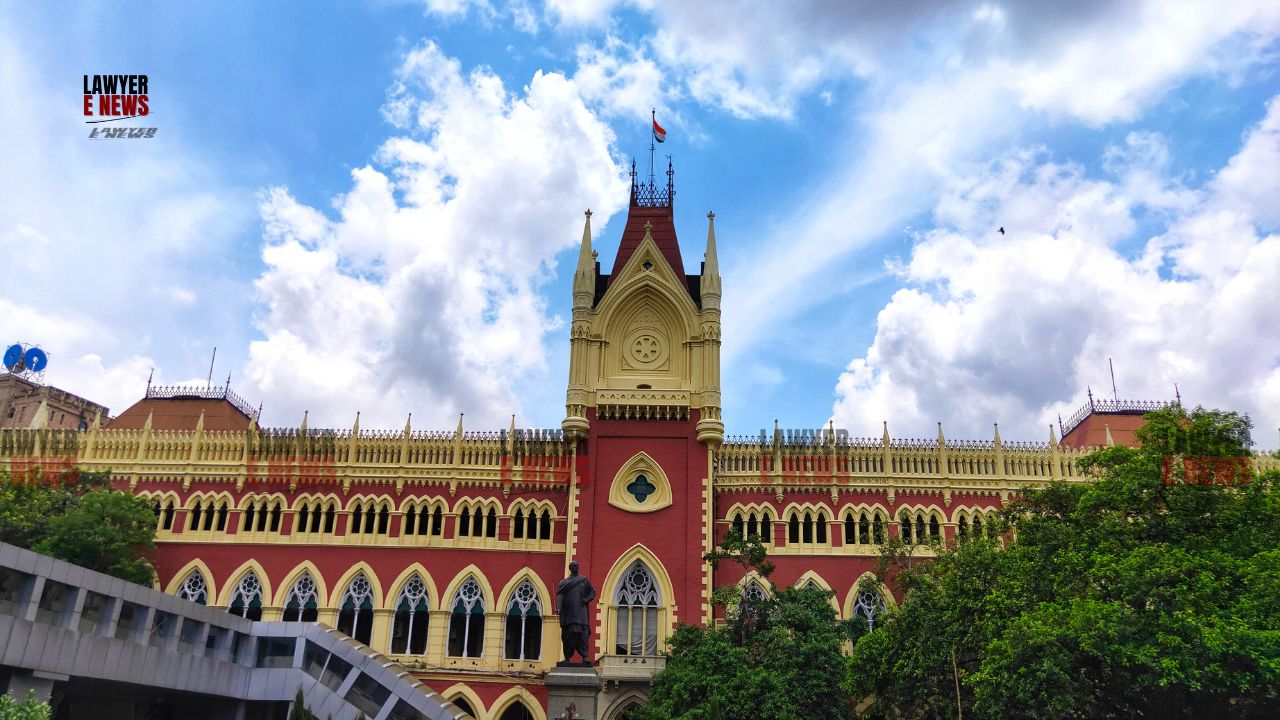
“Public Servants Cannot Be Harassed in the Guise of Criminal Prosecution”, In a scathing judgment reinforcing the sanctity of public officials acting in their lawful duties, the Calcutta High Court quashed the criminal proceedings against a senior officer of the West Bengal Financial Corporation (WBFC), observing that allowing the case to proceed would amount to a “gross abuse of the process of law.”
Justice Chaitali Chatterjee Das held:
“Allowing the proceedings to continue further would not only be an empty formality but also would be gross abuse of the process of law.”
The petitioner, a retired GM (Administrative & Training) of WBFC, had sought quashing of the charge-sheet under Sections 448, 354, 509, and 506 IPC, which arose from an FIR lodged after he and other officials visited a loanee’s residence for recovery of ₹1.17 crore in public dues.
“Mens Rea Missing – No Prima Facie Case Under Section 354 IPC”
The Court categorically held that the allegations of outraging modesty under Section 354 IPC were not substantiated. Citing Naresh Aneja v. State of UP, the Court clarified that to attract Section 354, there must be application of criminal force with intent to outrage a woman’s modesty — a threshold not met here:
“Allegations did not disclose conduct capable of shocking sense of decency of a woman – No material to infer requisite mens rea – Offence under Section 354 IPC not made out.”
“A Vexatious FIR Meant to Stall Recovery of Public Money”
The petitioner and a WBFC team had visited the residence of the husband of the de facto complainant — a defaulting borrower — on 8 November 2016. The FIR, filed on 11 November, accused the officials of trespass and threatening behaviour.
However, the General Manager (Operations) of WBFC, in a letter to police dated 9 November 2020, stated that the visit was part of a sanctioned recovery process targeting Magnifico Craps Pvt. Ltd., which had defaulted on a ₹1.17 crore loan. This letter was ignored by the Investigating Officer, who proceeded to file a charge-sheet within five days, without waiting for or incorporating this crucial evidence.
The Court observed:
“The FIR was nothing but an effort on the part of the complainant’s husband to stall the loan recovery proceedings” and that continuation of the prosecution “would amount to harassment of a public servant performing official duty”
“Investigation Was Perfunctory, Delayed, and Ignored Key Evidence”
A glaring feature of the case was the four-year delay in filing the charge-sheet without explanation. The charge-sheet was filed on 30 September 2020, taken cognizance of more than a year later in October 2021. The Court found this delay unexplained and unjustified.
Additionally, statements of key witnesses were recorded twice without explanation under Section 161 CrPC — once in 2016 and again in 2020. Statements under Section 164 CrPC of the de facto complainant were never recorded. Names of other officials present during the visit (also named in FIR) were not included in the charge-sheet.
“The IO submitted the charge-sheet without waiting for the reply... even after receiving the letter, the IO did not pray for further investigation… There is an inordinate delay… Magistrate committed grave error in taking cognizance.”
The Court held the investigation was “perfunctory and mechanical” and “conducted with total non-application of mind.”
“Public Officials Discharging Duties Should Not Be Dragged Into Frivolous Litigation”
Citing Imran Ahmed Ansari v. State of West Bengal, the Court reiterated that when public servants are obstructed in discharge of official duty through misuse of criminal process, it constitutes a serious miscarriage of justice:
“Petitioners proceeded to take possession in accordance with law for default in payment… and therefore, justice shall be met in quashing the proceedings.”
The Court invoked the landmark judgments of State of Haryana v. Bhajan Lal and L. Muniswamy to assert that the inherent power under Section 482 CrPC must be exercised to prevent misuse of judicial process and to secure the ends of justice.
“Police Machinery Cannot Be a Tool for Private Grudge”
Relying on Mohammad Wajid v. State of UP and Sharif Ahmed v. State of UP, the Court emphasised that courts must go beyond the four corners of the FIR and examine attending circumstances, especially where allegations seem to arise from vendetta:
“The court owes a duty to look into many other attending circumstances… with due care and circumspection, try to read in between the lines.”
Charge-Sheet and Proceedings Quashed
Finding the entire criminal proceeding against the petitioner to be a classic case of personal grudge disguised as criminal law, the Court concluded:
“The complaint was maliciously instituted with an ulterior motive... Continuation of such proceedings would be a gross abuse of process.”
Accordingly, the revisional application was allowed, and the entire proceedings pending before the 5th Judicial Magistrate, Howrah, were quashed.
Date of Decision: 05 February 2026





