Recovery Of Excess Payment Made By Mistake Is Permissible When Employee Furnished An Undertaking To Refund: Supreme Court Anticipatory Bail Application Under Sec 482 BNSS Is Maintainable Even If No Formal Order Of Arrest Is Passed By CGST Authorities: Allahabad High Court Consensual Physical Relationship Following Three-Year Courtship Does Not Amount To Rape If Marriage Promise Fails: Supreme Court Criminalization Of Civil Disputes | Courts Must Not Engage In Speculative Reasoning While Dealing With Quashing Petitions Under Section 482 CrPC: Supreme Court Mere Recovery Of Tainted Money In The Absence Of Proof Of Demand Is Insufficient To Sustain Conviction Under Section 7 And 13 PC Act: Supreme Court High Court Cannot Quash NDPS Proceedings Merely Relying On Jurisprudence Regarding Evidentiary Value Of Confessional Statements: Supreme Court Extra-Judicial Confession Made While In Police Custody Is Inadmissible In Evidence: Supreme Court Taxing Authorities Must Levy Tax Based On The Form Of Goods At The Time Of Sale, Not On Potential End Use: Supreme Court Punjab & Haryana High Court Orders CBI Probe Into State Corruption Scams After Punjab Police Fails To Act On ED’s Section 66(2) PMLA Referral Section 482 CrPC | FIR Based On Consensual Relationship Gone Sour Cannot Be Sustained To Coerce Marriage: Supreme Court CISF Personnel Soliciting Bribes For Employment Is Guilty Of 'Gross Misconduct' Under Section 18 CISF Act: Andhra Pradesh High Court PIL | State Cannot Use Demolition Powers To Silence Whistleblowers Or Deflect Accountability: Punjab & Haryana High Court Criminal Proceedings Against In-Laws Without Specific Allegations Of Overt Acts Constitute Abuse Of Process: Supreme Court Order 22 Rule 9 CPC | Admission In An Abated Suit Does Not Constitute Estoppel Against Landlord In A Fresh Eviction Proceeding: Calcutta High Court Arbitral Award Cannot Be Set Aside For Non-Adjudication Of Claims Specifically Abandoned By Parties: Delhi High Court Mere Long Possession Is Not Adverse Possession; Defendant Must Prove Hostile Animus To Deny Title Of True Owner: Himachal Pradesh High Court Reopening Of Assessment Under Sec 148A(d) Income Tax Act Cannot Be Based On 'Change Of Opinion' Without Fresh Tangible Material: Gujarat High Court Municipal Authorities Must Initiate Formal Proceedings And Grant Opportunity Of Hearing Before Sealing Premises:  Jharkhand High Court Court Cannot Compel Third-Party To Undergo DNA Test Unless Necessary For Just Adjudication: Madhya Pradesh High Court Trial Court Cannot Defer Bail Application Merely Because A Transfer Petition Is Pending In High Court: Punjab & Haryana High Court Section 108 BNS | Mere Taunts Or Harassment Regarding Not Bearing A Male Child Do Not Constitute Abetment To Suicide: Rajasthan High Court Daily-Wage Employees Treated As Permanent Under 1988 Government Resolution Entitled To Annual Increment Benefits: Supreme Court

Live-In Relationships Outside Valid Marriages Not Covered by Section 498A IPC: Kerala High Court

07 May 2024 8:19 AM

By: Admin


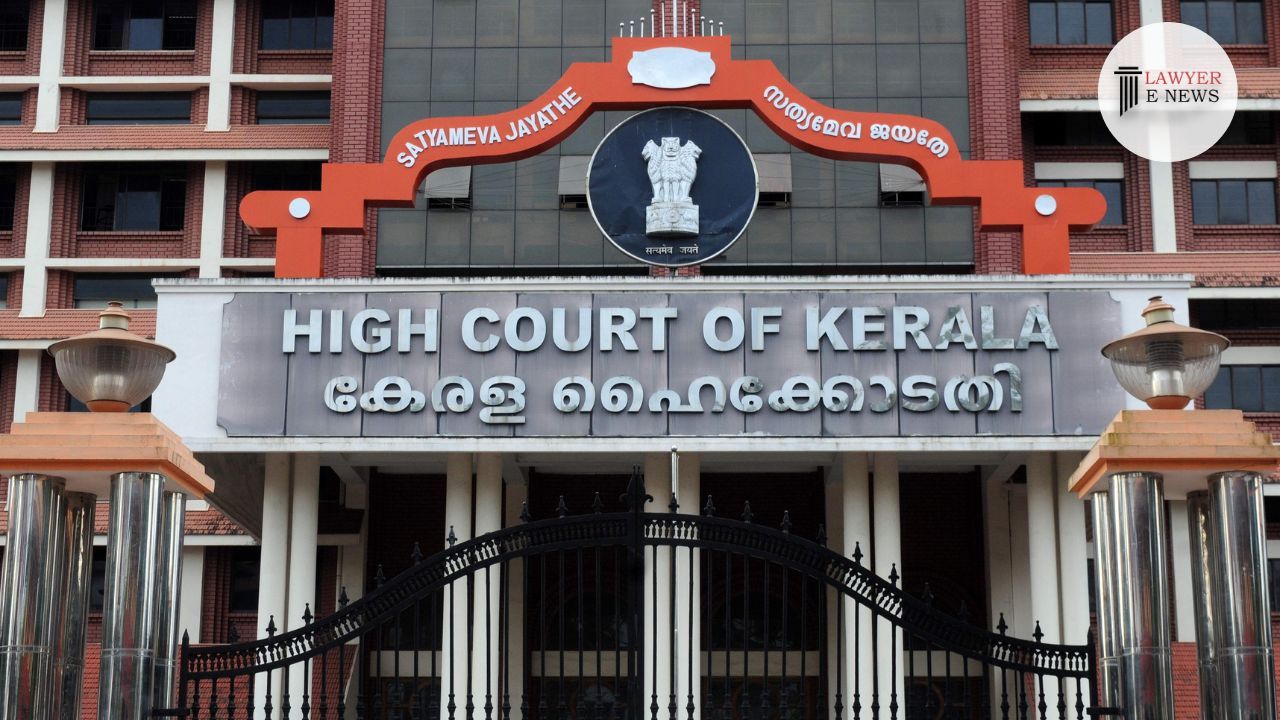
In a groundbreaking verdict, the Kerala High Court, led by The Honourable Mrs. Justice Sophy Thomas, has ruled that live-in relationships without valid marriages do not fall within the purview of Section 498A of the Indian Penal Code (IPC). The decision came in response to a Criminal Revision Petition challenging the conviction of the appellants for offenses under Sections 306 and 498A of IPC.

The High Court's observation, which forms the crux of this ruling, emphasized the importance of a valid marital relationship when applying Section 498A of IPC. The Court declared, "Even when a marriage was solemnized following the rituals, it may not be legal always, as the validity of a marriage depends on so many factors like age, mental status, religion, consanguinity, spouse living, etc. When there is some form of marriage either religious or customary which has the color of a legal marriage, then also, the woman can seek protection under Section 498A of IPC though later, for some reason as mentioned above, that marriage is found to be invalid in the eye of law."

The verdict underscores that the mere existence of a live-in relationship based on an agreement, without the validity of a legally recognized marriage, cannot be accepted as grounds for invoking Section 498A of IPC. The Court clarified that the legislation's intent was to prevent harassment of a woman who had entered into a marital relationship and later became a victim of greed for money. The ruling upheld that the concept of "husband" in Section 498A covers individuals who enter into a marital relationship, regardless of the legitimacy of the marriage.

Additionally, the High Court stressed the necessity for a positive act of harassment proximate to the time of occurrence to establish abetment of suicide under Section 306 of IPC. The Court ruled that the prosecution failed to prove its case against the revision petitioners beyond a reasonable doubt, leading to the acquittal of revision petitioners 1 and 4.

This landmark ruling has significant implications for cases involving allegations of cruelty and abetment of suicide in live-in relationships without valid marriages, setting a legal precedent in the state of Kerala.

Advocate Sri.K.P.Balagopal represented the Revision Petitioners, while Smt.Nima Jacob served as the Public Prosecutor for the Respondent/Complainant. The decision, based on meticulous legal analysis and jurisprudence, brings clarity to the applicability of Section 498A of IPC in live-in relationships.

Date of Decision: 12 October 2023

NARAYANAN VS STATE OF KERALA     

Latest Legal News