-
by sayum
26 August 2026 1:49 PM







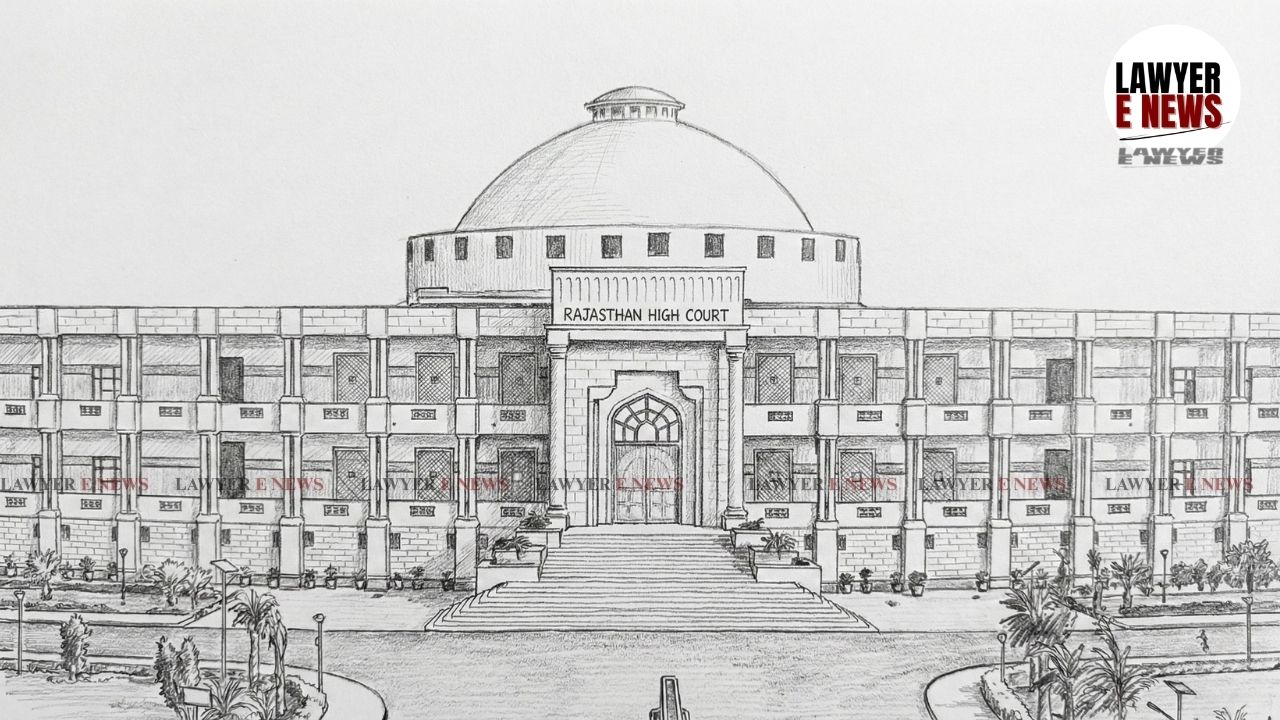
“A Licensee Who Participates In A Policy Framework Cannot Challenge Its Conditions After Failing To Secure Renewal”, In a significant ruling concerning the regulatory powers of the State over liquor trade, the Rajasthan High Court upheld the cluster-based settlement system introduced under the Rajasthan Excise & Temperance Policy, 2025–2029, holding that renewal of a liquor licence is not a vested right and remains subject to policy conditions framed by the State.
Division Bench of the Rajasthan High Court comprising Justice Dr. Pushpendra Singh Bhati and Justice Sandeep Shah, in the case Jamana v. State of Rajasthan & Others, dismissed a batch of writ petitions challenging the constitutional validity of Clauses 2.2.6, 2.2.7 and 2.2.8 of the Rajasthan Excise & Temperance Policy, 2025–2029.
The Court ruled that the cluster mechanism and the requirement of at least 70% licence renewal applications within a district are valid policy measures falling within the State’s regulatory domain over liquor trade.
Background of the Case
The dispute arose after the Finance (Excise) Department of the Government of Rajasthan issued the Rajasthan Excise & Temperance Policy, 2025–2029 on 29 January 2025, introducing a revised framework for settlement and renewal of retail liquor shops.
Under the policy, the total number of liquor shops in the State remained fixed at 7,665, but for the first time the State introduced a district-wise cluster system for settlement and renewal of licences.
As per the policy, retail liquor shops were grouped into clusters consisting of a minimum of one and a maximum of five contiguous shops.
Existing licensees were allowed to apply for renewal for the financial year 2025–26, subject to fulfilling eligibility conditions including payment of an Annual Guarantee Amount increased by 10% over the previous year.
However, Clauses 2.2.6, 2.2.7 and 2.2.8 of the policy introduced two significant conditions:
The first condition required that renewal applications must be received from at least 70% of eligible licensees in a district.
The second condition required that all shops within a cluster must apply for renewal, failing which the cluster could be settled through e-auction or e-tender.
The petitioner, Jamana, who was operating a Country Liquor and IMFL/Beer Composite Retail Off-Vend shop in Barmer district, applied for renewal of her licence. However, because one shop within her cluster did not apply for renewal, the renewal process failed and the cluster was proposed to be settled through auction.
Aggrieved by the cancellation of her renewal application and the operation of the impugned clauses, the petitioner approached the High Court seeking quashing of Clauses 2.2.6, 2.2.7 and 2.2.8 and restoration of her licence renewal.
Legal Issues Before The Court
The principal legal issue before the Court was whether the cluster-based system and the 70% district-level renewal threshold under the Excise Policy were arbitrary and violative of Article 14 of the Constitution of India.
The petitioners argued that the policy made renewal of an individual licence dependent on the conduct of other licensees within the cluster and district, thereby creating an unreasonable classification and imposing economic coercion.
They further contended that the policy effectively forced licensees to assume responsibility for non-renewed shops within a cluster, failing which their own licence renewal would be jeopardized.
The State, on the other hand, defended the policy as a legitimate regulatory mechanism intended to ensure rational distribution of liquor shops, prevent fallow areas and maximize revenue.
Court’s Observations On Liquor Trade And State Control
The High Court reiterated the well-settled constitutional position that trade in liquor is not a fundamental right but a privilege regulated by the State.
Referring to the Supreme Court’s landmark decision in Khoday Distilleries Ltd. v. State of Karnataka (1995) 1 SCC 574, the Court observed:
“A citizen has no fundamental right to trade or business in liquor as beverage. The State can prohibit completely the trade or business in potable liquor since liquor as beverage is res extra commercium.”
The Court noted that the constitutional scheme under Entry 8 and Entry 51 of List II of the Seventh Schedule grants the State legislative and regulatory control over intoxicating liquors.
The Court further emphasized that Article 47 of the Constitution directs the State to endeavour to bring about prohibition of intoxicating drinks, reinforcing the State’s authority to regulate liquor trade strictly.
However, the Court clarified that although no fundamental right exists in liquor trade, State action remains subject to constitutional scrutiny under Article 14.
Validity Of The 70% Renewal Threshold
The Court examined the validity of the 70% district-level renewal threshold prescribed under Clause 2.2.6 and Clause 2.2.7 of the policy.
It held that the prescription of a threshold percentage is a legitimate policy tool intended to ensure adequate participation of existing licensees before granting renewal benefits.
Justice Bhati observed that:
“The mere fact that renewal rights of an individual licensee are linked to cluster-level or district-level participation does not ipso facto render the provision arbitrary.”
The Court found no material on record to demonstrate that the 70% criterion was manifestly arbitrary or lacked rational nexus with the objective of ensuring revenue stability and preventing fragmented settlement of liquor shops.
Legality Of The Cluster-Based System
The Court also upheld the cluster formation mechanism, holding that grouping liquor shops into clusters of one to five contiguous units was an administrative measure aimed at rationalising the settlement of retail shops and preventing unserved areas.
The Bench observed that cluster formation falls within the administrative competence of the Excise Department and cannot be interfered with merely because individual licensees may face inconvenience.
The Court rejected the argument that the cluster mechanism resulted in economic coercion or monopolization, noting that the policy provides multiple opportunities including renewal, limited tender among cluster licensees and finally open e-auction.
Participation In Policy And Principle Of Estoppel
Another significant observation of the Court related to the conduct of the petitioners in participating in the policy framework.
The Court noted that the petitioners submitted renewal applications with full knowledge of the conditions under the Excise Policy, including the cluster mechanism and the 70% renewal threshold.
In this regard, the Court held:
“A party who participates in a process with knowledge of the conditions cannot subsequently challenge those very conditions merely because the outcome is unfavourable.”
Thus, the Court applied the principle that participants in a policy or tender process cannot challenge the terms after participating and failing in the process.
Judicial Review Of Policy Decisions
The Bench emphasized that courts do not sit in appeal over policy decisions of the executive, particularly in areas involving fiscal regulation and revenue administration.
It held that judicial interference is justified only where a policy is patently arbitrary, discriminatory or contrary to statutory provisions.
The Court concluded that the Excise Policy was framed after considering revenue interests, administrative efficiency and regulatory stability, and therefore did not suffer from any constitutional infirmity.
The Rajasthan High Court ultimately held that the cluster-based system and district-level renewal threshold under the Rajasthan Excise & Temperance Policy, 2025–2029 are valid policy measures within the State’s regulatory domain.
Finding no manifest arbitrariness, discrimination or violation of constitutional provisions, the Court dismissed the batch of writ petitions and upheld the validity of Clauses 2.2.6, 2.2.7 and 2.2.8 of the policy.
The ruling reinforces the principle that liquor trade remains a regulated privilege under State control, and licence holders cannot claim renewal as a matter of right.
Date of Decision: 06 March 2026