-
by sayum
27 July 2026 10:58 AM







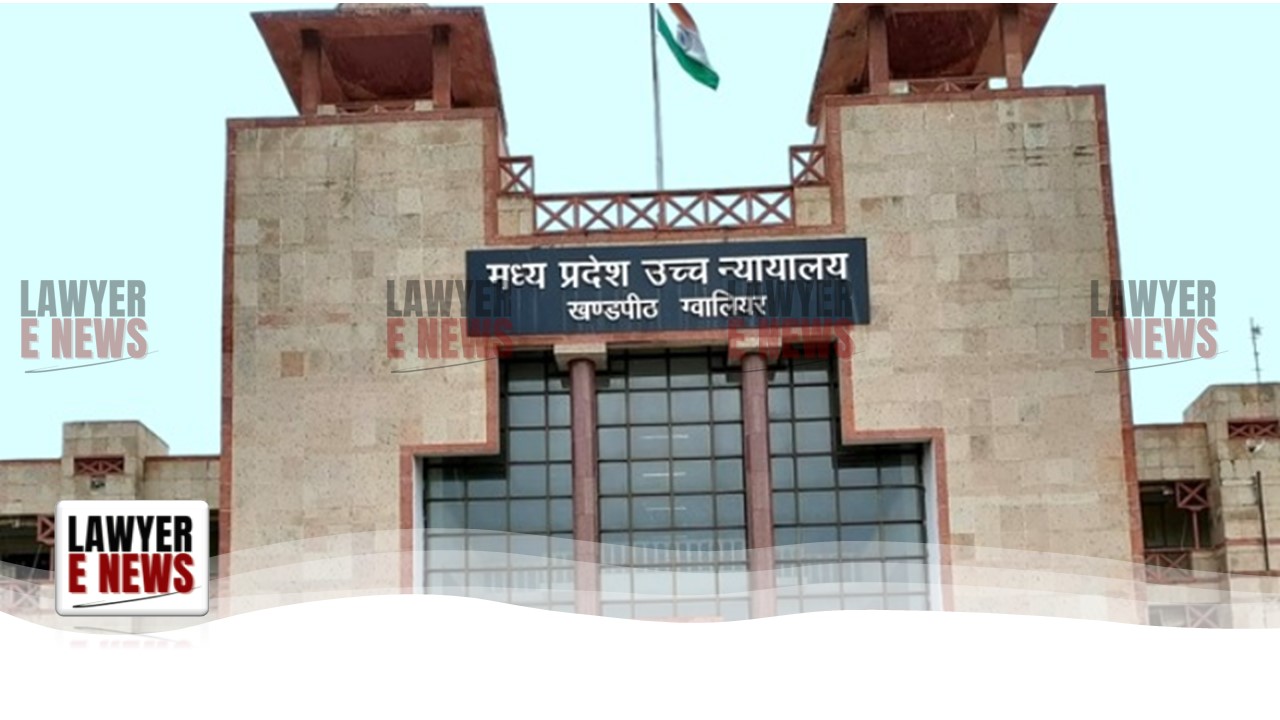
Madhya Pradesh High Court, in the case of Ashish Pathak vs. State of Madhya Pradesh, Criminal Appeal No. 159 of 2011, acquitted the appellant, Ashish Pathak, who had been convicted of murder and sentenced to life imprisonment under Section 302 of the Indian Penal Code (IPC) and two years under Section 201 of the IPC. The court found that the circumstantial evidence, including the "last seen together" theory and recovery of incriminating articles, was insufficient to prove guilt beyond a reasonable doubt. The acquittal highlights the importance of concrete and conclusive evidence in cases based on circumstantial grounds.
The central issue in the appeal was whether the circumstantial evidence, primarily the "last seen together" theory and recovery of alleged incriminating articles, was strong enough to support the conviction. The trial court had relied on witness testimony that placed the appellant with the deceased shortly before the murder and on the recovery of items like a blood-stained iron "tangi" (axe) and clothes from the appellant. However, the forensic report found no blood on these items, severely undermining the prosecution's case.
The case stemmed from the death of Lala Pathak, whose body was found near his Dhaba on the morning of July 11, 2009. Ashish Pathak, the appellant, was accused of having been seen with the deceased on the night of July 10, 2009, when they were allegedly drinking together. The appellant was convicted by the 2nd Additional Sessions Judge, Rewa, on June 9, 2010, for murder (Section 302 IPC) and for causing the disappearance of evidence (Section 201 IPC).
Validity of the Circumstantial Evidence: The court reviewed the principles governing circumstantial evidence, citing Sharad Birdhichand Sarda vs. State of Maharashtra (1984) and other landmark cases. For a conviction based on circumstantial evidence, the court emphasized that the circumstances must form a complete chain pointing only to the guilt of the accused, and they must be conclusive, excluding every possibility of innocence.
"The circumstances should be so compelling as to exclude every hypothesis but that of guilt," the court reiterated from the Sharad Birdhichand Sarda case.
Weakness of the Last Seen Together Theory: The prosecution's case hinged on the "last seen together" theory. Several witnesses testified that they had seen the appellant drinking with the deceased shortly before his death. However, the court found discrepancies in their testimonies, with some witnesses contradicting their statements during cross-examination. Moreover, the time gap between when the appellant was allegedly seen with the deceased and when the body was discovered was significant, allowing for the possibility of another perpetrator.
The court referred to Ashok vs. State of Maharashtra (2015) to explain that the last seen together theory, by itself, cannot be the sole basis for conviction without strong corroborating evidence.
"The last seen theory does not by itself lead to the inference that it was the accused who committed the crime. Mere non-explanation on the part of the accused cannot lead to a presumption of guilt," the court noted from previous judgments.
Discrepancies in Witness Testimonies and Forensic Evidence
Several witnesses, including Keshav Prasad Pathak (PW1), Smt. Neelam Pathak (PW7), and Smt. Geeta Pathak (PW13), provided testimonies regarding the appellant being seen with the deceased on the night of the murder. However, during cross-examination, significant contradictions and inconsistencies arose, making their testimonies unreliable.
Additionally, the recovery of alleged incriminating articles, including a blood-stained "tangi" and the appellant’s clothes, failed to establish a link to the crime. The Forensic Science Laboratory (FSL) report, Ex. P.14, found no traces of blood on the items seized from the appellant, severely weakening the prosecution’s case.
Court's Decision: Failure to Prove Guilt Beyond Reasonable Doubt
The court emphasized the principle that the prosecution must prove the guilt of the accused beyond reasonable doubt. In the absence of strong, conclusive evidence linking the appellant to the crime, the court held that the prosecution had failed to establish the chain of circumstances necessary for a conviction.
"The prosecution has failed to prove the guilt of the appellant beyond reasonable doubt. The evidence of last seen together is weak, and the forensic findings do not support the case," the court stated.
As a result, the court acquitted the appellant and set aside the trial court's conviction.
The Madhya Pradesh High Court's ruling underscores the need for robust and reliable evidence in cases built on circumstantial grounds. The failure to conclusively establish the appellant's involvement in the crime, coupled with discrepancies in witness testimony and lack of forensic support, led to the acquittal. The court's judgment serves as a reminder of the high standard of proof required for criminal convictions, especially in cases involving circumstantial evidence.
Date of Decision: October 16, 2024