-
by sayum
28 August 2026 2:11 PM







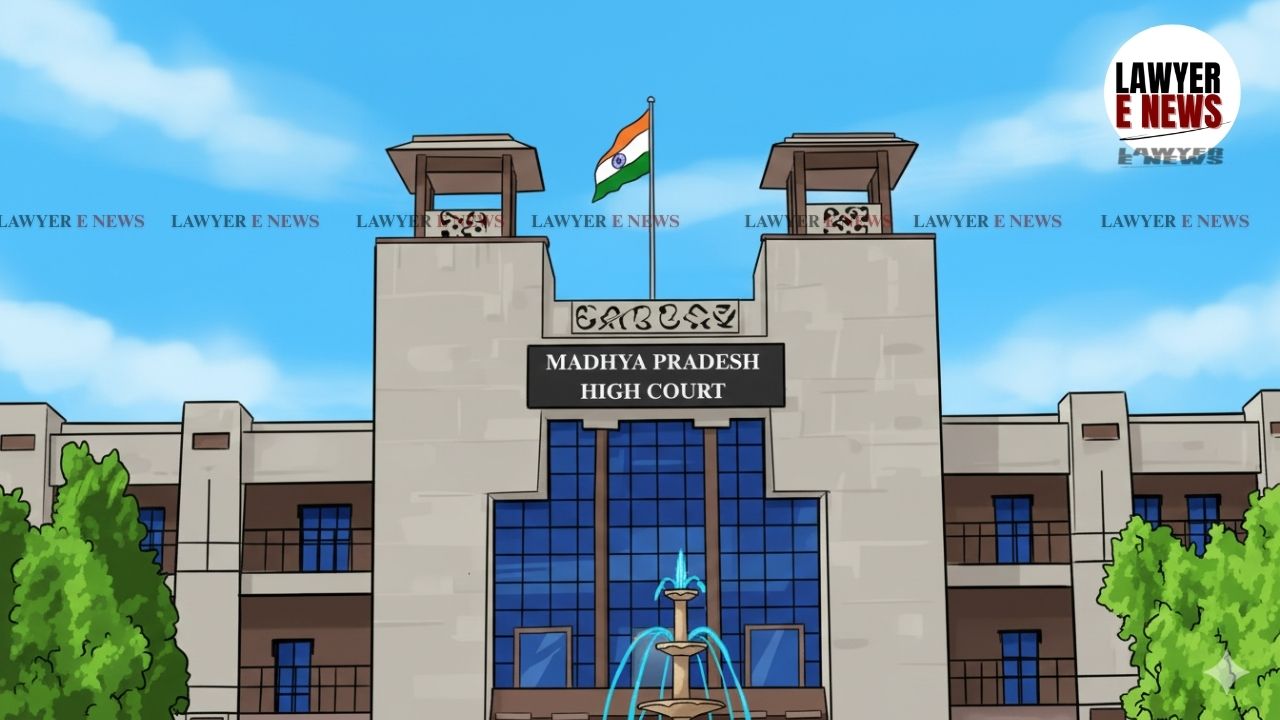
"As the Hon'ble Apex Court has already held that the land owners even in the case of acquisition under the National Highways Act are entitled for solatium, therefore... that can be a ground of challenge under Section 34(2)(3)(ii) of the Act of 1996," Madhya Pradesh High Court, in a significant ruling, has held that landowners whose lands are acquired under the National Highways Act, 1956, are entitled to solatium on the compensation awarded.
A Single Judge bench of Justice Deepak Khot observed that the non-grant of solatium constitutes an error of law and a violation of the fundamental policy of Indian law, providing a valid ground to challenge an arbitral award under Section 34 of the Arbitration and Conciliation Act, 1996.
The appellants, including Naveen Mittal and others, challenged an order passed by the 24th District Judge, Jabalpur, which had dismissed their applications under Section 34 of the Act of 1996. The dispute arose because the Arbitrator, while determining compensation for land acquisition under Section 3G(5) of the National Highways Act, 1956, failed to award solatium. The appellants approached the High Court seeking the setting aside of the District Court’s order and the remission of the matter for proper determination of compensation.
The primary question before the Court was whether the non-grant of solatium by an Arbitrator in a land acquisition case under the National Highways Act, 1956, falls within the grounds for setting aside an award under Section 34 of the Act of 1996. The Court also considered whether the Civil Court was obligated to decide an application under Section 34(4) for remanding the matter to the Arbitrator to cure such legal defects.
Entitlement to Solatium under National Highways Act
The Court relied heavily on the landmark precedent set by the Supreme Court in Union of India Vs. Tarsem Singh and Others (2019) 9 SCC 304. In that case, the Apex Court declared Section 3-J of the National Highways Act, 1956, as ultra vires and violative of Article 14 of the Constitution of India to the extent that it denied solatium and interest to landowners.
The Court noted that even in cases of arbitration and determination of compensation under the Act of 1956, the aggrieved person is legally entitled to solatium over the compensation. The failure of the Arbitrator to grant this benefit was deemed a clear error of law.
Non-Grant of Solatium Violates Fundamental Policy of Indian Law
The Court addressed the respondent's argument that the scope of Section 34 is narrow and cannot be enlarged to include the quantum of compensation. Justice Khot observed that an arbitral award in conflict with the public policy of India, specifically one in contravention of the fundamental policy of Indian law, can be set aside.
The bench emphasized that since the Supreme Court has already settled the law regarding the entitlement of solatium, any award that ignores this right is legally unsustainable. The Court held that such a deficiency "can be a ground of challenge under Section 34(2)(3)(ii) of the Act of 1996."
Duty of Civil Courts Under Section 34(4) of the 1996 Act
The Court observed that the appellants had moved an application under Section 34(4) before the District Judge, requesting the remission of the matter to the Arbitrator for a fresh adjudication on the question of solatium. However, the lower court had dismissed the challenge without dealing with this specific application.
The High Court clarified that while neither the High Court nor the Civil Court can directly decide the quantum of compensation, Section 34(4) provides a mechanism to remand the matter. "The Civil Court ought to have remanded the matter to the Arbitrator to decide the quantum of compensation and the application as per law laid down by the Apex Court in the case of Tarsem Singh," the bench remarked.
Determination of Interest and Date of Claims
Regarding the respondent's contention based on a subsequent Review Petition in the Tarsem Singh case, the Court noted that while the entitlement to interest on solatium may depend on when the claims were raised, the core right to solatium remains intact. The Court directed the Arbitrator to determine the applicable dates and notifications in consonance with the Supreme Court's directives.
Direction to Correct Clerical Errors in Khasra Numbers
In two connected appeals (A.A. No. 53/2024 and A.A. No. 55/2024), the appellants pointed out clerical mistakes regarding the identity of the land and incorrect Khasra numbers mentioned in the original award. The Court directed the Arbitrator to look into these cases and ensure that the identity of the property is properly recorded.
The High Court allowed the appeals to a limited extent, setting aside the order of the 24th District Judge, Jabalpur. The matters were remanded back to the Arbitrator with a direction to decide the question of solatium strictly in accordance with the law laid down in Union of India Vs. Tarsem Singh and the subsequent Review Petition dated March 25, 2026. The parties have been directed to appear before the Arbitrator on July 16, 2026.
Date of Decision: 17 June 2026