-
by sayum
24 August 2026 10:50 AM







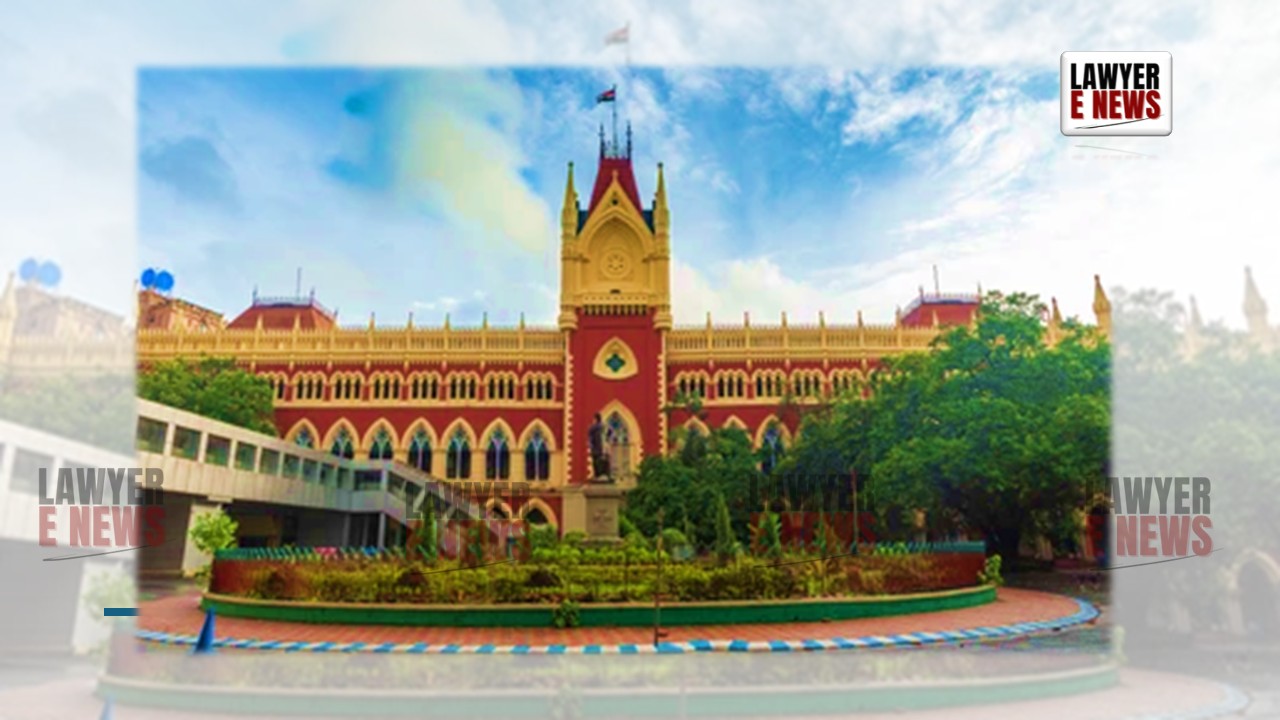
“Court Has No Business to Dictate How a Landlord Should Live” — On 15 January 2026, the High Court at Calcutta, through Justice Sugato Majumdar, delivered a significant judgment in Ratan Karmakar & Others v. Smt. Chaina Das & Others, dismissing a tenant’s second appeal and affirming the landlord’s right to recover possession of a suit premises for reasonable and bona fide requirement. The Court firmly reiterated that a landlord cannot be compelled to live in discomfort simply because the tenant has enjoyed prolonged possession.
In powerful words that capture the judicial sentiment, the Court observed:
“There is no law which deprives the landlord of the beneficial enjoyment of his property... The landlords might have been staying in a staircase room at the time of letting out the premises, but that does not mean that they have to live uncomfortably and in a particular manner perpetually.”
“Reasonable Requirement is a Living Concept, Not a Static Condition Frozen in Time”
The suit, originally filed under Section 13(1)(f) of the West Bengal Premises Tenancy Act, 1956, had been dismissed by the Trial Court on the premise that the landlord was residing in a staircase room at the time of letting, and that the suit room was not fit for habitation. However, the Appellate Court reversed that view, granted eviction on the ground of reasonable requirement, and the High Court has now affirmed that decree, holding that there was no perversity or error of law warranting interference under second appellate jurisdiction.
Justice Majumdar emphasized that reasonable requirement must be assessed with the realities of a family’s evolving needs, stating,
“Reasonable requirement varies from family to family, time to time, and situation to situation. It is always a living need of a family.”
“Commissioner’s Report Cannot Override Landlord’s Personal Necessity” – High Court Rejects Tenant’s Technical Objections
The tenant had placed heavy reliance on the reports of two Advocate Commissioners, arguing that the suit premises lacked proper ventilation and were therefore unfit for living. However, the High Court clarified the limited evidentiary value of such reports, declaring that:
“Report of the Advocate Commissioner cannot construct the need of the landlord. It is the own need of the landlord himself.”
Refusing to reduce the landlord’s claim to a checklist of structural features, the Court reiterated that the landlord is the best judge of his own needs, citing Prativa Devi v. T.V. Krishnan and Shiv Sarup Gupta v. Mahesh Chand Gupta, where the Supreme Court had firmly established that the court has no business prescribing how a landlord should live or utilise his property.
“Alternative Accommodation Must Be Reasonably Suitable, Not Just Existing”
The tenant contended that the landlords had other rooms available, and even referred to a prior residential property that was sold during the pendency of the suit. The High Court was categorical in rejecting this line of argument, holding that:
“The landlord may convince the court that the alternative residential accommodation though available is still of no consequence as the same is not reasonably suitable to satisfy the felt need.”
The Court drew support from Shiv Sarup Gupta to reinforce that the test is not mere availability, but suitability and convenience, considering the landlord’s family, business, and standard of living.
Notably, the suit premises also housed a bakery business run by the landlord in another room on the ground floor, and the landlord’s claim of needing the adjoining space was found neither fanciful nor exaggerated.
Trial Court Findings on Habitability and Past Occupation Declared Misconceived and Irrelevant
Criticising the Trial Court’s reasoning, Justice Majumdar observed that it had committed legal error by focusing excessively on physical features of the room, rather than the subjective need of the landlord.
Refuting the trial court’s conclusion that the suit room was not habitable, the High Court underlined:
“The Trial Court also decided that rooms are not habitable. This inference led to the conclusion that the premises were not reasonably required, oblivious of the fact that a business is being carried out there.”
The fact that the landlord resided in a ‘Chiley Room’ or ‘Thakurghar’ (staircase room) at the time of letting was held to be irrelevant, with the Court stating:
“This is an unreasonable presumption not warranted by law.”
“Courts Should Not Treat Landlord’s Requirement as Fiction” – High Court Reiterates Scope of Second Appeal
Dismissing all grounds raised in the second appeal, including four substantial questions of law admitted at the time of admission, Justice Majumdar ruled that there was no perversity in the Appellate Court’s judgment, and the High Court cannot reappreciate facts or evidence under Section 100 CPC.
Reaffirming the appellate court’s findings, the High Court declared: “The need for one room cannot be overemphasized. The Appellate Court considered the need of the landlord in proper perspective without being swayed by the report of the Pleader Commissioners.”
Decree for Eviction Upheld – Tenant Directed to Vacate in 60 Days
Ultimately, the High Court affirmed the eviction decree dated 30 August 2003, passed by the Additional District & Sessions Judge, Fast Track, 2nd Court, Suri, Birbhum, and ordered the tenants to hand over possession within 60 days of the drawing up of the decree.
In the event of default, the landlords were given liberty to proceed with execution. All interim applications stood disposed.
This judgment marks a strong reaffirmation of the principle that landlords are entitled to reclaim their premises for genuine and reasonable needs, and tenants cannot force them to live in discomfort simply because they had done so once before.
Date of Decision: 15 January 2026