-
by sayum
14 August 2026 3:21 PM







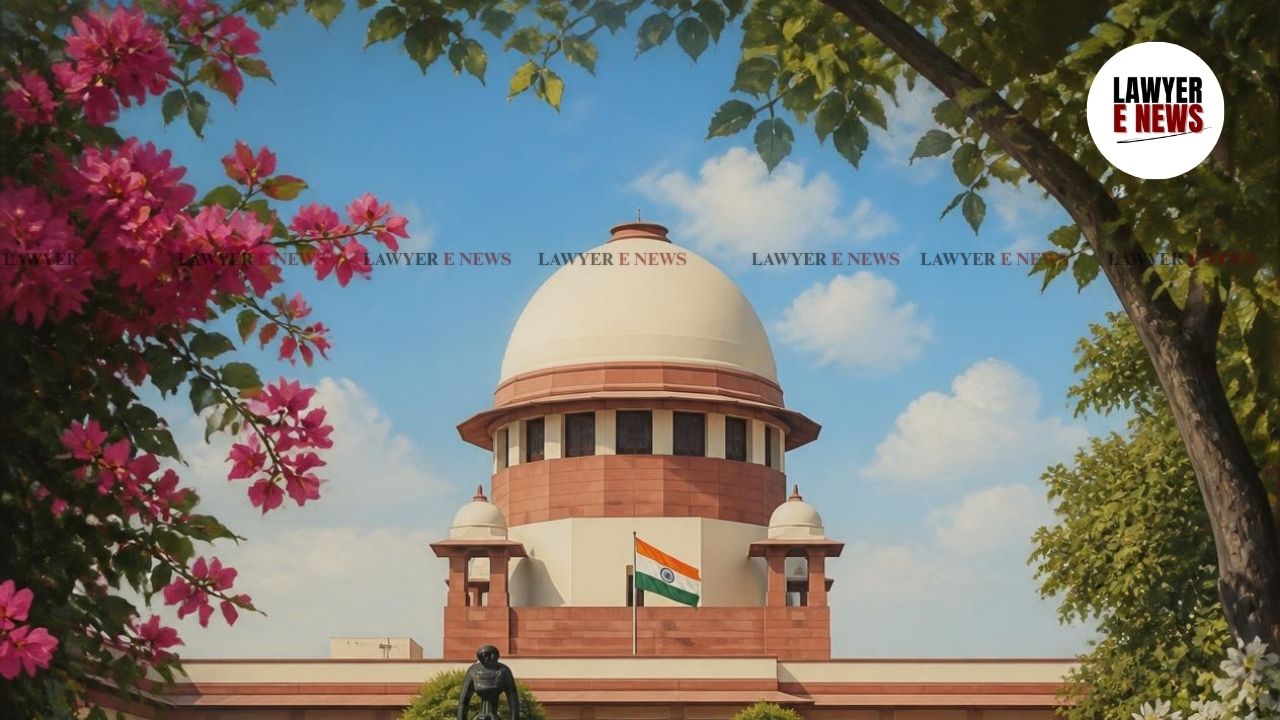
"To permit the respondent-complainant to continue in such circumstances would be to allow the appellants to remain in a state of suspended animation indefinitely." Supreme Court of India, in a significant ruling dated July 21, 2026, quashed criminal proceedings pending for over two decades under the Foreign Exchange Regulation Act (FERA), holding that the fundamental right to a speedy trial under Article 21 of the Constitution was blatantly violated.
A bench comprising Justices J.B. Pardiwala and Manoj Misra strongly deprecated the persistent and unexplained inaction of the Enforcement Directorate, observing that keeping an accused in a state of indefinite suspense fundamentally breaches the fair, just, and reasonable procedure guaranteed by the Constitution.
The case stems from a criminal complaint instituted on May 30, 2002, against Standard Chartered Bank and its officer concerning a 1991-1992 transaction allegedly violating FERA provisions. Though the Magistrate took cognizance and issued summons on the very same day, the prosecution failed to collect the summons for service for nearly two years. The appellants approached the Supreme Court after the Bombay High Court in 2012 refused to quash the proceedings under Section 482 of the CrPC, primarily holding the petition non-maintainable due to the availability of an alternate revisional remedy.
The primary question before the court was whether the appellants' fundamental right to a speedy trial under Article 21 of the Constitution was violated by the prosecution's sheer inaction in the facts and circumstances of the case. The court was also called upon to determine if a petition under Section 482 of the CrPC is barred when a revisional remedy under Section 397 exists, and whether non-compliance with the mandatory opportunity notice under FERA warrants quashing.
Right To Speedy Trial Extends To All Stages
The Supreme Court initiated its analysis by referring to the Constitution Bench judgment in A.R. Antulay v. R.S. Nayak, reaffirming that the right to a speedy trial is implicit in the fair, just, and reasonable procedure guaranteed under Article 21. The Court emphasised that this right extends to every stage of a criminal proceeding, encompassing investigation, inquiry, trial, appeal, revision, and retrial. It noted that the underlying concern is to minimise the worry, anxiety, and expense occasioned by unduly prolonged proceedings and to guard against the erosion of the accused's ability to defend themselves over time.
Prosecution Held Responsible For Decades Of Delay
Addressing the specific timeline of the case, the bench expressed shock at the lethargy of the prosecution. The court highlighted that although the complaint was filed and summons were issued in 2002 for a transaction dating back to 1991, the complainant department did not even collect the summons for service until 2004. The Court noted that for a further period of eight years, the summons could not be served upon the accused, yet the department remained entirely passive, repeatedly remaining absent from hearings and failing to seek non-bailable warrants.
"Chronicle Of Persistent And Unexplained Inaction"
The bench observed that the delay could not be attributed to the appellants or brushed aside as a mere passive lapse of time. Characterising the department's conduct, the court remarked that the record disclosed a chronicle of persistent and unexplained inaction spanning virtually the entire life of the proceedings. The court pointed out that even when the High Court fixed a one-month outer limit to conclude the trial in 2012, the complainant inexplicably declined to collect fresh notices and remained absent through an extended six-month deadline.
"Such conduct, persisting even after two express directions of the High Court fixing outer time-limits for completion of the trial, cannot be explained away as systemic delay or administrative constraint. In our opinion, it reflects a want of diligence and unwillingness to prosecute the appellants further."
Quashing Proceedings Over 'Suspended Animation'
Relying on the recent precedent in Kailash Chandra Kapri v. State of Uttar Pradesh, the Court underscored that quick and timely justice is the very sine qua non of the Article 21 constitutional guarantee. The bench stated that keeping a person in a state of suspended animation indefinitely is wholly incompatible with constitutional mandates. Concluding that twenty-three years had elapsed since the institution of the complaint without the trial progressing beyond the stage of service of summons, the Court found it deeply unjust and inequitable to permit the prosecution to continue.
Maintainability Of Section 482 CrPC Petitions
While decisively resolving the controversy on the ground of speedy trial, the court also laid down crucial legal principles regarding the High Court's inherent powers. Citing Dhariwal Tobacco Products Ltd. and Prabhu Chawla, the bench ruled that the mere availability of a revisional remedy under Section 397 of the CrPC does not operate as an absolute bar to the maintainability of a quashing petition under Section 482. The Court observed that the High Court erred in rejecting the quashing petitions on a hyper-technical threshold rather than examining the abuse of process.
Mandatory Statutory Notice Under FERA
Furthermore, the court held the entire prosecution vitiated because the respondents failed to prove compliance with the mandatory requirement of Section 61(2) of FERA. The statute demands that an accused be given an "opportunity notice" to show they possessed the requisite RBI permissions before a complaint is filed. The Court observed that this opportunity must be meaningful and adequate, not a mere technical compliance, and since no such notice was placed on record before the Magistrate, the cognizance order itself was unsustainable in law.
The Supreme Court ultimately allowed the appeals and set aside the impugned judgment of the Bombay High Court. Exercising its inherent powers to prevent the abuse of the legal process and protect the fundamental right to a speedy trial, the Court quashed the criminal complaints and the consequent summoning orders against the appellants.
Date of Decision: 21st July, 2026