Registration Of FIR Is Mandatory If Information Ex Facie Discloses Commission Of  Cognizable Offence: Supreme Court 'No Res Judicata': Supreme Court Holds Rejection Of Section 156(3) CrPC Plea Is No Bar To Subsequent Registration Of FIR Auto Dealers' Referral Charges From Banks & Insurers Constitute 'Business Auxiliary Service', But No Penalty If Tax Paid Before Show Cause Notice: Supreme Court MACT | Appellate Courts Must Liberally Admit Additional Evidence Under Order XLI Rule 27 CPC To Compute 'Just Compensation': Supreme Court MACT | Post-Accident Vehicle Position On Sketch Cannot Be Sole Basis To Infer Contributory Negligence: Supreme Court Enhances Compensation To ₹50.8 Lakhs 'Sanction Under Section 19(1)(c) PC Act Must Be Granted By Removing Authority': Supreme Court Sets Aside Conviction Mere Recovery Of Money Cannot Resurrect Prosecution Proof Of Demand Is Sine Qua: Supreme Court Lok Adalat Awards Without Signatures Of All Rival Claimants Are Invalid, Order I Rule 8 CPC Inapplicable: Supreme Court Lok Adalat Cannot Decide Title Disputes, Mere Physical Possession Doesn't Prove Ownership": Supreme Court Quashes Land Acquisition Awards Power Discoms Can't Escape Liability: Andhra Pradesh High Court Upholds Damages For Death Caused By Snapped Live Wires Lying On Ground Extra-Judicial Confessions To Village Administrative Officers Cannot Be Accepted As Gospel Truth Without Signatures And Corroboration: Madras High Court Acquits Murder Accused 'Article 21 Trumps UAPA Rigors': Allahabad High Court Grants Bail To PFI Members After 5 Years In Jail Due To 'Sluggish' Trial" Daughters Cannot Be Denied Equal Share: Orissa High Court Upholds Compensation Apportionment In Favor Of Daughters Under Hindu Succession Act Cannot Reopen Closed Chapter Years Later: Calcutta High Court Dismisses BSF Ex-Head Constable's Plea Claiming Voluntary Retirement Was Extracted Under Coercion Long-Standing Relationship And Public Recognition Prove Valid Marriage: Karnataka High Court Upholds Second Wife's Right To 1/3rd Share In Property Collector Becomes Functus Officio Once Duty Is Determined: Punjab & Haryana High Court Quashes Penalty On Stamp Duty Deficiency Eyewitness Testimony Contradicted By Medical Evidence Cannot Sustain Murder Conviction: Madhya Pradesh High Court Acquits Woman In IPC 302 Case

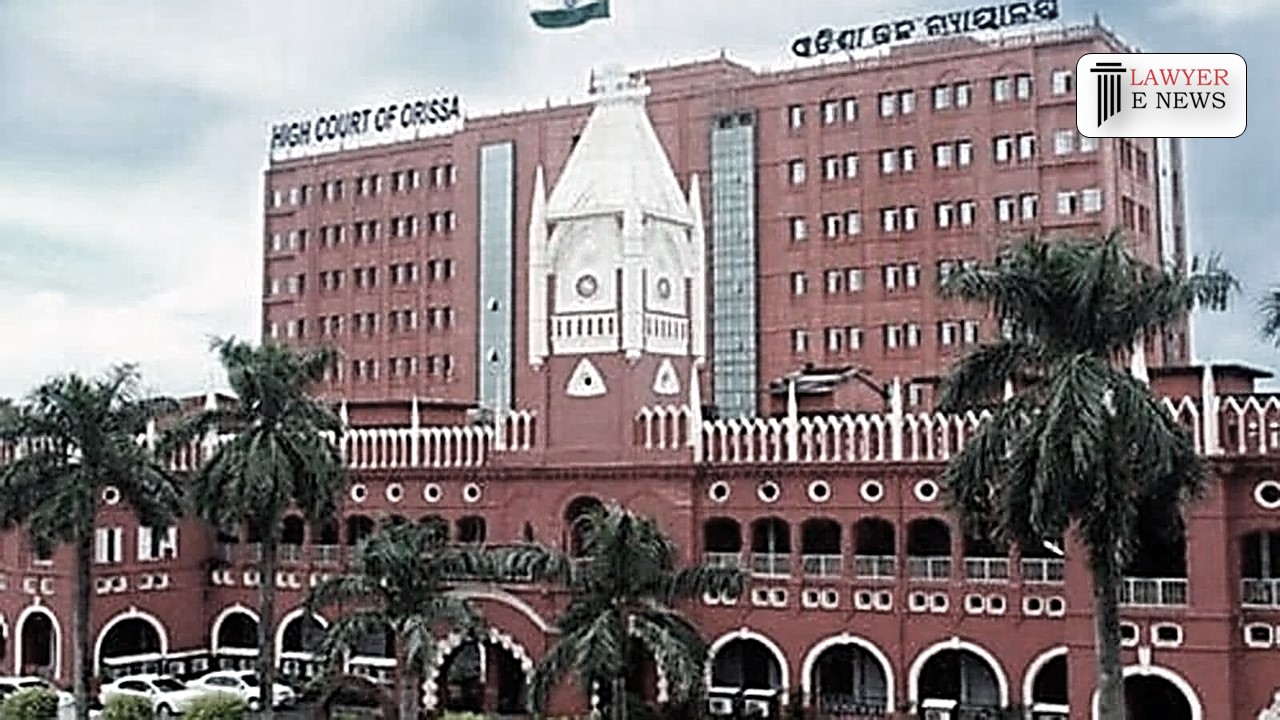
Justice Reconsidered: Orissa High Court Rules 'Heat of Passion' Mitigates Murder to Culpable Homicide

05 September 2024 6:09 AM

By: Admin


In a notable judgement on November 2, 2023, the High Court of Orissa delivered a verdict that has become a focal point of legal discussions. The appellant, Leven Kerketta, who was previously convicted under Section 302 of the IPC for the murder of the deceased, saw his conviction altered by the High Court. The bench comprising the Hon’ble Mr. Justice S.K. Sahoo and Mr. Justice Chittaranjan Dash found merit in the argument of ‘grave and sudden provocation,’ leading to a significant change in the appellant’s sentence.

The court observed, “The possibility of raising protest by the appellant to the conduct of his wife (P.W.1) and the deceased and also raising sudden quarrel cannot be ruled out.” This observation came in light of the defense’s argument that the appellant had been provoked upon seeing his wife in the company of the deceased under compromising circumstances.

The Hon’ble judges further noted, “The objective test is whether a reasonable man is likely to lose his self-control as a result of such provocation.” Based on this rationale, the court held that the appellant’s actions fell under Exception 4 to Section 300 of the IPC, leading to the modification of his conviction to Section 304 Part-II, which denotes culpable homicide not amounting to murder.

In delivering their decision, the bench also took into account the time that Kerketta had already spent in custody. They stated, “As the appellant has remained in jail custody for more than five years at different times in connection with this case and in the meantime, more than twenty-two years have already been passed since the date of occurrence and the appellant is more than sixty years of age...” This led to the reduction of his sentence to the period already undergone.

The court’s decision underscores the significance of the circumstances under which a crime is committed and opens up a dialogue on the interpretation of provocation in the eyes of the law. The case, represented by Mr. Laxmi Narayan Patel for the appellant and Mr. Sonak Mishra for the state, has thus concluded with a judgement that emphasizes the human element in legal proceedings, acknowledging the complex interplay of emotions and actions.

Date of Decision: 02.11.2023

Leven Kerketta VS State of Odisha         

Latest Legal News