CBI Can’t Prosecute When Bank Suffers No Loss: Andhra Pradesh High Court Discharges Bhimavaram Hospitals Directors in ₹1.5 Crore SBI Case Section 256 CrPC Cannot Be A Shield For An Accused Who Never Faced Trial: Allahabad High Court Restores 8 Cheque Bounce Complaints Minimum Wages Cannot Be Ignored While Determining Just Compensation: Andhra Pradesh High Court Re-Fixes Income of Deceased Mason, Enhances Interest to 7.5% 34 IPC | Common Intention Is Inferred From Manner Of Attack, Weapons Carried And Concerted Conduct: Allahabad High Court Last Date of Section 4 Publication Is Crucial—Error in Date Cannot Depress Market Value: Bombay High Court Enhances Compensation in Beed Land Acquisition Appeals Order 26 Rule 10-A CPC | Rarest of Rare: When a Mother Denies Her Own Child: Rajasthan High Court Orders DNA Test to Decide Maternity Acquittal Is Not a Passport Back to Uniform: Punjab & Haryana High Court Upholds Dismissal of Constable in NDPS Case Despite Trial Court Verdict Limitation Under Section 468 Cr.P.C. Cannot Be Ignored — But Section 473 Keeps the Door Open in the Interest of Justice: P&H HC Non-Stamping Renders A Document Inadmissible, Not Void – Defect Is Curable Once Duty Is Paid: Punjab & Haryana High Court Upholds Specific Performance MP High Court Upholds Ladli Behna Yojana Criteria; Rules Registration Deadlines and Age Limits Fall Under Executive Domain Criminal Courts Are Not Recovery Agents: Orissa High Court Grants Bail in ₹3.5 Crore Land Fraud Cases Citing Article 21 and Terminal Illness Employee Cannot Switch Cadre At His Sweet Will After Accepting Promotion: J&K High Court Rejects Claim For Retrospective Assistant Registrar Appointment Anticipatory Bail Cannot Expire With Charge-Sheet: Supreme Court Reiterates Liberty Is Not Bound by Procedural Milestones Order II Rule 2 Cannot Eclipse Amendment Power Under Order VI Rule 17: MP High Court Refuses to Stall Will-Based Title Suit Grounds of Arrest Must Be Personal, Not Formal – But Detailed Allegations Suffice: Kerala High Court Upholds Arrest in Sabarimala Gold Misappropriation Case Grounds of Arrest Are Not a Ritual – They Are a Constitutional Mandate Under Article 22(1): Allahabad High Court Sets Aside Arrest for Non-Supply of Written Grounds Sect. 25 NDPS | Mere Ownership Cannot Fasten NDPS Liability – ‘Knowingly Permits’ Must Be Proved Beyond Reasonable Doubt: MP High Court Section 308 CrPC | Revocation of Pardon Is Not Automatic on Prosecutor’s Certificate: Karnataka High Court Joint Family and Ancestral Property Are Alien to Mohammedan Law: Gujarat High Court Sets Aside Injunction Right to Health Cannot Wait for Endless Consultations: Supreme Court Pulls Up FSSAI Over Delay in Front-of-Pack Warning Labels If A Son Dies Intestate Leaving Wife And Children, The Mother Has No Share: Karnataka High Court

Justice Prevails for Train Accident Victim’s Widow: High Court Awards Rs. 8 Lakhs Compensation

07 May 2024 8:19 AM

By: Admin


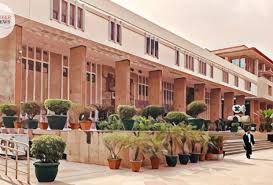
In a landmark judgment, the Delhi High Court, led by Justice Dharmesh Sharma, has set a precedent in the case of train accident compensation. The Court has overturned the previous decision by the Railway Claims Tribunal (RCT) and awarded a compensation of Rs. 8 lakhs to Rukmani, the widow of the deceased Moti Chand, who tragically lost his life in a train accident.

The judgment, pronounced on November 17, 2023, comes after a careful consideration of the case, where the appellant’s plea was previously dismissed by the RCT. Justice Sharma, in his ruling, emphasized the importance of credible witness testimony and the analysis of post-mortem reports in such cases. He noted, “The nature of injuries were commensurating from accidental fall from a train,” highlighting the consistency of the injuries with the alleged accident.

The case revolved around the death of Moti Chand, who was involved in a train accident on October 19, 2016. The RCT had initially dismissed the compensation claim on grounds of insufficient evidence proving that Chand was a bona fide passenger. However, the High Court, upon reevaluation of the witness’s testimony and the post-mortem report, found substantial evidence supporting the claim that the deceased was indeed a bona fide passenger and had met with an ‘untoward incident’, as defined under the Railways Act.

Justice Sharma’s ruling further stated, “It is probable that the rail ticket might have fallen out of the pockets probably on account of the impact of jerks due to the momentum of the body on its fall on the rail tracks.” This observation was crucial in understanding the circumstances of the accident and the absence of a ticket on the deceased’s body.

The compensation includees an interest of 9% per annum from the date of the incident until the date of the judgment. Additionally, the RCT has been directed to deposit the compensation amount within four weeks. In case of failure, the appellant is entitled to an interest on the claim amount from the date of this judgment till realization.

Date of Decision: 17 November 2023

RUKMANI  VS UNION OF INDIA 

Latest Legal News