-
by sayum
26 August 2026 12:18 PM







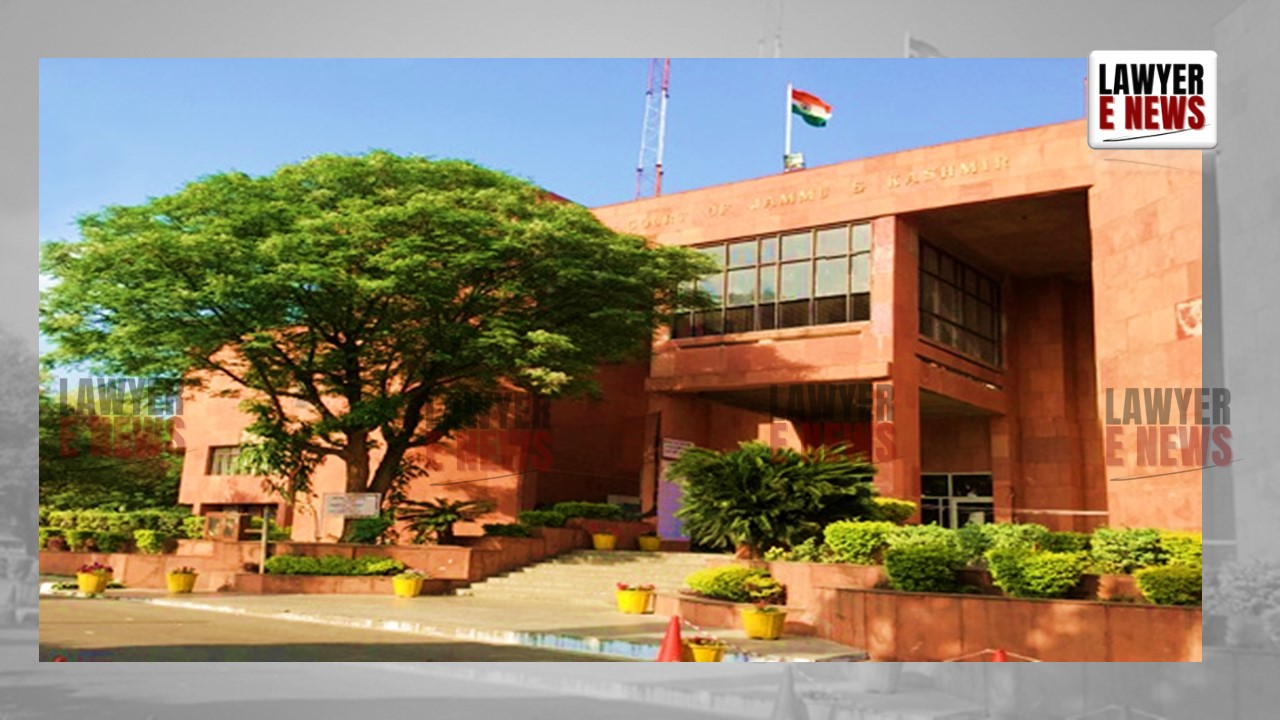
High Court of Jammu & Kashmir and Ladakh rules CJM Jammu lacked jurisdiction in insurance claim dispute, emphasizing the civil nature of such cases.
The High Court of Jammu & Kashmir and Ladakh at Jammu has quashed an FIR against Bajaj Allianz General Insurance Company Ltd., ruling that the Chief Judicial Magistrate (CJM) of Jammu lacked jurisdiction in the matter. The judgment, delivered by Justice Sanjay Dhar, emphasizes that disputes arising from insurance claims are fundamentally civil and should not be given a criminal character.
The case originated from a complaint filed by Kuldeep Kour, whose son, Inder Pal Singh, died in Switzerland in March 2013. Prior to his trip, Inder Pal Singh, along with his family members, had obtained an insurance policy from Bajaj Allianz, covering medical expenses, evacuation, and repatriation of remains. Despite repeated requests from Singh’s brother for financial assistance due to Singh’s deteriorating health, the insurance company allegedly failed to act, resulting in his death. Post his death, the insurance company refused the claim, stating that the insurance was canceled before the trip. Kuldeep Kour alleged forgery and conspiracy by the insurance company, leading to the registration of FIR No.79/2013 for offenses including culpable homicide not amounting to murder, cheating, and forgery.
Jurisdictional Issues: The court meticulously analyzed the jurisdictional aspects, determining that the CJM, Jammu, did not have the authority to entertain the complaint filed by the respondent. “Neither any event nor its consequence has taken place within the territorial limits of either CJM or within the territorial limits of Police Station, Gandhi Nagar, Jammu,” Justice Dhar stated. This lack of jurisdiction rendered the FIR and the subsequent investigation by the Gandhi Nagar police station invalid.
Nature of the Dispute: Addressing the core of the dispute, the court emphasized the civil nature of the insurance claim. The complaint revolved around non-payment of an insurance policy claim following the death of Inder Pal Singh in Switzerland. The court noted, “The transaction between the insurer and the insured is purely contractual in nature. If any of the parties to this contract defaults in honouring its commitment, it cannot form a basis for launching a criminal prosecution.”
Justice Dhar highlighted Supreme Court precedents to support the ruling. Citing G. Sagar Suri And Anr vs State Of UP. And Ors (2000) and Indian Oil Corporation vs NEPC India Limited (2006), the judgment reiterated that civil disputes should not be converted into criminal cases to expedite resolution. “The Supreme Court has time and again expressed its disapproval for imparting criminal colour to a civil dispute,” Justice Dhar remarked.
“The order whereby the learned CJM, Jammu, has directed the SHO to register the impugned FIR and investigate the same is, therefore, without jurisdiction and is liable to be set aside,” stated Justice Dhar. Furthermore, the court observed, “Merely because, on the basis of non-payment of compensation under the insurance policy to the complainant, her son breathed his last, it cannot be stated that the petitioner-company was, in any manner, responsible for his death.”
The High Court’s decision to quash the FIR against Bajaj Allianz is a landmark judgment that reinforces the separation of civil and criminal jurisdictions in disputes arising from contractual obligations. By nullifying the criminal proceedings, the court has underscored the need to handle insurance claim disputes within the appropriate legal framework. This ruling is expected to serve as a precedent, discouraging the misuse of criminal prosecution in civil matters.
Date of Decision: 24th May 2024