Renewal Is Not Extension Unless Terms Are Fixed in Same Deed: Bombay High Court Strikes Down ₹64.75 Lakh Stamp Duty Demand on Nine-Year Lease Fraud Vitiates All Solemn Acts—Appointment Void Ab Initio Even After 27 Years: Allahabad High Court Litigants Cannot Be Penalised For Attending Criminal Proceedings Listed On Same Day: Delhi High Court Restores Civil Suit Dismissed For Default Limited Permissive Use Confers No Right to Expand Trademark Beyond Agreed Territories: Bombay High Court Enforces Consent Decree in ‘New Indian Express’ Trademark Dispute Assam Rifles Not Entitled to Parity with Indian Army Merely Due to Similar Duties: Delhi High Court Dismisses Equal Pay Petition Conspiracy Cannot Be Presumed from Illicit Relationship: Bombay High Court Acquits Wife, Affirms Conviction of Paramour in Murder Case Bail in NDPS Commercial Quantity Cases Cannot Be Granted Without Satisfying Twin Conditions of Section 37: Delhi High Court Cancels Bail Orders Terming Them ‘Perversely Illegal’ Article 21 Rights Not Absolute In Cases Threatening National Security: Supreme Court Sets Aside Bail Granted In Jnaneshwari Express Derailment Case A Computer Programme That Solves a Technical Problem Is Not Barred Under Section 3(k): Madras High Court Allows Patent for Software-Based Data Lineage System Premature Auction Without 30-Day Redemption Violates Section 176 and Bank’s Own Terms: Orissa High Court Quashes Canara Bank’s Gold Loan Sale Courts Can’t Stall Climate-Resilient Public Projects: Madras High Court Lifts Status Quo on Eco Park, Pond Works at Race Club Land No Cross-Examination, No Conviction: Gujarat High Court Quashes Customs Penalty for Violating Principles of Natural Justice ITAT Was Wrong in Disregarding Statements Under Oath, But Additions Unsustainable Without Corroborative Evidence: Madras High Court Deduction Theory Under Old Land Acquisition Law Has No Place Under 2013 Act: Punjab & Haryana High Court Enhances Compensation for Metro Land Acquisition UIT Cannot Turn Around After Issuing Pattas, It's Estopped Now: Rajasthan High Court Private Doctor’s Widow Eligible for COVID Insurance if Duty Proven: Supreme Court Rebukes Narrow Interpretation of COVID-Era Orders Smaller Benches Cannot Override Constitution Bench Authority Under The Guise Of Clarification: Supreme Court Criticises Judicial Indiscipline Public Premises Act, 1971 | PP Act Overrides State Rent Control Laws for All Tenancies; Suhas Pophale Overruled: Supreme Court Court Has No Power To Reduce Sentence Below Statutory Minimum Under NDPS Act: Supreme Court Denies Relief To Young Mother Convicted With 23.5 kg Ganja Non-Compliance With Section 52-A Is Not Per Se Fatal: Supreme Court Clarifies Law On Sampling Procedure Under NDPS Act MBA Degree Doesn’t Feed the Stomach: Delhi High Court Says Wife’s Qualification No Ground to Deny Maintenance POCSO Presumption Is Not a Dead Letter, But ‘Sterling Witness’ Test Still Governs Conviction: Bombay High Court High Courts Cannot Routinely Entertain Contempt Petitions Beyond One Year: Madras High Court Declines Contempt Plea Filed After Four Years Courts Cannot Reject Suit by Weighing Evidence at Threshold: Delhi High Court Restores Discrimination Suit by Indian Staff Against Italian Embassy Improvised Testimonies and Dubious Recovery Cannot Sustain Murder Conviction: Allahabad High Court Acquits Two In Murder Case Sale with Repurchase Condition is Not a Mortgage: Bombay High Court Reverses Redemption Decree After 27-Year Delay Second Transfer Application on Same Grounds is Not Maintainable: Punjab & Haryana High Court Clarifies Legal Position under Section 24 CPC Custodial Interrogation Is Not Punitive — Arrest Cannot Be Used as a Tool to Humiliate in Corporate Offence Allegations: Delhi High Court Grants Anticipatory Bail Partnership Act | Eviction Suit by Unregistered Firm Maintainable if Based on Statutory Right: Madhya Pradesh High Court Reasonable Grounds Under Section 37 of NDPS Act Cannot Be Equated with Proof; They Must Reflect More Than Suspicion, But Less Than Conviction: J&K HC Apprehension to Life Is a Just Ground for Transfer When Roots Lie in History of Ideological Violence: Bombay High Court Transfers Defamation Suits Against Hamid Dabholkar, Nikhil Wagle From Goa to Maharashtra

Interim Bail To Father Kotur And Sister Safi Convicted In Sister Abhaya Murder Case: Kerala HC

07 May 2024 8:19 AM

By: Admin


D.D: 23 JUNE 2022

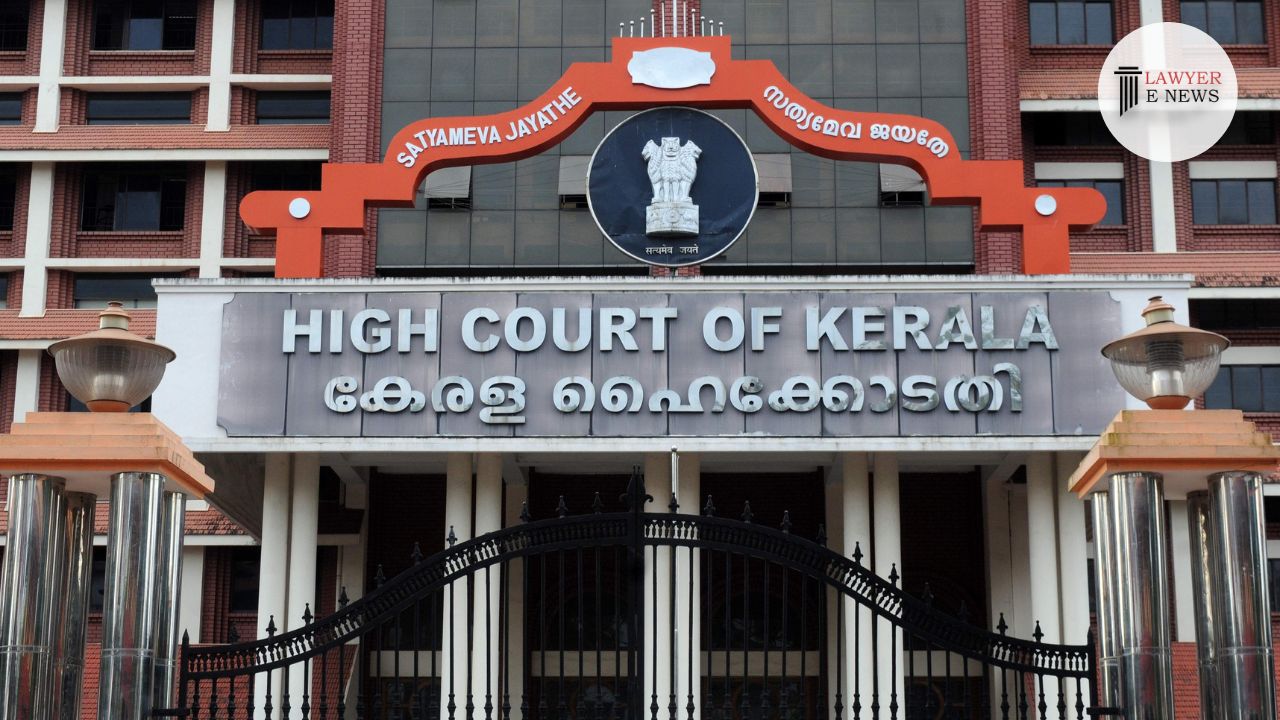
Thursday, the Kerala High Court granted Father Thomas Kottoor and Sister Sephy's petition to suspend their sentence in the notorious Sister Abhaya case [Father Thomas Kottoor v. Central Bureau of Investigation].

A division bench comprised of Justices K Vinod Chandran and C Jayachandran issued the order granting them interim bail on the condition that they post 5 lakh in cash and two sureties in the same amount.

The order stated, "On the basis of the evidence presented by the defence and not effectively refuted by the prosecution, we cannot but release the two accused as an interim measure, suspending their sentence pending the outcome of their appeal."

The court has imposed the following conditions:

The petitioners/ accused shall be released on bail upon execution of a bond for 5,00,000 each with two solvent sureties, each in the like amount, to the satisfaction of the trial court; If the conviction and sentence of the petitioners/ appellants is upheld or even modified, the time during which they were so released shall be excluded in computing the term of their sentence as provided in Section 389(4) of the Code of Criminal Procedure (CrPC); They shall not indulge in any other criminal activity.

A CBI Judge in Thiruvananthapuram convicted Kottoor and Sister Sephy, a nun from Pius Convent Kottayam, in December 2020 for the murder of 20-year-old nun Sister Abhaya.

They were subsequently sentenced to life in prison and ordered to pay a 5 lakh fine each. Additionally, Father Kottoor was ordered to pay 1 lakh for house trespass.

Sister Abhaya was discovered murdered in a convent in the Kottayam district of Kerala more than 28 years prior to the CBI Court's decision.

Her body was discovered in the convent's well on March 27,1992. Before it was finally tried in court, the case underwent a number of unexpected turns.

In 1993, the State police filed a report concluding that it was a suicide. The case was then transferred to the CBI after activist Jomon Puthenpurackal filed a lawsuit.

In 1996, however, the CBI filed a report stating that it was unable to determine whether the death was a homicide or a suicide. However, the court rejected the same and ordered a new investigation.

A year later, the CBI determined that the case was indeed a homicide, but there was insufficient evidence to proceed with the trial.

This was again rejected by the court, and a third CBI investigation commenced.

In 2008, Father Thomas Kottoor, Father Jose Poothrukayil, and Sister Sephy were arrested and charged with murder, ten years after the first arrests in the case.

In 2009, the Kerala High Court granted them bail, and Poothrukayil was released.

The verdict was rendered by the CBI court in accordance with an order from the Kerala High Court that criticised the delay and directed that the case be heard daily.

The CBI court's judgement stated, "The evidence on file is more than sufficient to conclude that the unbroken chain of circumstances cumulatively points to the guilt of the accused, leading to a conclusion inconsistent with the accused's innocence."

In January 2021, a Division Bench of the Kerala High Court accepted the appeal filed by Father Kottoor.

In the appeal, it was argued that the trial court's decision was tainted by grave illegalities and was based on "unconnected storey circumstances culled from unreliable solitary witnesses," referring to the key witness Adakka Raju.

THOMAS KOTTOOR

Versus

STATE OF KERALA

 

Latest Legal News