-
by sayum
24 August 2026 2:46 PM







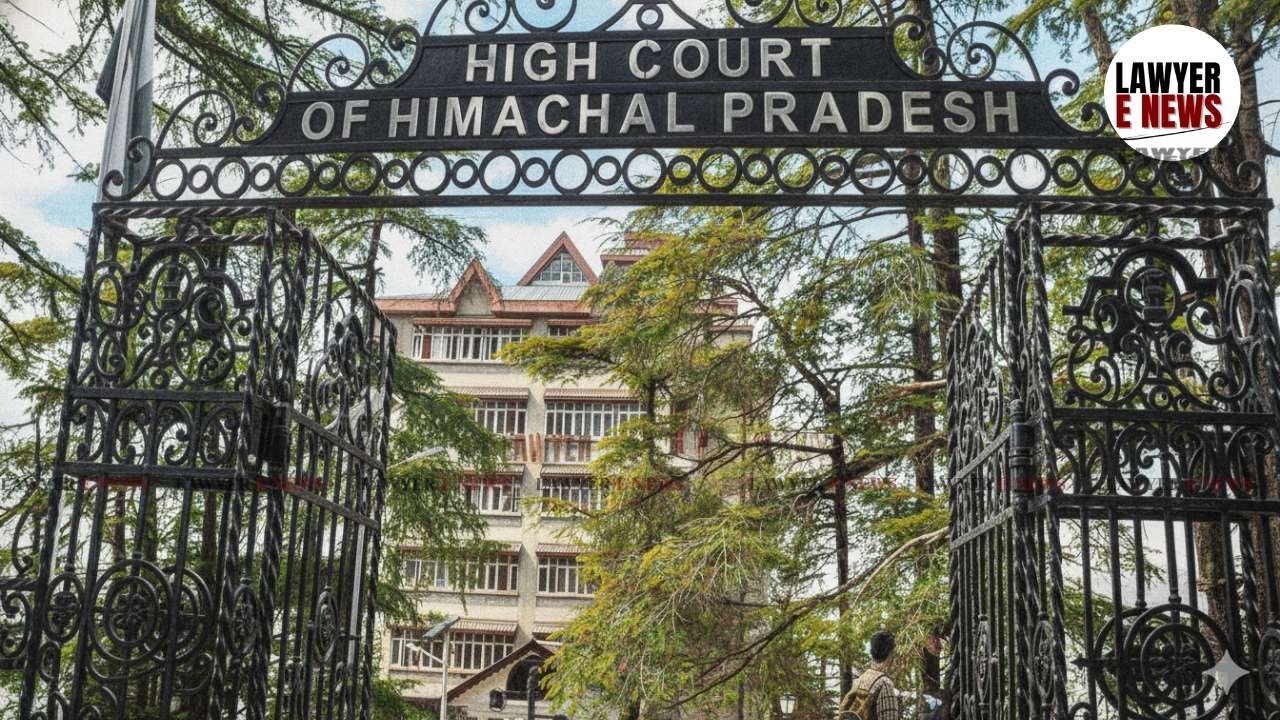
“Absolute scrupulousness in the process rejuvenates faith of the public… Any act of impersonation damages this trust irreparably” – In a strongly worded judgment reinforcing the sanctity of recruitment examinations, the Himachal Pradesh High Court refused anticipatory bail to a candidate accused of abetting impersonation in a government recruitment examination.
Justice Rakesh Kainthla held that anticipatory bail is not a matter of right, especially in cases involving fraud in public employment processes, and reiterated that public interest outweighs individual liberty when fairness of examinations is under attack.
The Court found that prima facie, the impersonation could not have occurred “without the petitioner’s complicity”, noting that another person was caught appearing in the exam using Aalok Sharma’s roll number, admit card, and forged identity. The FIR, registered under Sections 318(4) and 319(2) of the Bharatiya Nyaya Sanhita, 2023, alleged a deliberate act of cheating and abetment, both punishable with imprisonment up to seven years.
“The presumption of innocence cannot override the public’s right to a fair recruitment process”
The Court drew strength from a string of recent Supreme Court decisions, particularly State of Rajasthan v. Indraj Singh, 2025 SCC OnLine SC 518, where it was categorically held that persons involved in cheating or impersonation in public examinations are not entitled to bail.
Citing the Apex Court, Justice Kainthla observed:
“Each act, such as the one allegedly committed by the respondent, represents possible chinks in the faith of the people in the public administration and the executive... The benefit of bail is not to be extended when the public recruitment process is compromised.”
Rejecting the plea for anticipatory bail, the Court added that “scrupulous adherence to the examination process is essential to preserve meritocracy and public confidence”, and held that release at this stage would not only undermine the ongoing investigation but also send the wrong message regarding the integrity of recruitment systems.
“Grant of pre-arrest bail is not a rule, but an exception” – Court applies strict tests for anticipatory bail
The Court reaffirmed that anticipatory bail under Section 438 CrPC is an extraordinary remedy, not meant for routine use, especially in cases that directly “interfere with public justice and institutional trust”. It cited with approval the ruling in P. Chidambaram v. Directorate of Enforcement, where the Supreme Court cautioned that:
“The privilege of pre-arrest bail should be granted only in exceptional cases… such protection must not interfere with the sphere of investigation.”
The Court similarly referred to Srikant Upadhyay v. State of Bihar, 2024 SCC OnLine SC 282, where the Apex Court held that anticipatory bail must be granted only after careful examination of the possibility of tampering with evidence or impeding investigation.
In the present case, CCTV footage, documentary evidence, and the seizure of documents were said to establish a prima facie case of impersonation, and the Court observed:
“Jatin Kumar could not have accessed the petitioner’s admit card and roll number unless it was handed to him. These facts cannot be brushed aside as coincidence.”
"Parity principle doesn’t extend to anticipatory bail" – Co-accused’s bail not a ground for pre-arrest relief
The petitioner’s counsel attempted to invoke the principle of parity, pointing out that the co-accused Jatin Kumar had been granted regular bail. However, the Court rejected this submission outright, holding:
“Considerations for the grant of pre-arrest bail and regular bail are materially different... The grant of regular bail post-arrest does not entitle a co-accused to pre-arrest protection.”
The Court emphasized that anticipatory bail cannot be claimed merely on the basis of the sentence prescribed for the offence, nor can it rest on presumptions of innocence, especially when investigation is ongoing and the petitioner is absconding.
Court underscores investigative necessity and public interest in refusing bail
In concluding the order, the Court stressed that allowing anticipatory bail at this stage would obstruct a fair investigation, particularly in a case where the petitioner had not cooperated with the police and had failed to appear despite multiple notices. The Court concluded:
“The investigation is continuing, and releasing the petitioner on pre-arrest bail will interfere with the fair investigation… Over-solicitous homage to the accused’s liberty can, sometimes, defeat the cause of public justice.”
The petition was accordingly dismissed, reinforcing the legal position that crimes undermining the fairness of public examinations warrant a strict judicial approach.
Date of Decision: January 16, 2026