-
by sayum
18 October 2026 12:12 PM







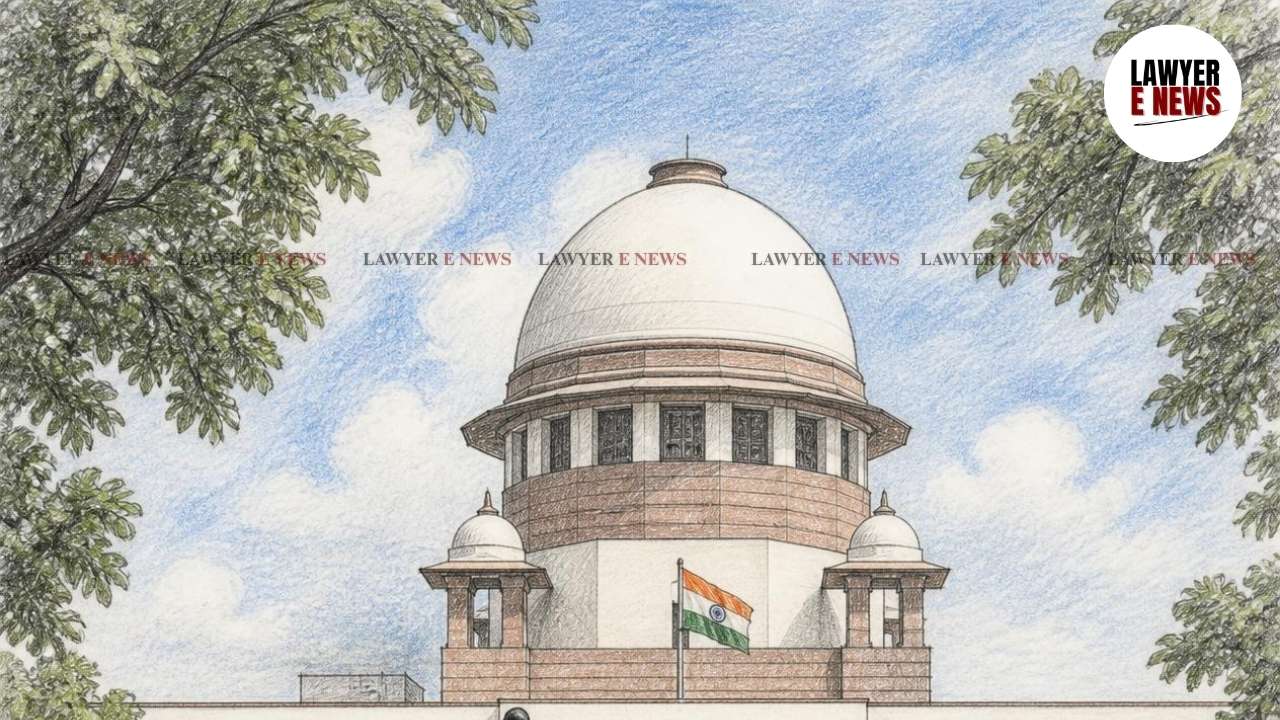
"The primary concern is that whoever commits any offence under the relevant Statues, both the MMDR Act as well as the Forest Act and the general penal Statutes of the country, is liable to be prosecuted thereunder." Supreme Court, in an order dated October 5, 2026, held that any entity or individual committing offences under special environmental and mining statutes, including the Mines and Minerals (Development and Regulation) Act, 1957 (MMDR Act) and the Indian Forest Act, 1927, must be prosecuted alongside general penal offences under the Indian Penal Code, 1860 (IPC).
A bench comprising Justice Ahsanuddin Amanullah and Justice Manmohan directed the State of Maharashtra to conduct further investigation into statutory violations regarding unauthorized excavation for public projects and submit a supplementary chargesheet before the trial court.
The petitioners, who owned land in Maharashtra, alleged that private contractors executing the Nagpur-Mumbai Expressway project illegally excavated earth, gravel, and trees from their private land as well as adjacent forest land without authorization or statutory permits. Although an FIR was registered on their complaint, the investigating agency filed a chargesheet solely under provisions of the IPC, omitting violations under the MMDR Act and the Forest Act. The High Court of Judicature at Bombay at Nagpur Bench dismissed their writ petition seeking a CBI inquiry, leaving it to the trial court to invoke Sections 216 and 319 of the Code of Criminal Procedure, 1973 (CrPC) if evidence emerged, prompting the appeal to the top court.
The primary question before the court was whether the investigating machinery could confine prosecution to general offences under the IPC when specific statutory violations under the MMDR Act and the Forest Act were disclosed on the factual matrix. The court was also called upon to decide whether the statutory powers of the trial court under Sections 216 and 319 CrPC could substitute a comprehensive investigation by the police at the pre-trial stage.
Liability Under Special Statutes Cannot Be Bypassed
Addressing the omission of statutory offences in the original chargesheet, the bench observed that the issues raised concerning environmental degradation and unauthorized mineral extraction held paramount significance. The court stressed that statutory enactments intended to preserve forest land and regulate mineral extraction cannot be subordinated to general criminal law provisions.
"The primary concern is that whoever commits any offence under the relevant Statues, both the MMDR Act as well as the Forest Act and the general penal Statutes of the country, is liable to be prosecuted thereunder."
State Directed To Re-Examine Offences And File Supplementary Chargesheet
The bench took into consideration the stand taken by the Additional Public Prosecutor before the High Court that the non-invocation of Section 23 of the MMDR Act would be examined, and a supplementary chargesheet could be filed if warranted. The court emphasized that it was primarily the duty of the investigating agency, rather than the trial judge alone, to place all relevant statutory offences on record.
The court accordingly clarified that the State of Maharashtra must actively assess the entire spectrum of offences committed by the accused companies and their directors. The bench directed the State authorities to do the needful by carrying out further investigation and submitting a supplementary chargesheet before the trial court to ensure complete prosecution under both general and special laws.
Landowners Granted Liberty To Adduce Evidence In Criminal Trial
Recognizing the distinct injury suffered by private landowners whose property was subjected to unauthorized commercial exploitation, the bench expanded the procedural participation of the victims during the trial stage.
"We further give liberty to the petitioners to participate in the trial and to adduce evidence because of the fact that from their land also, the earth has been excavated."
Six-Month Sunset Clause Imposed On Pending High Court Stays
The Supreme Court took serious note of parallel pending proceedings before the Nagpur Bench of the Bombay High Court, including Writ Petition No. 415 of 2020, Criminal Application No. 372 of 2020, and Writ Petition No. 2185 of 2020, wherein interim stay orders were operating in favour of the contractor firm. The bench requested the High Court to dispose of these matters expeditiously within six months.
The court explicitly mandated that if the High Court fails to conclude the proceedings within the stipulated six-month window, any interim stay granted in those matters shall automatically stand vacated. Given that witness examination had already commenced before the Trial Court, the bench directed the State of Maharashtra to take all necessary consequential steps without delay.
The Supreme Court disposed of the Special Leave Petition by ensuring that environmental and mining violations under the MMDR Act and Forest Act are actively integrated into the ongoing criminal prosecution via a supplementary chargesheet. The ruling firmly establishes that investigating agencies cannot ignore special penal statutes in infrastructure disputes and guarantees aggrieved landholders a right of evidentiary participation in the criminal trial.
Date of Decision: 05 October 2026