-
by sayum
24 August 2026 3:22 PM







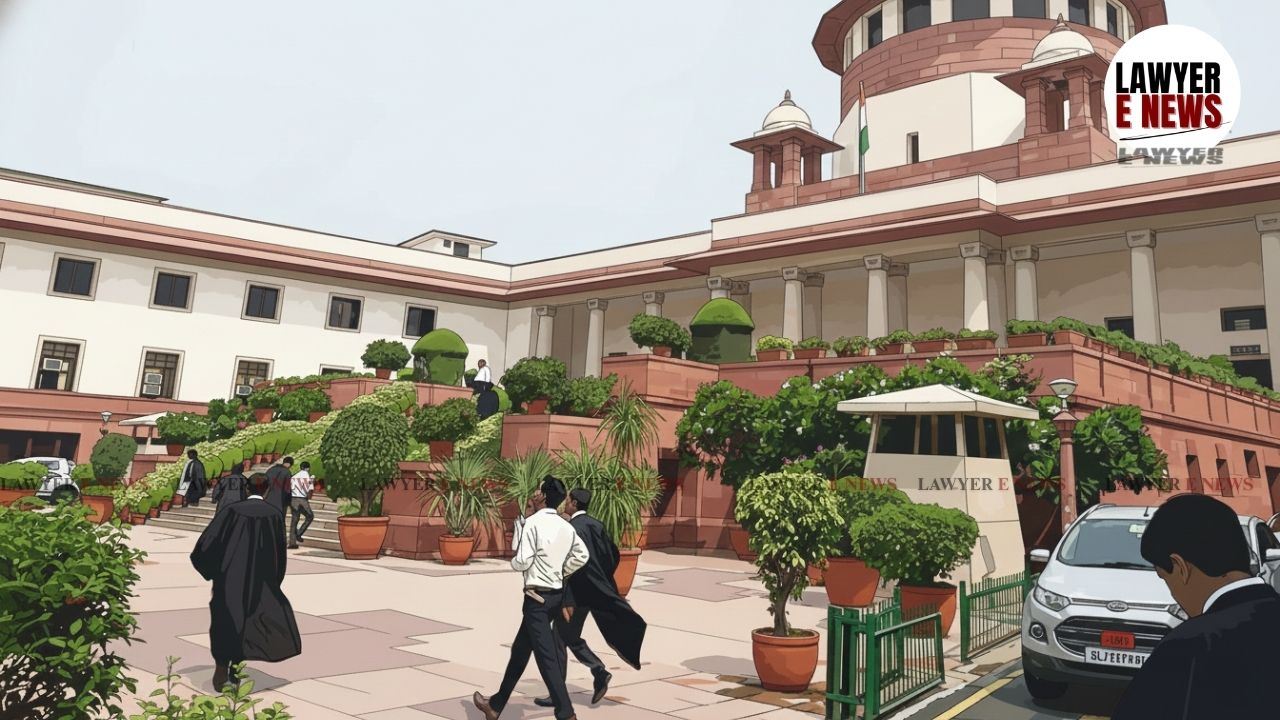
“IBC Is Not a Refuge for Non-Performing Developers”— Supreme Court Declares No Asset Survives After Lawful Termination of Rights Before Insolvency. In a path-breaking decision delivered on 28 November 2025, the Supreme Court of India ruled that a lawfully terminated development agreement does not constitute an “asset” under the Insolvency and Bankruptcy Code (IBC) and hence cannot be shielded by the moratorium under Section 14 of the Code.
The Court refused to stall the redevelopment of a dilapidated cooperative housing society in Bandra, Mumbai, where the original developer — now undergoing insolvency — sought to block fresh construction under the guise of alleged “development rights”. The Bench, comprising Justice J.B. Pardiwala and Justice R. Mahadevan, upheld the Bombay High Court’s directions allowing the Society to proceed with a new developer, holding:
“These agreements do not constitute assets or property of the corporate debtor. No proprietary, possessory or enforceable right survived on the insolvency commencement date.”
“Moratorium Under IBC Does Not Enlarge Rights That Have Already Lapsed”— SC Dismantles Developer’s Attempt to Resurrect Cancelled Contract
The Supreme Court was hearing an appeal against the Bombay High Court’s order directing authorities to grant statutory permissions to Tri Star Developers LLP, appointed by Kher Nagar Sukhsadan Co-operative Housing Society Ltd. after it terminated the previous redevelopment agreement with A A Estates Pvt. Ltd., the now-insolvent original developer.
The developer, through its Resolution Professional, argued that its development rights were “assets” protected by the IBC’s Section 14 moratorium. The Society responded that the agreement had been lawfully terminated long before insolvency began, and thus no rights subsisted.
In rejecting the developer’s claim, the Court made a clear distinction between ongoing and extinguished contractual rights, holding:
“Section 14 is not intended to protect expectant, contingent, or inchoate rights. It protects only such property which belongs to the corporate debtor at the time of commencement of insolvency.”
The Court observed that the corporate debtor had never even taken possession, never started demolition or construction, and had defaulted on rent payments to the residents for over a decade. Termination was issued after multiple extensions and final notices in 2019 and 2021 — all well before insolvency proceedings began in 2022.
“Housing Societies Are Not Hostages to Developer Insolvency”— SC Restores Balance Between Urban Redevelopment and Commercial Recovery
The Court reaffirmed that cooperative housing societies, as owners of the land, retain the right to protect their members, and cannot be indefinitely tied to a non-performing builder merely because insolvency proceedings have begun. Citing the landmark ruling in Gujarat Urja Vikas Nigam v. Amit Gupta, the Court distinguished between contracts terminated “solely on the ground of insolvency” and those terminated due to long-standing non-performance.
“The redevelopment agreement was not the lifeblood of the corporate debtor. It was not central to the insolvency process, and its termination did not arise from the fact of insolvency.”
The Bench warned against an expansive reading of “moratorium” that could undermine the interests of residents and block legitimate urban renewal. It reiterated that writ jurisdiction of the High Court under Article 226 remains untouched, especially where public authorities are reluctant to act due to confusion around the IBC.
“The High Court merely directed statutory bodies to consider applications for redevelopment in accordance with law. It did not decide contractual disputes or step into the NCLT’s domain.”
“Development Rights Without Possession or Progress Are Not Assets”— SC Explains What Truly Falls Within Section 3(27) of IBC
The Court clarified what qualifies as an “asset” under IBC, especially in real estate and redevelopment contexts. Referring to its earlier decisions in Sushil Kumar Agarwal v. Meenakshi Sadhu and Victory Iron Works Ltd., the Court held that development rights under a terminated agreement, without possession, performance, or registered interests, do not constitute “assets” within the meaning of Section 3(27) of the IBC.
“No work was ever commenced, no possession given, no rights crystallised. These are not ‘property’ for purposes of moratorium — they are lapsed contractual expectations.”
The developer’s reliance on past SLP dismissals was also firmly rejected, with the Court reiterating that:
“Dismissal of an SLP without reasons does not create binding precedent. It binds only the parties and not future interpretation of law.”
“IBC Cannot Be Used As a Legal Trap to Delay Rehabilitation of Citizens”— Supreme Court Reasserts Human-Centric View of Urban Law
In a powerful closing, the Supreme Court addressed the larger social dimension of the case, where 60 families, many from low-income backgrounds, had lived in fear of collapse for over a decade due to the non-performance of the developer. The Court refused to let the IBC become a legal weapon to prolong their suffering:
“The IBC was never intended to be used as a shield for non-performance at the cost of human rehabilitation. The law must balance commercial rights with the right to housing and human dignity.”
“The corporate debtor cannot indefinitely paralyze redevelopment while contributing neither money nor progress. The residents’ right to safe housing must prevail over speculative commercial claims.”
The Court upheld the High Court’s direction to authorities to process redevelopment permissions within two months, while permitting the RP to separately pursue claims for alleged expenses, if any, under the appropriate legal framework.
Supreme Court Denies IBC Protection to Dormant, Forfeited Development Agreements
The Supreme Court’s judgment is a landmark precedent on the scope of Section 14 IBC in real estate and redevelopment disputes. It has decisively clarified that:
This ruling is expected to bring relief to hundreds of stalled housing societies across Mumbai and other urban centers, where redevelopment is blocked by defunct or insolvent developers invoking moratorium protection. The Supreme Court has made it clear — “Insolvency cannot become an excuse to deny rehabilitation.”
Date of Decision: 28 November 2025