Electricity Act 2003 | Section 56(2) Does Not Preclude Licensee From Raising Supplementary Demand After Two Years; Only Restricts Right To Disconnect: Supreme Court Dissolution Of Partnership At Will | Outgoing Partner Entitled To Market Value Of Assets As On Date Of Distribution, Not Date Of Dissolution: Supreme Court SEBI | Release Of Escrow Under Buyback Regulations Does Not Preclude Independent Inquiry Into Fraud Under PFUTP Regulations: Supreme Court Promotion Based On Merit Does Not Wipe Out Past Adverse Records But Must Be Balanced In FR 56(j) Compulsory Retirement: Supreme Court Appellate Court Can Convict For Offence Even If Charge Not Framed By Trial Court Under Section 464 CrPC: Supreme Court Extradition | Sovereign Assurance Does Not Override Judicial Sentencing; Cannot Be Used To Artificially Accelerate Sentence Completion: Supreme Court Article 21 | State Has A Positive Duty To Protect Public Health By Implementing Front-Of-Package Labelling Regulations: Supreme Court Revenue Entries Are Not Documents Of Title, Cannot Replace Substantive Evidence In Property Disputes: Supreme Court Long Possession Without Hostile Animus Does Not Amount To Adverse Possession: Supreme Court Administrative Discretion Must Comply With Article 14; Subsequent Executive Decisions Cannot Retroactively Cure Failure Of Timely Performance: Supreme Court Municipal Corporation Cannot Unilaterally Downgrade Market Value Of Land Acquired For Road Widening To Deny TDR Certificates: Andhra Pradesh High Court Execution Of Agreement To Sell Does Not Automatically Terminate Existing Tenancy: Allahabad High Court Writ Jurisdiction Not Maintainable When Title To Property Is Under A Cloud And Subject Matter Of Disputed Facts: Andhra Pradesh High Court Amendment Of Plaint Seeking Impleadment Of Third Parties And Addition Of Time-Barred Claims In A Partition Suit Cannot Be Permitted: Bombay High Court Reassessment Order Does Not Result In Merger Of Original Assessment Order If Issues Are Distinct: Andhra Pradesh High Court GST Assessment Order Uploaded Only Under 'Additional Notices' Tab Without Separate Intimation Violates Principles Of Natural Justice: Calcutta High Court 'Prolonged Inaction' Cannot Be Rewarded: Delhi High Court Upholds CESTAT Refusal To Condone 968-Day Delay In Filing Customs Appeal Probate No Longer Mandatory To Establish Rights Under A Will Following 2025 Amendment To Indian Succession Act: J&K High Court Review Jurisdiction Cannot Be Used To Introduce New Factual Foundations Or Reopen Concluded Arbitral Awards: Karnataka High Court High Court Cannot Invoke Article 227 To Strike Off Plaint When Statutory Remedy Under Order VII Rule 11 CPC Is Available: Madras High Court Section 58 BNSS | Detention Beyond 24 Hours Without Magistrate’s Authority Vitiates Arrest And Subsequent Remand: Orissa High Court Arbitrator Is The Sole Judge Of Quality And Quantity Of Evidence, Court Cannot Act As Court Of Appeal: Punjab & Haryana High Court Section 5 Limitation Act | Court Cannot Condone Delay In A Mechanical Manner Without Ascertaining Bona Fides Of The Applicant: Calcutta High Court High Court Cannot Quash FIR Under Section 482 CrPC By Conducting Mini-Trial On Merits: Punjab & Haryana High Court Taxation Law | Mere Assertion Of Natural Justice Violation On Disputed Facts Won't Bypass Statutory Appeal: Delhi High Court

"High Court Upholds Life Sentences in Notorious Ahsan Murder Case: 'The Evidence Rings with the Truth'"

07 May 2024 8:19 AM

By: Admin


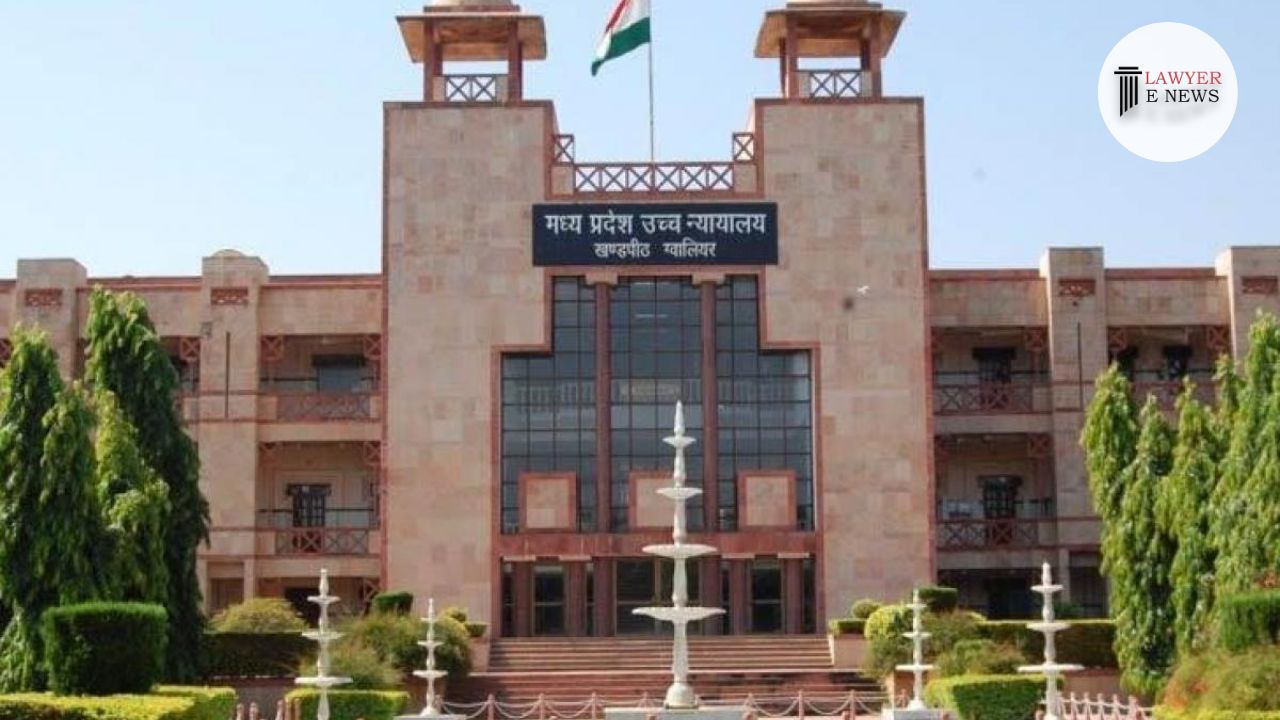
In a significant ruling, the Madhya Pradesh High Court at the Indore Bench, comprising Justices Vivek Rusia and Anil Verma, affirmed the life imprisonment sentences of the appellants involved in the murder of Ahsan. The court meticulously reviewed the evidence and testimonies, dismissing the appeals filed against the Sessions Court's judgment in Criminal Appeals No. 917, 936, and 988 of 2013.

The appellants, Kammu @ Kamlesh, Sheju Mewati @ Shahjad Kha, Ansar, Rijwan @ Tinu, and Jafar, were convicted under Sections 120-B and 302 of the Indian Penal Code for their involvement in a calculated and brutal murder conspiracy. The case, which sent shockwaves through the community, centered around the killing of Ahsan, who was shot dead following a premeditated plan by the accused.

In their judgment, the High Court judges stated, "The trial court has rightly held that such contradictions and omissions are trivial in nature and same is neither material nor sufficient to discard their testimony which are duly corroborated by statement of each other.” This observation was critical in dismissing the appellants' claims of contradictions and omissions in the prosecution's case.

The pivotal evidence in the case included the testimony of the key eyewitness, Naushad (PW-2), and the medical evidence provided by Dr. D.K. Sharma (PW-8), who conducted the postmortem. The court noted that despite some witnesses turning hostile, the overall evidence, including the forensic analysis, supported the prosecution's narrative.

The High Court, referring to precedents set by the Supreme Court, highlighted the importance of the credibility of eyewitness accounts and the need for scrutiny. "Discrepancies which do not shake the credibility of the witnesses and the basic version of the prosecution case to be discarded,” the bench noted, emphasizing the solidity of the evidence presented.

The judges concluded by affirming the trial court's decision, stating, "We hold that the trial Court has rightly convicted and sentenced the aforesaid appellants.” They directed the appellants, who were out on bail, to surrender within 15 days to serve their remaining sentences.

This ruling reinforces the judiciary's commitment to ensuring justice in criminal cases, even in the face of challenges and appeals. The Ahsan murder case, with its complexities and implications, thus reaches a conclusive end, upholding the rule of law and the sanctity of the judicial process in India.

Date of Decided on: 21-03-2024

KAMMU @ KAMLESH S/O KAILASH MALI AND OTHERS Vs.THE STATE OF MADHYA PRADESH AND OTHERS

Latest Legal News