-
by sayum
25 August 2026 9:55 AM








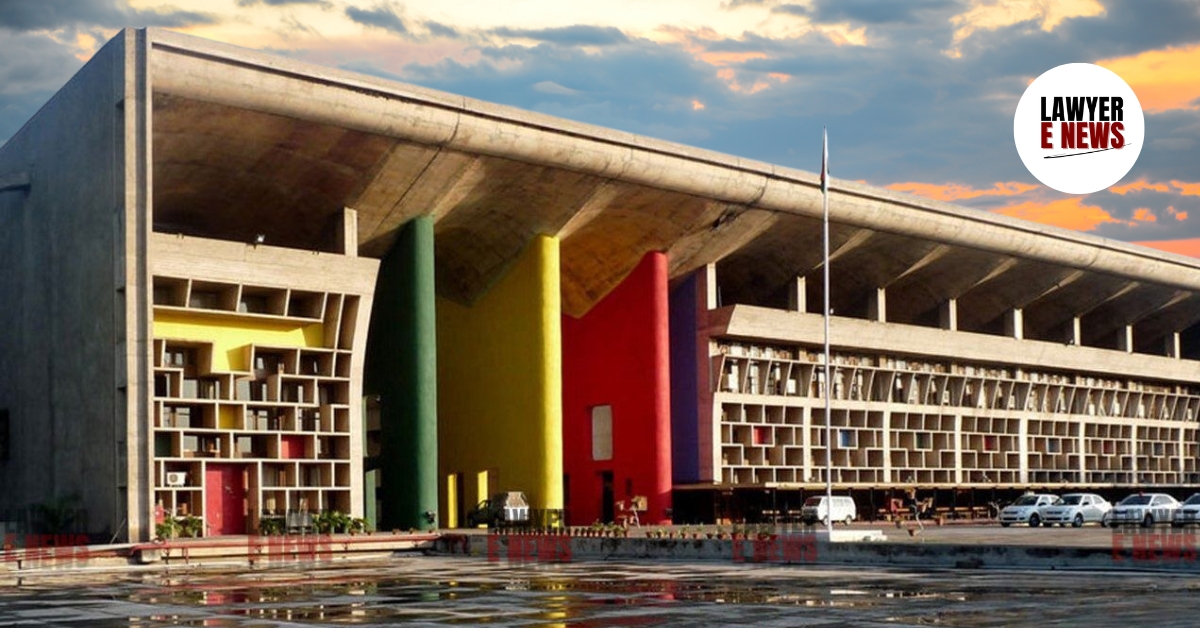
In a significant judgment, the Punjab and Haryana High Court quashed recovery proceedings initiated by the Commissioner of Central Excise and Central Goods and Service Tax against Haryana City Gas Distribution Limited, declaring them illegal due to the absence of a mandatory show cause notice. The Court held that the freezing of the petitioner’s bank account and the imposition of penalty and interest, based solely on a CAG audit report, violated the principles of natural justice.
The decision, delivered on December 20, 2024, by a bench comprising Justice Sanjeev Prakash Sharma and Justice Jasjit Singh Bedi, emphasized that the provisions under Sections 11A, 11AA, and 11AC of the Central Excise Act, 1944, inherently require adherence to natural justice principles, including providing an opportunity to the assessee to be heard before any recovery proceedings are initiated.
The petitioner, Haryana City Gas Distribution Limited, a public utility service provider for CNG and PNG in Gurugram, challenged the freezing of its bank account and demand for interest and penalty. The action arose from a Comptroller and Auditor General (CAG) audit that identified delayed payment of excise duty for the period from 2018-19.
The Superintendent of Central Excise issued letters directing the petitioner to pay interest and penalty but failed to issue a show cause notice as mandated under the Excise Act. Subsequently, the petitioner’s bank account was frozen under Section 11(2) of the Act to recover the alleged outstanding amount of ₹6.99 crore.
The demand was based solely on the CAG audit report, which could not serve as the basis for recovery without proper adjudication.
No show cause notice or opportunity to explain the delay was provided, violating the principles of natural justice.
The freezing of the bank account without due process caused severe financial hardship and disrupted essential public utility services.
The respondents contended that the delayed payment of excise duty was an admitted fact and that interest and penalty were automatically recoverable under Sections 11AA and 11AC of the Act. They argued that a show cause notice was unnecessary in such cases.
The Court ruled that the issuance of a show cause notice is mandatory before imposing any penalty or interest under Sections 11AA and 11AC. These provisions incorporate natural justice principles, ensuring that an assessee is given an opportunity to explain the delay or contest the liability.
The Court noted: "The principles of natural justice are inherent in the recovery mechanism under Section 11AA of the Act. Merely relying on the findings of a CAG audit cannot justify bypassing the statutory requirement of issuing a show cause notice."
The Court held that findings in a CAG audit report could only form the basis for initiating assessment proceedings. Direct recovery based on an audit report is unsustainable. The statutory framework requires the issuance of a show cause notice, followed by adjudication and a reasoned order, before any recovery action can be taken.
The Court declared the freezing of the petitioner’s bank account under Section 11(2) as illegal, as it was based on a non-adjudicated demand. It emphasized that such coercive actions, which infringe upon the civil rights of a taxpayer, must comply with due process.
The Court stated: "Any action that results in taking away the civil rights of an individual without affording them an opportunity to be heard is bad in law and vitiates the proceedings."
Reliance on Supreme Court Precedents
The Court extensively relied on the Supreme Court judgment in Union of India v. Madhumilan Syntex Pvt. Ltd., (1988) 35 ELT 349, which held that recovery proceedings initiated without serving a show cause notice and affording an opportunity to be heard are bad in law.
It also referred to Gokak Patel Vokkart Ltd. v. Collector of Central Excise, (1987) 28 ELT 53 (SC), which emphasized that a notice of demand under Section 11A must be preceded by a show cause notice and an opportunity to represent.
The Court quashed the recovery proceedings and set aside the order freezing the petitioner’s bank account. Key rulings include:
The respondents’ demand for penalty and interest, initiated without issuing a show cause notice, is declared illegal.
The freezing of the petitioner’s bank account under Section 11(2) is invalid as it was based on an unadjudicated demand.
The petitioner is entitled to recover any amount paid under protest without prejudice to its rights.
"The principles of natural justice cannot be overridden by mere administrative expediency. Any order or action impacting civil rights must conform to the statutory scheme and provide an opportunity to the affected party to present its case."
This judgment reinforces the importance of adhering to procedural safeguards in tax recovery proceedings. It clarifies that:
Natural Justice is Inherent in Tax Laws: The issuance of a show cause notice and an opportunity to be heard are indispensable in recovery proceedings under the Excise Act.
Audit Reports Are Not Final Determinations: Findings in a CAG audit report cannot bypass the statutory process of adjudication.
Coercive Actions Require Due Process: Actions like freezing bank accounts must be based on adjudicated demands and not on mere administrative instructions.
Date of Decision: December 20, 2024