Non-Production Of Case Property And Missing Link Evidence In Seizure Cases Vitiates Prosecution: Himachal Pradesh High Court Employees Compensation Act | Death Due To Cardiac Arrest During Employment Is An 'Accident' Arising Out Of Stress And Strain Of Duty: J&K High Court Transfer Of Proceedings | Courts Must Issue Fresh Notice To Parties Even If They Had Appeared Before The Transferor Court: Kerala High Court Sets Aside Ex-Parte Award Section 80P(4) IT Act Does Not Deny Deduction To Regional Rural Banks As They Retain The 'Deemed Co-operative Society' Status Under Section 22 RRB Act: Madras High Court Property Purchased In Name Of Child For Family Benefit Is Not A 'Benami Transaction' Under Section 2(9) Of The 1988 Act: Madhya Pradesh High Court Person Without Caveatable Interest Cannot Challenge Will Or Seek Revocation Of Probate: Madras High Court Divorce | Cruelty Must Be Assessed By Cumulative Effect Of Matrimonial Conduct Rather Than Isolated Incidents: Orissa High Court Merely Labeling Insurance Policy As Comprehensive Does Not Create Unlimited Liability: MP High Court Order VII Rule 11 CPC | Plaint Must Be Rejected If Limitation Bar Is Apparent From Face Of Pleadings: Patna High Court Limitation Act | 'Sufficient Cause' Cannot Be Used To Revive Stale Or Dead Claims By State: Orissa High Court Quashes Order Condoning 53-Year Delay Employee Cannot Remain Dormant Like Rip Van Winkle & Awaken At Convenience: Punjab & Haryana High Court Dismisses Stale Service Plea With ₹25K Cost Section 29 NDPS Act | Mere Allegation Of 'Cooperation' Without Specific Overt Acts Cannot Sustain Charge Of Conspiracy: Rajasthan High Court Forest Land Status Does Not Extinguish Private Civil Title: Punjab & Haryana High Court Upholds Decree For Possession Once Admitted In Evidence, Document Cannot Be De-Marked On Grounds Of Insufficiency Of Stamp Duty: Telangana High Court Section 190 BNSS | Mere Presence In Unlawful Assembly With Active Intent Renders Member Vicariously Liable For Homicidal Act: Punjab & Haryana High Court Contributory Negligence Under Motor Vehicles Act Cannot Be Inferred Without Cogent Evidence: Telangana High Court Enhances Compensation Motor Vehicles Act | Section 164 Compensation Of Rs. 5 Lakhs Applicable Even To Pending Claims Arising Prior To 2019 Amendment: Punjab & Haryana High Court Consumer Protection Act | Builder Liable To Pay Interest For Delayed Possession Despite Force Majeure Plea If Agreement Executed Post-Outbreak: State Commission

High Court Sets Aside Order U/S 82 Cr.P.C in Dowry Case, Emphasizes Supreme Court Guidelines on Arrest Procedures

07 May 2024 8:19 AM

By: Admin


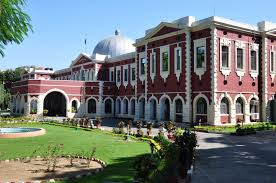
In a significant ruling, the High Court of Jharkhand, presided over by Hon’ble Mr. Justice Sanjay Kumar Dwivedi, set aside an impugned order dated 20.10.2023 related to a case under Section 498A of the IPC (Indian Penal Code). The case, Vishwamitra Singh vs. The State of Jharkhand and Another (W.P.(Cr.) No. 958 of 2023), saw a detailed discussion on the guidelines for issuing processes under Section 82 of the Cr.PC (Criminal Procedure Code) and the protocols for anticipatory bail.

In his judgment, Justice Dwivedi underscored the importance of adhering to Supreme Court guidelines when considering arrest and coercive measures, especially in cases under Section 498A IPC. He stated, “This aspect of the matter if the case is arising out of section 498A IPC was earlier considered by the Hon’ble Supreme Court in the case of Arnesh Kumar v. State of Bihar, (2014) 8 SCC 723.”

The petitioner, Vishwamitra Singh, challenged the order that was issued under Section 82 Cr.PC in connection with Dhanbad Mahila P.S. Case No.30 of 2023. The court noted that the petitioner had already complied with notice under Section 41A Cr.PC and appeared before the investigating officer, which was a significant factor in the decision.

Justice Dwivedi also referenced the case of Satender Kumar Antil v. C.B.I (2022), reiterating the importance of judicial discretion in issuing processes under Section 82 Cr.PC. The court’s decision to set aside the impugned order and remit the case back to the lower court for fresh proceedings signifies a meticulous application of legal principles and Supreme Court directives.

Legal experts view this judgment as a reaffirmation of the principles laid down by the Supreme Court, emphasizing the need for balance between the powers of law enforcement and the rights of individuals, especially in cases involving family disputes under Section 498A IPC.

Date of Decision: 10.11.2023

Vishwamitra Singh VS The State of Jharkhand and Another   

Latest Legal News