Order VIII Rules 3 & 5 CPC | Silence Is Admission: State’s Failure To Specifically Deny Hiring Amounts To Acceptance: JK HC Mere Entry, Abuse Or Assault Is Not Civil Contempt – Willfulness And Dispossession Must Be Clearly Proved: Bombay High Court Magistrate Cannot Shut Eyes To Final Report After Cognizance – Supplementary Report Must Be Judicially Considered Before Framing Charges: Allahabad High Court Examination-in-Chief Alone Cannot Sustain Conviction Amid Serious Doubts: Delhi High Court Upholds Acquittal in Grievous Hurt Case Employees Cannot Pick Favourable Terms and Reject the Rest: Bombay High Court Upholds SIDBI’s Cut-Off Date for Pension to CPF Optees Cannot Reclaim Absolute Ownership After Letting Your Declaration Suit Fail: AP High Court Enforces Finality in Partition Appeal Death Due to Fat Embolism and Delayed Treatment Is Not Culpable Homicide: Orissa High Court Converts 30-Year-Old 304 Part-I Conviction to Grievous Hurt Fabricated Lease Cannot Be Sanctified by Consolidation Entry: Orissa High Court Dismisses 36-Year-Old Second Appeal Rules of the Game Were Never Changed: Delhi High Court Upholds CSIR’s Power to Prescribe Minimum Threshold in CASE-2023 Resignation Does Not Forfeit Earned Pension: Calcutta High Court Declares Company Superannuation Benefit as ‘Wages’ Under Law Fraud Vitiates Everything—Stranger Can File Independent Suit Against Compromise Decree: Bombay High Court Refuses to Reject 49-Year-Old Challenge at Threshold Mere Long Possession By One Co-Owner Does Not Destroy The Co-Ownership Right Of The Other: Madras High Court State Cannot Hide Behind An Illegal Undertaking: Punjab & Haryana High Court Questions Denial Of Retrospective Regularization Sentence Cannot Be Reduced to Two Months for Four Life-Threatening Stab Wounds: Supreme Court Restores 3-Year RI in Attempt to Murder Case Suspicion, However Grave, Cannot Substitute Proof: Apex Court Reaffirms Limits of Section 106 IEA Accused at the Time of the Statement Was Not in the Custody of the Police - Discovery Statement Held Inadmissible Under Section 27: Supreme Court Failure to Explain What Happened After ‘Last Seen Together’ Becomes an Additional Link: Supreme Court Strengthens Section 106 Evidence Act Doctrine Suicide in a Pact Is Conditional Upon Mutual Participation — Survivor’s Resolve Reinforces the Act: Supreme Court Affirms Conviction Under Section 306 IPC Participation in Draw Does Not Cure Illegality: Supreme Court Rejects Estoppel in Arbitrary Flat Allotment Case Nepotism and Self-Aggrandizement Are Anathema to a Democratic System: Supreme Court Quashes Allotment of Super Deluxe Flats by Government Employees’ Welfare Society Liberty Is Not Absolute When It Becomes a Threat to Society: Supreme Court Cancels Bail of Alleged ₹6.5 Crore Fraud Mastermind Magistrate’s Power Is Limited — Sessions Court May Yet Try the Case: Supreme Court Corrects High Court’s Misconception in ₹6.5 Crore Fraud Bail Order Dacoity Cannot Be Presumed, It Must Be Proved: Allahabad High Court Acquits Villagers After 43 Years, Citing ‘Glaring Lapses’ in Prosecution Case

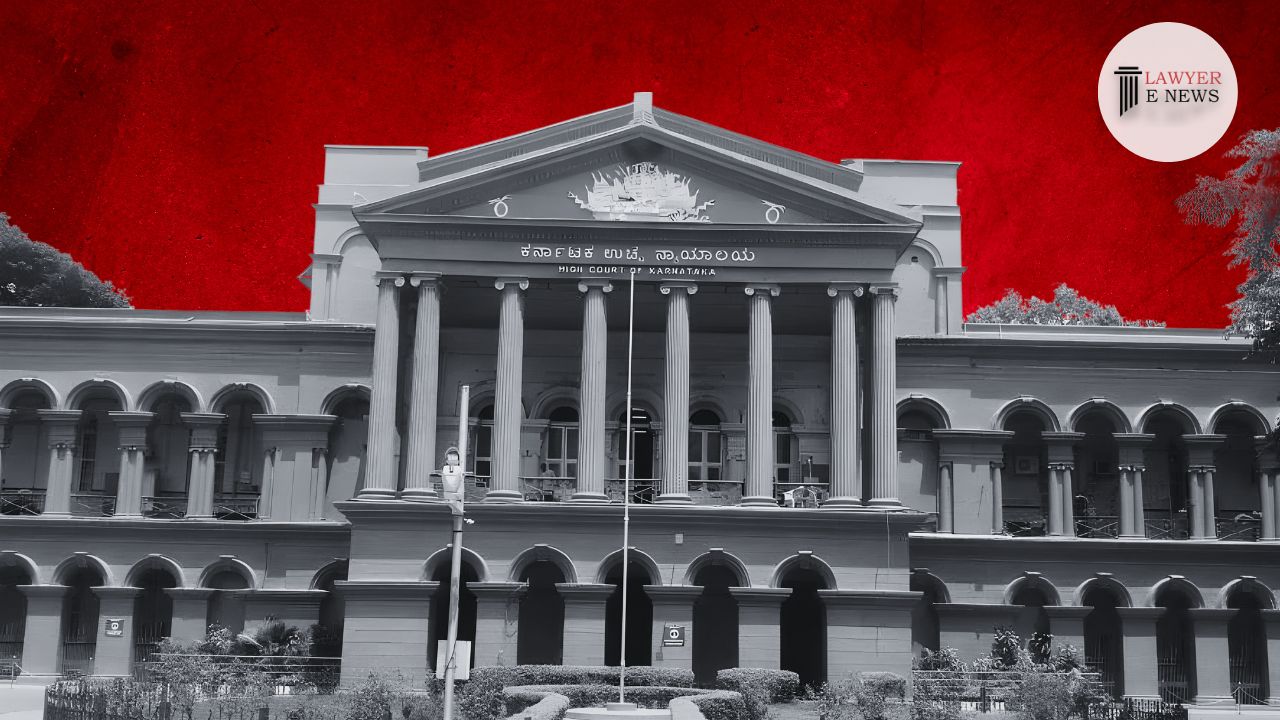
High Court of Karnataka Sets Aside Temporary Injunction - Civil Court lacks jurisdiction in matters that fall under the SARFAESI Act

07 May 2024 8:19 AM

By: Admin


In a significant ruling, the High Court of Karnataka has overturned a temporary injunction granted by the Trial Court in a mortgage dispute involving The Mahila Co-operative Bank Ltd. And Sri Venugopal N., among others. The High Court observed that the “Trial Court committed an error in granting an order of temporary injunction,” thereby allowing the appeal filed by the bank.

The case revolved around the jurisdictional conflict between the Civil Court and the Debt Recovery Tribunal (DRT) under the SARFAESI Act, the nature of the property in question, and the validity of a temporary injunction. The High Court clarified that the Civil Court lacks jurisdiction in matters that fall under the SARFAESI Act, stating, “Section 34 of the SARFAESI Act imposes a bar on the Civil Court to grant any relief of injunction.”

The Court also delved into the nature of the property, stating that it was not ancestral but a “separate property of the defendant No.1.” This clarification is crucial as the property was mortgaged to the bank and had turned into a Non-Performing Asset (NPA).

Addressing the issue of fraudulent claims, the Court found that mere allegations of fraud without specific instances do not suffice to establish fraud. “Mere statement that the defendant No.1 was not taking care of the family does not constitute a fraudulent act,” the Court observed.

In its final decision, the High Court allowed the appeal, thereby setting aside the impugned order dated 19.03.2022 passed by the Trial Court. The ruling has significant implications for similar cases involving jurisdictional conflicts and property disputes.

Date of Decision: 29 August 2023

THE MAHILA CO-OPERATIVE BANK LTD.  vs SRI VENUGOPAL 

Latest Legal News