-
by sayum
24 August 2026 3:22 PM







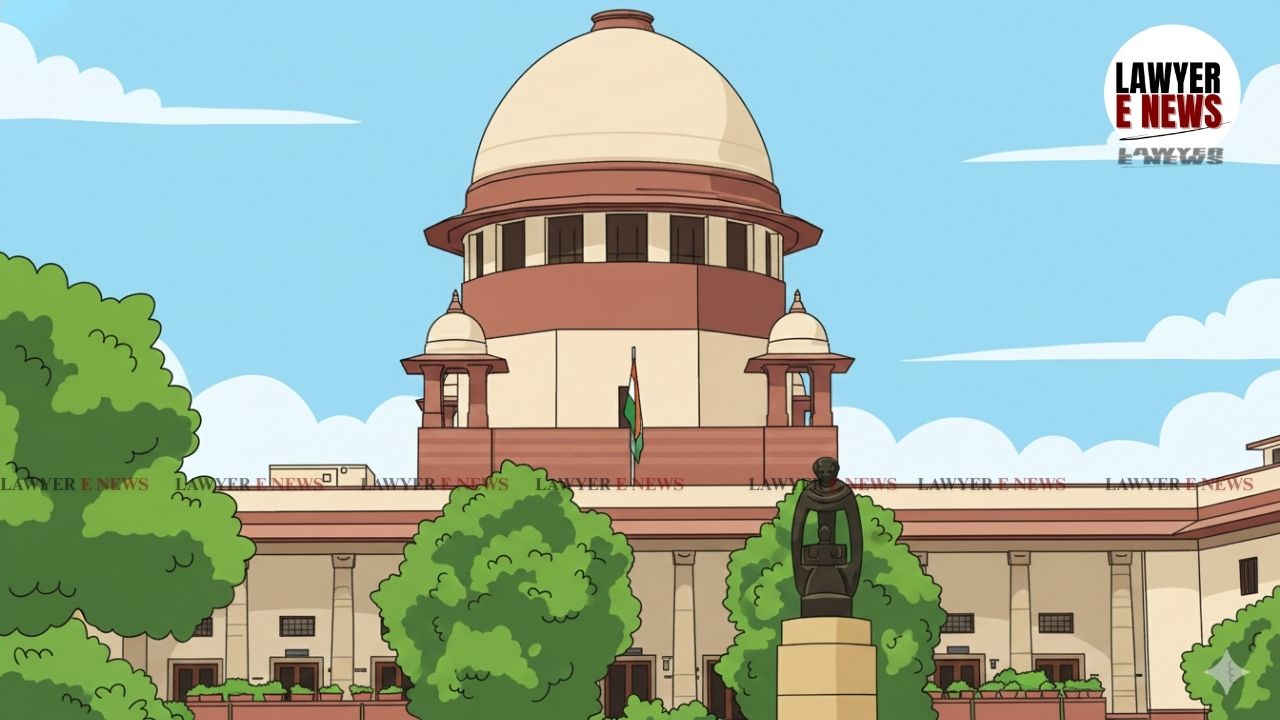
“Once a Court Appoints an Arbitrator Under Section 11(6), It Becomes Functus Officio”— In a latest Judgement Supreme Court of India decisively holding that once a High Court appoints an arbitrator under Section 11(6) of the Arbitration and Conciliation Act, 1996, it becomes functus officio and cannot later review or recall such appointment on merits. The judgment came in a Civil Appeal arising out of SLP (C) No. 4211 of 2025 and was authored by Justice R. Mahadevan for the Bench also comprising Justice J.B. Pardiwala.
The Court set aside the Patna High Court’s order that had reviewed and dismissed its own prior order appointing an arbitrator, branding such action legally impermissible and contrary to the minimal interventionist framework of the Arbitration Act. The judgment reaffirms the primacy of arbitral autonomy, the doctrine of severability, and limits of judicial authority in arbitral appointments.
“Courts Must Resist Re-Entering What the Statute Has Shut Through the Front Door”—Reiterating Finality of Section 11 Orders
In a detailed and scathing analysis of judicial overreach, the Supreme Court held that the High Court’s review of its own order appointing an arbitrator under Section 11(6) was ultra vires and contrary to the statutory design of the Arbitration Act. Emphasizing the legislative intent to minimize judicial interference, the Court declared:
“Section 11(6) does not confer any revisional or appellate power to re-adjudicate issues already settled. The High Court became functus officio after appointment.”
The ruling has major implications for public-sector arbitration, unilateral appointment clauses, and the integrity of arbitral proceedings, especially where state instrumentalities are parties.
The dispute stemmed from a contract awarded by Bihar Rajya Pul Nirman Nigam Ltd. to Hindustan Construction Company Ltd. for constructing a bridge over River Sone. Clause 25 of the contract provided for arbitration, albeit with an appointment mechanism vesting sole power with the Managing Director of the respondent entity.
After an initial arbitration was concluded and award implemented without dispute, fresh disputes arose during the extended contract period. The appellant, following due procedure under Clause 25, sought arbitration. When the Managing Director failed to act, the appellant moved Patna High Court under Section 11(6), which appointed Justice Shivaji Pandey (Retd.) as arbitrator in 2021.
Over 70 hearings were conducted, and the proceedings reached the final argument stage. However, in 2024, the respondents filed a review application challenging the original appointment order. Shockingly, the High Court reviewed and dismissed its own Section 11 order, invalidating the ongoing arbitration—despite having itself extended the arbitrator’s mandate under Section 29A multiple times.
The Supreme Court addressed three central legal questions:
On Review Jurisdiction Under Section 11(6): No Power to Reopen Settled Orders
The Court categorically held that once a court appoints an arbitrator under Section 11, it has no jurisdiction to revisit or rescind that order. The Bench observed:
“Such review is impermissible... Section 11(6) does not confer any revisional or appellate power... the High Court became functus officio after appointment.”
The Court drew extensively from seven-judge bench ruling in Interplay Between Arbitration and Stamp Act, (2024) 6 SCC 1, reaffirming that the referral court’s role under Section 11 is limited to prima facie examination of existence of an arbitration agreement. All questions regarding validity or jurisdiction must be left to the arbitral tribunal under Section 16.
“The Arbitration Act is a self-contained code... what is not expressly permitted is deemed prohibited. The review jurisdiction wrongly invoked to revisit settled interpretation.”
Further, the Court condemned the High Court’s review as nothing but an “appeal in disguise,” observing that:
“The High Court’s action undermines certainty, dilutes the sanctity of judicial orders, and erodes confidence in the arbitral process.”
Clause 25 Is a Valid Arbitration Agreement; Unilateral Clause Severable
A core dispute was whether Clause 25, which vested appointment power solely in the Managing Director and provided that no arbitration shall take place if such appointment fails, was a valid arbitration clause.
The Court ruled decisively:
“Clause 25 satisfies the requirements of Section 7 of the Act. The existence of a valid arbitration agreement is established through the parties’ consistent conduct and earlier accepted awards.”
Referring to TRF Ltd., Perkins Eastman, and CORE II, the Court held that unilateral appointment clauses in public contracts are violative of Article 14 and contrary to principles of neutrality. However, applying the doctrine of severability, the Court severed the offending part while preserving the arbitration agreement.
“The core arbitration agreement survives. The clause disabling arbitration due to failure of appointment is vague, arbitrary and violative of Section 18 and Article 14.”
The Court further observed that both parties had earlier acted upon Clause 25, and had even accepted arbitral awards under it, thereby validating its binding nature.
Waiver by Conduct: Joint Applications Under Section 29A Estop Challenge
In addressing whether participation in arbitral proceedings amounted to waiver, the Court noted:
“Though Section 12(5) requires an express post-dispute written waiver, participation and joint applications under Section 29A amount to waiver under Section 4.”
The Bench harmonized Sections 4, 12(5), and 29A by stating that where no Seventh Schedule ineligibility exists, active participation and consent-based extensions under Section 29A constitute waiver by conduct. The respondents were thus estopped from challenging the arbitrator’s mandate.
Dismissal of SLPs Does Not Create Binding Precedent
The respondents had relied on State of Bihar v. Kashish Developers, arguing that the High Court’s earlier view on Clause 25 had been "affirmed" due to dismissal of SLP. The Court rebuked this line of argument:
“Dismissal of an SLP without reasons does not amount to law declared under Article 141… reliance on such dismissal is misplaced.”
Citing Kunhayammed v. State of Kerala and Atul Kumar Dwivedi, the Court reiterated that non-speaking dismissals carry no precedential value and bind only the parties, not future benches.
The Supreme Court allowed the appeal, restored the arbitral process, and directed the High Court to appoint a substitute arbitrator within two weeks. The new arbitrator is to resume proceedings from the stage they were interrupted, preserving prior hearings and avoiding de novo adjudication.
Further, the Court issued a stern warning to the Managing Director of the respondent PSU for administrative apathy and misuse of legal processes:
“Public officers are custodians of public faith, not mere administrators. Repetition of such neglect may invite personal accountability.”
While refraining from imposing costs, the Court stressed the responsibility of state entities to act fairly and promptly in contractual matters.
Date of Decision: 28 November 2025