-
by sayum
25 August 2026 12:32 PM







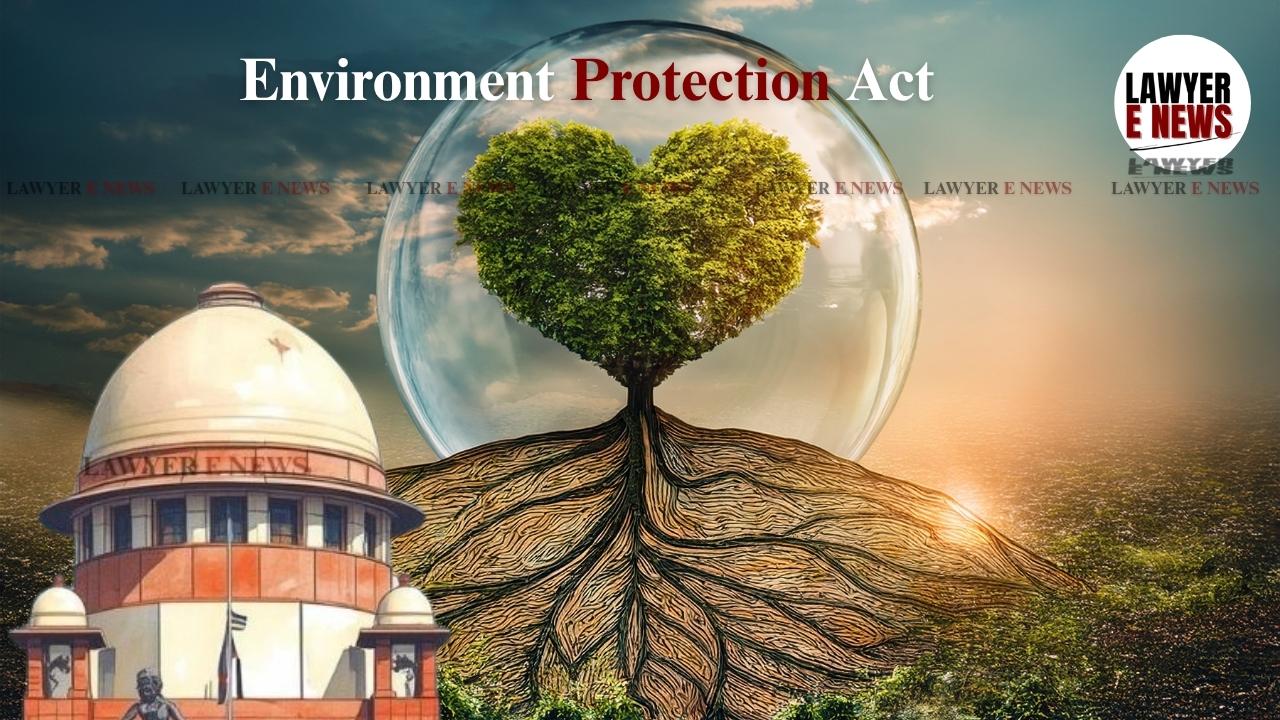
“The Delhi Ridge Must Be Preserved in Its Pristine Glory” - In a monumental ruling delivered on November 11, 2025, the Supreme Court of India in T.N. Godavarman Thirumulpad v. Union of India & Others (Writ Petition (C) No. 202 of 1995) addressed the long-standing environmental neglect of the Delhi Ridge and its ecologically sensitive Morphological Ridge. A bench comprising Chief Justice B.R. Gavai and Justice K. Vinod Chandran held that the Delhi Ridge Management Board (DRMB), which had been functioning for decades through ad-hoc court directions, must now be constituted as a statutory body under Section 3(3) of the Environment (Protection) Act, 1986.
The Court held unequivocally that “without a statutory backing, it will not be possible for the Board to function effectively,” and further declared the DRMB as the “single-window authority” for all matters concerning the Ridge and Morphological Ridge.
“The Green Lungs of Delhi Must Be Legally Protected”: Court Slams Decades of Delay in Notifying Ridge Under Forest Act
The Court’s judgment was grounded in the failure of the Government of NCT of Delhi (GNCTD) to notify the Delhi Ridge under Section 20 of the Indian Forest Act, 1927, even though preliminary notifications were issued as early as 1994. Observing the delay to be unjustified, the Court remarked:
“Though this court observed as early as in May, 1996 that the Government has not taken proper steps for conservation of the Ridge, not much has been done even after a lapse of almost three decades therefrom.”
Only 103.48 hectares out of 7,784 hectares have been formally notified, leaving the rest without legal protection. The Court emphasized that the non-notification deprives the Ridge of any enforceable statutory shield and directed the GNCTD to expedite the final notification process.
“Encroachments Defeat the Purpose of Ecological Protection”: Supreme Court Orders DRMB to Remove All Illegal Constructions from Ridge
Relying on reports submitted by the Central Empowered Committee (CEC) and other monitoring authorities, the Court found that illegal encroachments were rampant, occupying at least 5% of the Ridge.
The Court stated firmly:
“The entire purpose of the ecological conservation of the Ridge is futile if illegal constructions are coming up throughout the area.”
Criticising the GNCTD’s inaction, the Court held that the DRMB must ensure complete removal of encroachments, both from the officially notified Ridge and the Morphological Ridge, which had similarly sensitive ecological characteristics.
“Morphological Ridge Deserves the Same Protection as Notified Ridge”: Supreme Court Upholds Equal Ecological Treatment
In a key finding, the Court addressed the legal status of the Morphological Ridge, a zone not included in the official Master Plan but scientifically identified as part of the same Aravalli ecosystem. Citing earlier decisions such as Ashok Kumar Tanwar v. Union of India and DDA v. Kenneth Builders, the Court held:
“Land falling outside the demarcation of notified ridge but having similar ‘morphological features’ of ridge should be given the same protection.”
The DDA’s contention that the Morphological Ridge has “no legal sanctity” was expressly rejected. The Court directed that identification of the Morphological Ridge must be completed, and its preservation ensured through the DRMB.
“Multiple Authorities Create Duplication and Conflict”: Supreme Court Dissolves Overlapping Bodies, Consolidates Power with Statutory DRMB
Highlighting the chaos caused by overlapping bodies such as the NGT Oversight Committee, High Court-appointed Committees, and even separate benches of the Supreme Court itself, the Court held:
“Several committees are currently monitoring the issues... which, at times, results in conflicting orders.”
To resolve this, the Court directed that all Ridge-related matters be handled solely by the DRMB, which will now be restructured and notified under statutory authority. It declared:
“The DRMB shall act as a single-window authority insofar as the Delhi Ridge and the Morphological Ridge is concerned.”
“Transparency, Accountability, Judicial Review – DRMB Must Be Subject to Environmental Rule of Law”: Court Lays Down Governance Standards
Relying on its previous decision in T.N. Godavarman (2024), the Court stressed the institutional requirements of environmental governance. It observed:
“Environmental rule of law fosters open, accountable, and transparent decision-making and participatory governance.”
The Court directed that the new statutory DRMB must comply with the following features:
The Court emphasized that these structures are essential to ensure DRMB’s accountability and legal compliance.
“Statutory DRMB Must Include CEC Representative and Standing Committee for Daily Oversight”: Supreme Court Sets New Institutional Model
Acknowledging the expertise and long-standing role of the CEC, the Court directed that a representative of the CEC be made a permanent member of the DRMB, and also Chair the newly created Standing Committee for daily oversight. The judgment stated:
“Rather than the DRMB reporting to the CEC every now and then and having two levels of scrutiny, it will be appropriate that a representative of CEC is made a member of the DRMB.”
The Standing Committee will include conservation experts, forest officers, and NGO representatives and must meet regularly to ensure the execution of DRMB’s functions.
“State Cannot Run Away from Responsibility to Restore the Damage Done”: Supreme Court Enforces Restoration as Core Objective of DRMB
In a broader environmental mandate, the Court held that preservation is not enough; there must also be restoration of the damaged ecosystem, aligning with principles from international conventions and domestic jurisprudence. Quoting from its judgment in T.N. Godavarman (In Re: Gaurav Kumar Bansal), the Court reiterated:
“The State... should take immediate steps for restoration of the damage already done; undertake an exercise for determining the valuation of the damage done and recover it from the persons found responsible.”
The Court directed the DRMB to adopt scientific conservation, afforestation, and habitat restoration measures, and to prevent any further fragmentation of the Ridge ecosystem.
Supreme Court Issues Comprehensive Directions for Reconstitution and Functioning of DRMB
The judgment concluded with detailed, enforceable directions, including:
“The MoEF&CC shall notify the DRMB under Section 3(3) of the Environment Protection Act.”
The Board will have 13 members, chaired by the Chief Secretary of Delhi, and will be required to:
A Standing Committee headed by the CEC representative will ensure regular and technical oversight. Importantly, all government agencies in Delhi have been directed to cooperate fully with DRMB.
Supreme Court has now placed the ecological integrity of Delhi’s Ridge under enforceable statutory protection, marking the culmination of a 30-year litigation. The ruling is a model for urban forest governance, ensuring that environmental rule of law is no longer an aspirational ideal but a judicially enforceable reality.
Date of Decision: November 11, 2025