-
by kapil
29 October 2026 10:30 AM







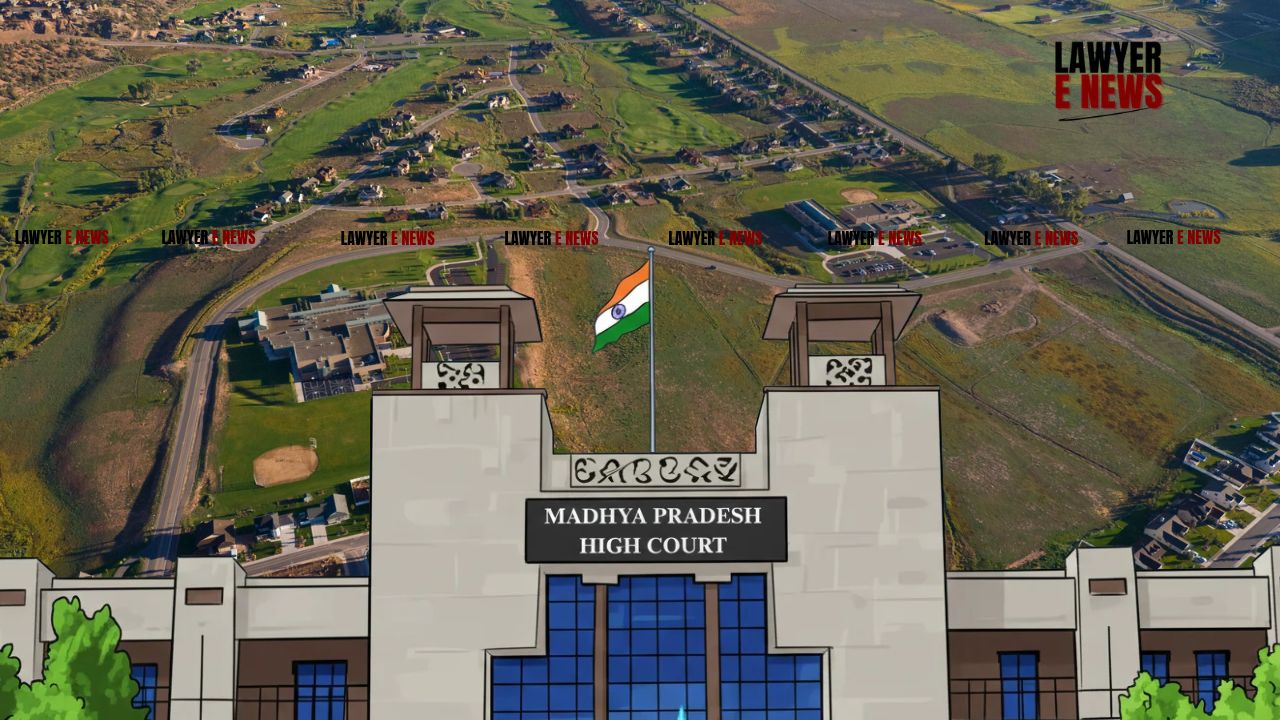
Deprecating the practice of introducing proxy objectors to obstruct judicial mandates, the Madhya Pradesh High Court held that fresh rounds of administrative proceedings under Section 250 of the Madhya Pradesh Land Revenue Code, 1959 cannot be initiated at the behest of subsequent unauthorized occupants to frustrate finalized eviction orders upheld up to the Supreme Court. Justice Sandeep N. Bhatt ruled on October 27, 2026, that granting relief to newly surfaced claimants who lack valid title deeds or municipal building permissions amounts to an abuse of the judicial process and infringes the constitutional property rights of the lawful Bhumiswami under Article 300-A and Article 19 of the Constitution of India.
The petitioner builder, a recorded Bhumiswami of land bearing Survey No. 66/2(k) in Khajrana, Indore, had obtained an eviction order under Section 250 of the MPLR Code against identified encroachers in 2018, which was affirmed by the High Court Division Bench and the Supreme Court. Upon facing persistent administrative inaction in executing the writ of mandamus directing vacant possession, the builder approached the High Court in contempt and fresh writ proceedings after the Sub-Divisional Officer entertained representations from newly sprouted occupants and initiated fresh inquiries. Simultaneously, multiple writ petitions were filed by these subsequent occupants seeking protection against demolition, asserting settled possession over the parcel.
Whether revenue authorities can entertain fresh proceedings under Section 250 of the MPLR Code at the instance of subsequent objectors who fail to substantiate lawful title or building permissions after an eviction order qua the subject land has attained judicial finality?
Whether unauthorized occupants lacking registered title instruments or building permissions can invoke extraordinary writ jurisdiction under Article 226 of the Constitution of India to restrain statutory eviction directed in favour of a recorded Bhumiswami?
The Court observed that the original demarcation had unequivocally identified the encroachment on the subject land, and the subsequent eviction order under Section 250 of the MPLR Code stood confirmed up to the Supreme Court. The bench observed that reopening the controversy under the garb of deciding administrative representations amounted to an executive overreach designed to subvert judicial finality.
Executive authorities cannot circumvent conclusive judicial directions by entertaining frivolous representations of subsequent objectors
The bench underscored that the Sub-Divisional Officer had misconstrued earlier procedural directions by entertaining fresh proceedings instead of executing the conclusive writ of mandamus issued by the Division Bench. The Court noted that the newly surfaced petitioners were never found in occupation during the statutory demarcation proceedings conducted by the revenue authorities.
"It can be considered as travesty of justice that though the petitioner i.e. M/s Ram Builders has contested the proceedings from the Court of SDO till the Supreme Court is not able to reap the fruits by getting possession of the property in question despite specific direction given by the Division Bench in W.A. No. 1224/2023, due to further proceedings initiated by way of filing other writ petitions by other so-called petitioners, who even in this proceeding have failed to produce any documents regarding their title or regarding valid occupation on the land in question."
Agreement to sale or municipal mutation does not confer proprietary title to resist statutory restoration
The Court highlighted that settled possession cannot be claimed in a vacuum without establishing lawful origin of title or municipal authorization. Citing settled law under Section 54 of the Transfer of Property Act, 1882, the bench noted that agreements to sell or entries in municipal tax assessment registers do not confer proprietary interest or legitimize unauthorized construction on private land.
"Merely paying property tax or obtaining electricity connection therein would not legalize their construction or would not confer any title to them. If the construction is illegal that too on land without title then that cannot come in the way of exercising the statutory power of Tahsildar under section 250 of the MPLRC. In order to defeat the provisions of MPLRC anybody can make illegal construction on the land and stall the proceeding."
Article 226 cannot be invoked to protect unauthorized possession lacking legal character
Justice Bhatt held that extraordinary constitutional jurisdiction under Article 226 of the Constitution of India cannot be utilized to confer a premium on dishonest litigants attempting to defeat the property rights guaranteed to recorded owners under Article 300-A of the Constitution. The bench noted that the addresses of several objectors reflected residences located elsewhere, exposing the vexatious character of the litigation.
"Therefore, considering this aspect no relief as prayed for in the Bunch of petitioners in W.P. No(s) 16249/2024... who allegedly projected themselves as encroachers of the land will amount to giving premium to the dishonest intention to such litigants. On that count also, jurisdiction under Article 226 of the Constitution which is required to be exercised to do justice to the parties and not to be exercised in cases where parties are trying to take indue advantage of the process of law."
Allowing the writ petition filed by the recorded Bhumiswami, the High Court quashed the Sub-Divisional Officer's administrative order dated March 11, 2024, and dismissed the writ petitions preferred by the unauthorized occupants. The Court directed the respondent revenue authorities to remove all illegal occupants and hand over vacant possession of the land to the builder within 30 days, while disposing of the connected contempt proceedings.
Date of Decision: October 27, 2026
Case Title: M/s Shree Ram Builders v. The Sub Divisional Officer (Revenue) and Others (with connected matters) | Writ Petition No. 18150 of 2024
Bench: Hon'ble Shri Justice Sandeep N. Bhatt