-
by kapil
19 October 2026 8:36 PM








"The grant of Samman Nidhi discharges an obligation of gratitude that has its source in the Constitution itself. That obligation is one of recognition, not compensation. It is owed equally to the known and the unknown participants of the freedom struggle, and it reaches the families who bore the cost of their sacrifice." Supreme Court, in a significant ruling dated October 5, 2026, held that claims for freedom fighters' pension cannot be rejected on hypertechnical grounds of delay and laches, reiterating that the governing standard of proof is based on probabilities rather than the rigorous standard of a criminal trial.
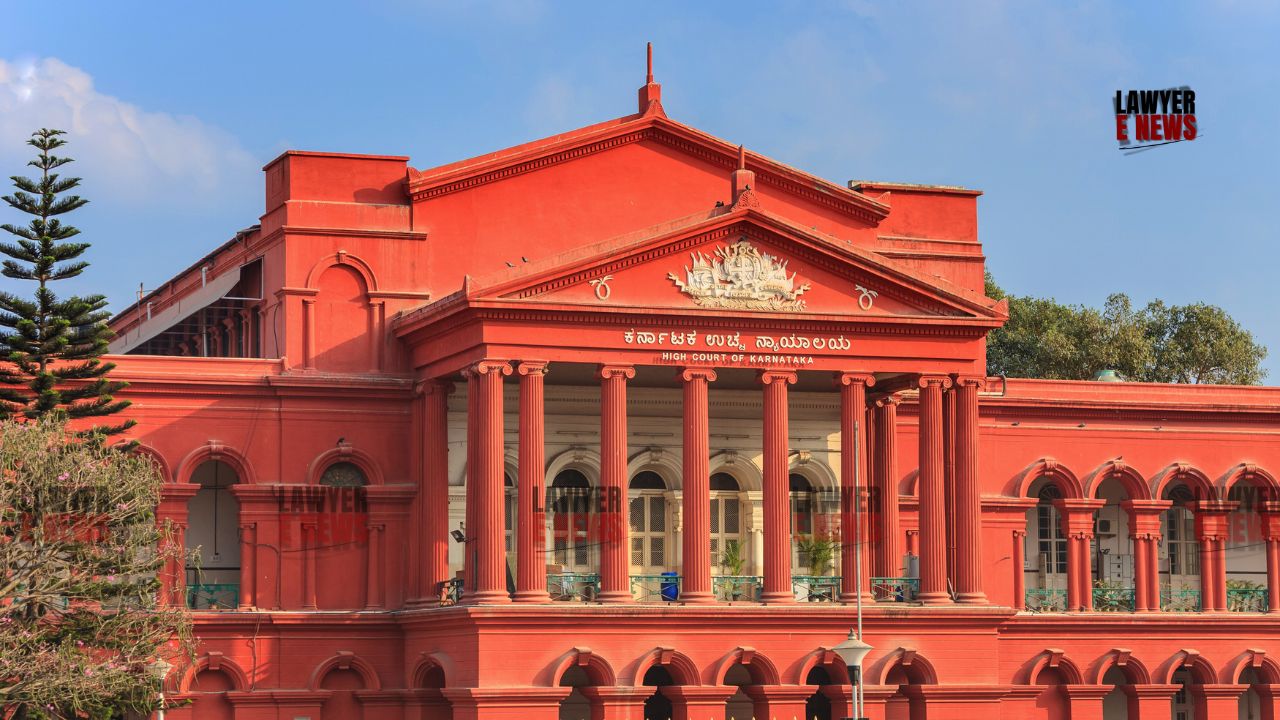
A bench comprising Justice Pamidighantam Sri Narasimha and Justice Alok Aradhe set aside a Division Bench ruling of the Madhya Pradesh High Court and restored the Single Judge's direction granting Samman Nidhi to an octogenarian widow with 6% interest per annum. The bench observed that the manner in which a claim is examined is itself integral to the honour conferred, warning that "a delayed, indifferent, or hypertechnical process diminishes the honour, even where the pension is eventually paid."
The appellant, Sushila Tripathi, is the widow of Late Shri Ramakant Tripathi, who participated in the Maihar State Praja Mandal Movement of 1945–46 and was imprisoned in Maihar Jail for 25 days. The State Government rejected the husband's claim for Samman Nidhi in 1991 via an unreasoned order, and following his demise in 2016, the appellant's fresh claim was similarly turned down by the Collector and the State citing absence of records, familial financial status, and lack of provision for reconsideration. A Single Judge of the High Court allowed her writ petition in 2023, relying on official district records and awarding pension from April 6, 1991 with 6% interest, but a Division Bench reversed this relief in 2025 on grounds of delay, laches, and estoppel, prompting the widow to approach the apex court.
The primary question before the court was whether a claim for freedom fighters' pension under the Madhya Pradesh Swatantrata Sangram Sainik Sammannidhi Rules, 1972 could be defeated on grounds of delay, laches, and estoppel where the claimant's spouse had not challenged an initial rejection during his lifetime. The court was also called upon to determine the appropriate standard of proof applicable to establish participation in the freedom struggle when evaluating historical secondary evidence and certificates.
Samman Nidhi Is A Constitutional Obligation Of Gratitude, Not State Bounty
Examining the conceptual basis of the Madhya Pradesh Swatantrata Sangram Sainik Sammannidhi Rules, 1972 and the central Swatantrata Sainik Samman Pension Scheme, 1980, the bench underscored that Samman Nidhi is neither a bounty nor a dole, but an acknowledgement by the State of an irrepayable debt. Tracing this ethos to midnight of August 14, 1947 and the pledge taken by the Constituent Assembly, the court ruled that the grant of pension discharges an obligation having its source in the constitutional order itself, particularly Article 51A(b) of the Constitution of India, which commands citizens to cherish and follow the noble ideals that inspired the national struggle.
"The pension is not simply compensation. It acknowledges a debt that money cannot repay, but which must, for that reason, not go unacknowledged. A nation is a community that spans generations, and each generation that enjoys freedom inherits the debt owed to those who secured it."
Standard Of Proof Is Balance Of Probabilities, Not Strict Criminal Proof
Addressing evidentiary standards, the bench reiterated that claimants cannot be subjected to unrealistic evidentiary burdens or expected to produce official documents from events over half a century old. Relying on settled precedents including Mukund Lal Bhandari v. Union of India, Gurdial Singh v. Union of India, and Kamlabai Sinkar v. State of Maharashtra, the court held that adjudication must rest on probabilities. The bench observed that because the State, and not the claimant, holds the custody of historical jail registers, police files, and gazettes, the primary obligation of searching official archives falls upon the State machinery rather than the aged applicant.
"It is an equally well-settled proposition that the standard of proof in a claim seeking freedom fighter’s pension is not that of a criminal trial and the claim has to be adjudicated on the basis of probabilities and a claimant cannot be expected to produce documents of events half a century old."
Claims Cannot Be Thrown Out On Delay And Laches
The apex court categorically rejected the Division Bench's view that the widow's application was barred by delay, laches, and estoppel because her deceased husband did not litigate against the 1991 rejection during his lifetime. Citing Union of India v. Jai Kishun Singh and State of Orissa v. Choudhuri Nayak, the bench affirmed that the beneficial object of honoring freedom fighters must not be scuttled by passage of time. The court observed that many freedom fighters were historically reluctant to pursue claims because they viewed monetary honoraria as putting a price on their selfless patriotism.
"This Court has held that object of grant of freedom fighter’s pension is to honour freedom fighters and the claim is not to be defeated merely because it was made belatedly."
"The claimant comes before the authority as one to whom something is owed, not as a supplicant seeking a favour. The approach of the authorities must therefore be practical, having regard to the fact that most of the applications are by old persons with no proper records."
Sacrifice Of The Family Must Be Honoured Liberally Under Statutory Rules
The court analyzed the statutory scheme of the 1972 Rules, noting that Rule 2(a) specifically includes a widow within the definition of 'family', while Rule 2(b)(iii) covers any person imprisoned for one day or more between 1919 and 1946. Furthermore, Explanations 3 and 4 to Rule 2 provide that in the absence of jail certificates, certificates issued by eminent freedom fighters of the district or adjoining districts, endorsed by legislators, constitute valid proof. Drawing comparative insights from the US Supreme Court ruling in Boone v. Lightner and South Africa's Special Pensions Act, 1996, the bench noted that when an individual drops personal affairs to shoulder the burden of the nation, the household bears the true cost, making the state's duty to care for dependants reciprocal and absolute.
"The nation received the benefit, while it was often the families who bore the cost. These sacrifices must translate into expressions of gratitude and continued acknowledgement of debt owed to the families."
Division Bench Overlooked Definitive District Records And Co-Prisoner Certificates
Applying the statutory framework to the facts, the court found that the appellant had produced unimpeachable evidentiary material, including certificates from former legislators Dr. Gaurishankar Shastri and Shri Shyamsundar Shyam certifying personal knowledge of the deceased's 25-day detention in Maihar Jail. These were corroborated by certificates from District Freedom Fighters’ Association Secretary Surya Pratap Gautam and co-prisoner Chintamani Shukla, as well as the official District Freedom Fighters List maintained by the Collector confirming the deceased's active role in the 1945–46 movement. The bench held that the Division Bench had committed a grave error in ignoring this substantive record.
Allowing the appeal, the Supreme Court set aside the High Court Division Bench judgment dated February 14, 2025, and restored the Single Judge's order dated January 5, 2023 granting Samman Nidhi with 6% annual interest from April 6, 1991. Considering the advanced age of the appellant widow, the bench directed the State authorities to fully comply with the Single Judge's directions within four weeks.
Date of Decision: October 05, 2026