-
by sayum
25 August 2026 12:32 PM







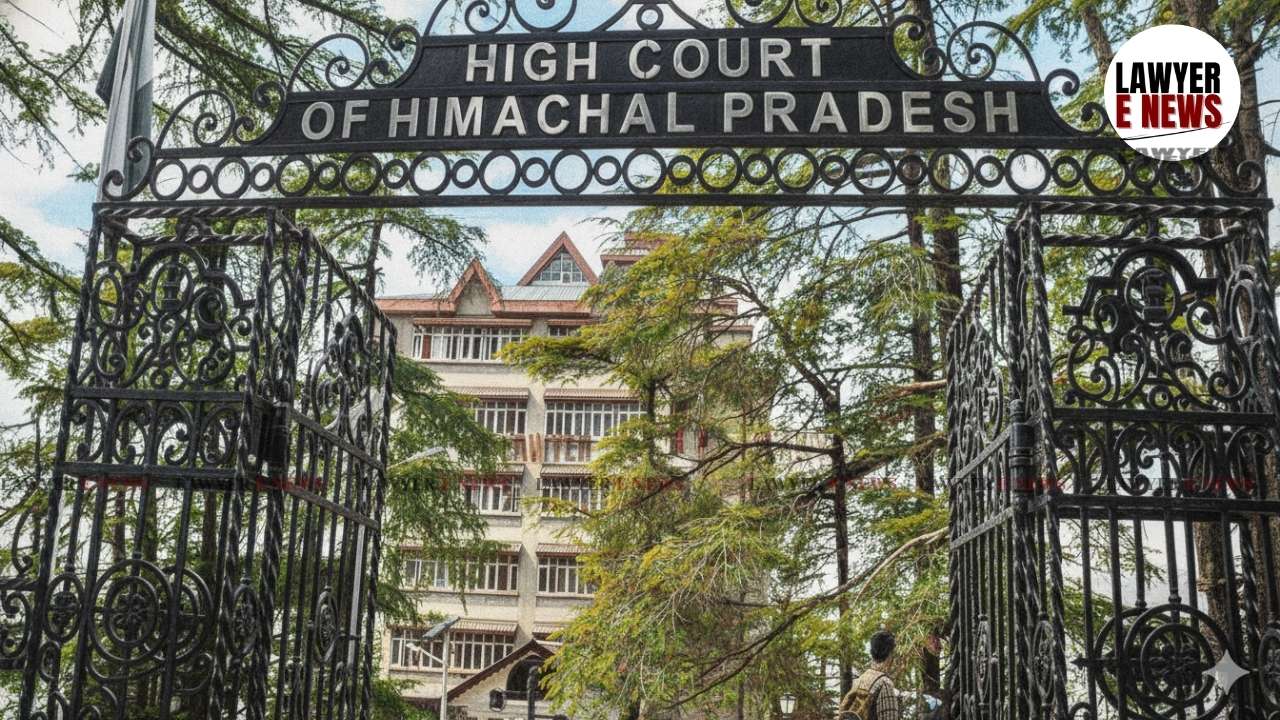
"An Order Which Does Not Terminate Proceedings Is Merely Interlocutory" – High Court of Himachal Pradesh dismissed a criminal appeal filed under Section 14A of the Scheduled Castes and Scheduled Tribes (Prevention of Atrocities) Act, 1989, holding that an appeal is not maintainable against an order framing charges. The judgment was delivered by Justice Jiya Lal Bhardwaj (Vacation Judge) in Lagnesh Verma v. State of Himachal Pradesh & Others, reaffirming a settled principle that an order framing charge is an “interlocutory order” and thus barred from appeal under Section 14A.
“Order framing charge does not finally decide rights of parties and is hence interlocutory”
The Court observed that the impugned order dated 23.09.2025, passed by the Special Judge, Kinnaur Sessions Division at Rampur Bushehar, by which charges were framed against the appellant under Sections 115(2) and 352 of the Bharatiya Nyaya Sanhita, 2023 and Section 3(2)(va) of the SC/ST Act, did not terminate the proceedings nor determine the rights of the parties finally. Thus, it was held to be an interlocutory order.
“The inescapable conclusion is that the order framing charges against the appellant…was merely an interlocutory order which neither terminated the proceedings nor finally decided the rights of the parties,” the Court held, relying on the authoritative judgment of the Supreme Court in V.C. Shukla v. State through CBI.
Framing of Charges Cannot Be Appealed Under Section 14A of SC/ST Act, Reiterates High Court
In a significant pronouncement on appellate jurisdiction under special statutes, the High Court ruled that an appeal under Section 14A of the SC/ST Act is not maintainable against an order framing charges, as such orders are inherently interlocutory. The appellant had challenged the Special Judge’s decision to frame charges under the Bharatiya Nyaya Sanhita and the SC/ST Act. The Court dismissed the appeal at the threshold, holding that the remedy, if any, lies in revision or by invoking inherent jurisdiction, not by appeal.
The appellant, Lagnesh Verma, approached the High Court under Section 14A of the SC/ST Act, assailing the order dated 23.09.2025 passed by the Special Judge, Kinnaur Sessions Division, wherein charges were framed under Section 115(2) and 352 of the Bharatiya Nyaya Sanhita, 2023 (BNS), along with Section 3(2)(va) of the SC/ST (Prevention of Atrocities) Act, 1989.
At the outset, the Court questioned the maintainability of such an appeal under Section 14A, which allows appeal only against a judgment, sentence or order not being an interlocutory order. The appellant contended that an order framing charge is not “interlocutory” and hence appealable.
The central issue before the Court was whether an order framing charge under BNS and SC/ST Act can be appealed under Section 14A of the SC/ST Act, 1989.
Counsel for the appellant argued that the impugned order was not interlocutory in nature and relied heavily on the precedents in:
The appellant relied particularly on Madhu Limaye, arguing that the order framing charge is an "intermediate" order and hence outside the bar of “interlocutory”.
However, the Court rejected this argument, emphasizing the difference between general criminal law (as discussed in Madhu Limaye) and special statutory schemes like Section 14A of the SC/ST Act. The Court held that:
“Even if the order framing charge is considered an intermediate order, for the purposes of Section 14A, it still falls squarely within the meaning of an interlocutory order.”
Statutory Interpretation: “Judgment, Sentence or Order Not Being Interlocutory”
The Court referred to the statutory language of Section 14A of the SC/ST Act which permits appeals only against any judgment, sentence or order, not being an interlocutory order.
“Framing of charge is neither a judgment nor a sentence. Even if it is viewed as an intermediate order, no appeal lies under Section 14A,” the Court declared.
The Court extensively quoted and relied upon the Supreme Court’s ruling in V.C. Shukla v. State through CBI, where the Apex Court had interpreted similar phraseology under Section 11 of the Special Courts Act, 1979, which is pari materia with Section 14A of the SC/ST Act.
“An interlocutory order is one which only decides a particular aspect or issue in a proceeding but does not conclude the trial at all,” the Court noted, citing the Supreme Court.
The judgment underlined the jurisprudential test laid down by Lord Esher in Salaman v. Warner and adopted by Indian courts:
“If the decision, whichever way it is given, allows the trial to proceed, it is interlocutory. Only a decision that disposes of the case entirely can be termed final.”
Reiterating this test, the Court held:
“Since the framing of charge merely initiates the trial and does not finally adjudicate the guilt or innocence, it is interlocutory in nature.”
Special Statutes Must Be Interpreted in Line with Legislative Intent
The Court also reasoned that allowing appeals against framing of charge would frustrate the legislative intent of speedy trials under the SC/ST Act. It observed:
“To permit appeals against framing of charge would delay trials and defeat the object of the statute, which seeks expeditious disposal of cases involving atrocities against Scheduled Castes and Scheduled Tribes.”
Justice Jiya Lal Bhardwaj concluded that the impugned order framing charges did not finally decide the rights of the parties and thus fell within the meaning of “interlocutory order” under Section 14A of the SC/ST Act. Accordingly, the appeal was held to be not maintainable and dismissed.
The Court, however, preserved the appellant’s right to avail other remedies:
“The aggrieved party can avail the remedy of revisional jurisdiction or invoke inherent powers under BNSS or other applicable laws, but not by way of statutory appeal under Section 14A.”
Date of Decision: 6th February, 2026