-
by sayum
26 October 2026 12:05 PM







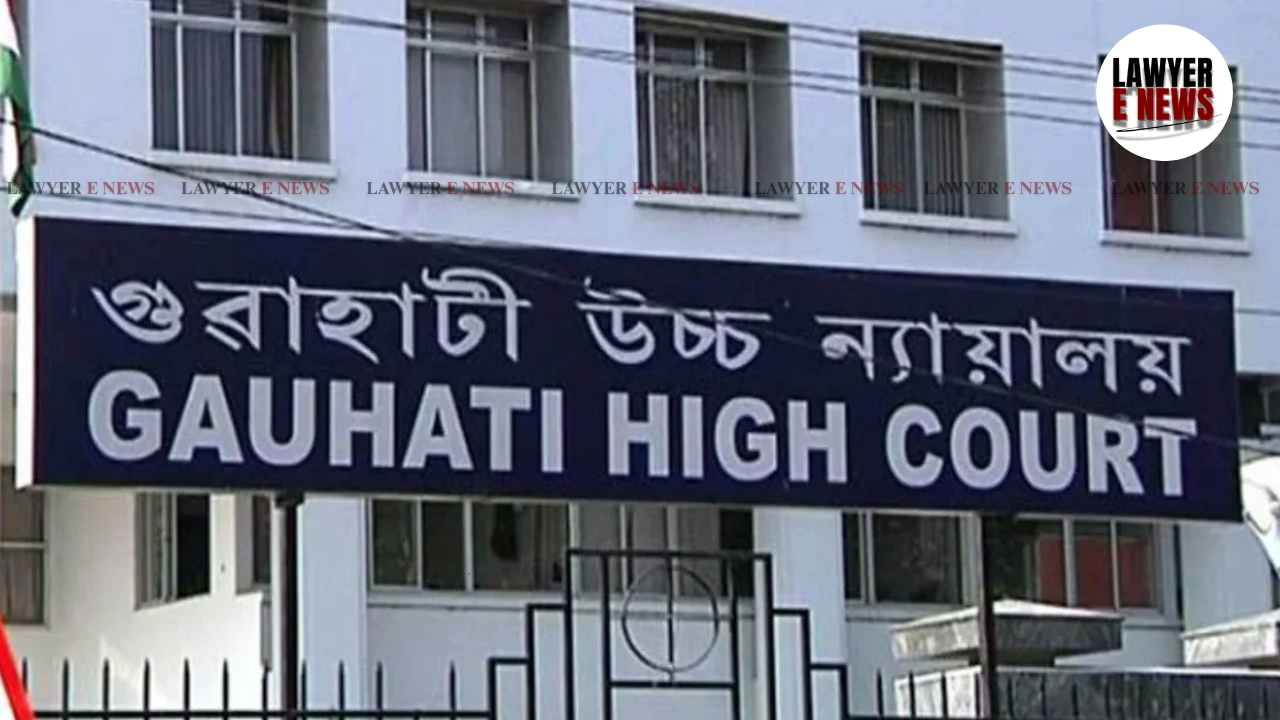
"It is a well settled law that an already sworn affidavit cannot be corrected/ altered/ varied. The unauthorised tampering of an already sworn evidence - on affidavit has the effect of discrediting the legality of such affidavit. Such a tampered affidavit is held to be no evidence at all." Gauhati High Court has held that an already sworn evidence-on-affidavit cannot be corrected, altered, or varied, and any subsequent tampering completely strips the document of its legal sanctity, rendering it "no evidence at all."
A division bench comprising Justice Kalyan Rai Surana and Justice Shamima Jahan, while upholding an order declaring a proceedee to be an illegal foreigner under Section 2(a) of the Foreigners Act, 1946, also reiterated that an Aadhaar card is strictly a proof of identity and cannot be accepted as proof of Indian citizenship.
The court further affirmed that unexplained discrepancies in family lineage, combined with an attempt to mislead the court by filing fabricated pleadings, disentitles a litigant from claiming relief, as the statutory burden cast under Section 9 of the Foreigners Act remains wholly undischarged.
The petitioner, Nurul Hoque, invoked Article 226 of the Constitution of India to challenge an opinion dated October 10, 2018, passed by the Foreigners Tribunal, Nagaon 7th at Lanka, Hojai. The Tribunal had declared him a foreigner who illegally entered Assam after March 25, 1971, without valid documentation. The petitioner contested this determination, claiming to be an Indian citizen by birth and attempting to trace his lineage to pre-1971 voter lists through his projected father and grandfather.
The primary question before the court was whether the petitioner successfully discharged the statutory burden under Section 9 of the Foreigners Act, 1946, to establish his Indian citizenship through verifiable pre-1971 lineage. The court was also called upon to determine the legal validity of an altered evidence-on-affidavit under Order 18 Rule 4 CPC, the evidentiary admissibility of an Aadhaar card, and the validity of a Gaonburah residence certificate issued under the Assam Land and Revenue Regulation, 1886.
Tampering Sworn Affidavit Vitiates Evidentiary Sanctity
Upon scrutinising the original records of the Foreigners Tribunal alongside the writ petition, the bench uncovered glaring material discrepancies between the pleadings filed before the Tribunal and those annexed to the writ petition. The evidence-on-affidavit of the petitioner (DW-1) available in the Tribunal's record displayed visible erasures and overwritings that were absent in the notarised copy annexed to the petition, establishing that the sworn statement had been altered subsequently.
The bench held that tampering with a sworn affidavit deprives it of any evidentiary standing in the eyes of the law, observing that such an instrument is rendered entirely void and inadmissible for proving facts.
"The unauthorised tampering of an already sworn evidence - on affidavit has the effect of discrediting the legality of such affidavit. Such a tampered affidavit is held to be no evidence at all."
Filing Fabricated Pleadings To Mislead Court Attracts Professional Scrutiny
The court expressed severe disapproval over the conduct of the petitioner and his advocates in placing conflicting and fabricated pleadings on record. While the copy of the written statement annexed to the writ petition claimed that the petitioner was born in village Samdhara, the original written statement before the Tribunal explicitly recorded his birthplace as Godaimari, an adjustment clearly made to paper over voter list discrepancies.
The bench noted that adopting such deceptive tactics constitutes sufficient ground to dismiss the writ petition in limine, but proceeded to test the case on merits purely because an issue of citizenship was involved.
"In this case, an unpardonable practice has been adopted by the petitioner and all his counsel engaged in this writ petition to mislead the Court by filing forged, fabricated and incorrect copy of written statement and evidence-on- affidavit."
Considering the gravity of the misconduct, the court directed the Registry to transmit a copy of its judgment along with the vakalatnama to the Bar Council of Assam, Nagaland, Mizoram, and Arunachal Pradesh for appropriate notice and action regarding the unscrupulous practice adopted by the engaged legal counsel.
Aadhaar Card Establishes Identity, Not Citizenship
The court affirmed the Tribunal's outright rejection of the petitioner’s Aadhaar card (Ext. 14), reiterating that the unique identification document is confined solely to validating identity. The bench clarified that possession of an Aadhaar card confers no citizenship status and cannot be relied upon by a proceedee to discharge the burden under Section 9 of the Foreigners Act.
Similarly, a self-serving explanatory affidavit sworn by the petitioner to reconcile wide discrepancies in the names of his projected father was held to be legally inadmissible and incapable of substituting cogent public records.
Unauthorised Gaonburah Certificates Hold No Evidentiary Value
Addressing the residence certificate issued by the Government Gaonburah of Dhing Bori Sapori, the court ruled that the certificate was inadmissible as the Gaonburah had illegally embossed the State Emblem, in direct contravention of the State Emblem of India (Regulation of Use) Rules, 2007. Furthermore, the issuing authority was never examined as a witness before the Tribunal with contemporaneous official registers.
The bench underscored that a Gaonburah appointed under executive instructions framed pursuant to the Assam Land and Revenue Regulation, 1886, is neither authorized nor required to maintain a village population register, rendering uncorroborated certificates worthless.
"In the case of Basiron Nessa v. Union of India & Ors., 2018 (4) GLT 692, this Court had held that documentary evidence must be proved from record and not solely by oral testimony when citizenship of a suspect is questionable."
Litigants Cannot Cherry-Pick Favourable Portions Of Voter Lists
Examining the series of voter lists from 1965 to 2017 produced by the petitioner, the bench observed substantial, unexplained variations in names, ages, and relationships. In earlier rolls, the petitioner’s projected father appeared as "Farukul Islam" and "Farukul," while his grandfather’s name underwent drastic mutations, from "Mofij Uddin" to "Mofij Uddin Master" and "Usman Ali Sarkar," with the petitioner failing to disclose his mother, siblings, or extended family members.
Reaffirming the ratio laid down in Basiron Bibi v. Union of India, the bench held that when a litigant tenders a voter list in evidence, they cannot seek to rely exclusively on advantageous portions while asking the court to overlook glaring internal contradictions.
Distinguishing the Supreme Court's ruling in Sirajul Hoque v. State of Assam, the bench observed that the benefit of minor spelling discrepancies is available only when the overarching identity and linkage of all family members are conclusively proved, which was completely absent in the present case.
Failure To Discharge Statutory Onus Under Section 9 Foreigners Act
The court concluded that the petitioner miserably failed to discharge his statutory burden of establishing pre-1971 ancestry and continuous presence on Indian soil. As the Tribunal’s opinion was anchored in a sound appraisal of documentary evidence, no ground for interference under Article 226 of the Constitution of India was made out.
The High Court dismissed the writ petition, recalled and revoked the interim bail granted to the petitioner on December 16, 2019, and directed all legal consequences under Section 2(a) of the Foreigners Act to take effect immediately.
Date of Decision: 12 October 2026