
-
by sayum
25 August 2026 12:32 PM







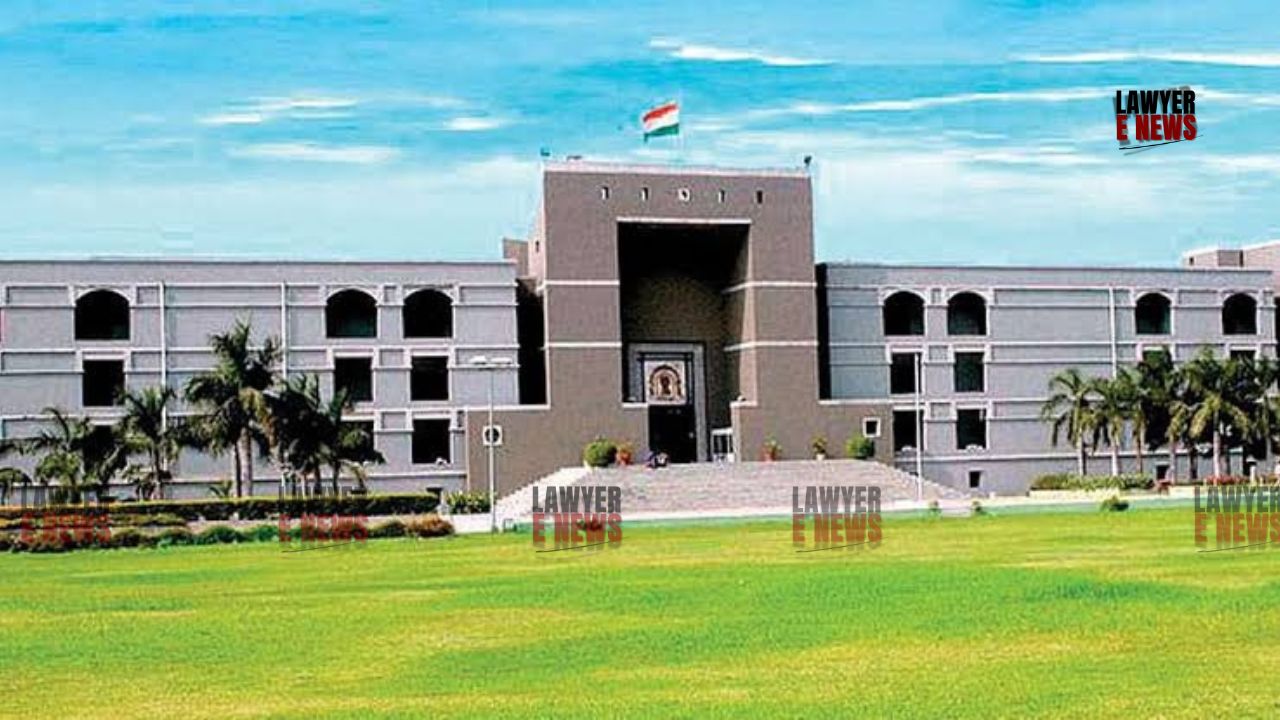
“Continuance of Pregnancy in a Minor Rape Case Presumed to Cause Grave Mental Injury”, High Court of Gujarat permitting the medical termination of pregnancy of a 14-year-and-6-month-old minor rape survivor. Exercising powers under Articles 226 and 227 of the Constitution of India, the Court held that forcing a minor rape victim to continue pregnancy would violate her right to life with dignity under Article 21, reiterating that the “best interest of the victim” must remain paramount.
The Court allowed the petition seeking termination of a 15-week pregnancy, relying on the Medical Termination of Pregnancy Act, 1971, as amended in 2021, and issued detailed safeguards, including directions for DNA preservation, post-operative care, and protection of any child born alive under the Juvenile Justice Act.
The applicant, a minor girl aged 14 years and 6 months, approached the High Court through her guardian after an FIR No. 11821014251231 of 2025 was registered at Dhanpur Police Station, Dahod, for offences under Sections 137(2) and 87 of the Bharatiya Nyaya Sanhita, 2023, alleging rape. The pregnancy was a direct consequence of the sexual assault.
Earlier proceedings seeking termination were withdrawn due to the victim’s temporary abduction. Once the victim was traced and reunited with her parents, she reiterated her unwillingness to continue the pregnancy. Acting on judicial directions, a Medical Board comprising gynaecologists, psychiatrist, physician and radiologist examined the victim and reported that the pregnancy was approximately 15 weeks, and that medical termination was permissible and safe under the MTP Act.
The Court was required to consider whether a minor rape survivor could be compelled to continue pregnancy, despite medical opinion permitting termination, and whether constitutional courts could intervene beyond procedural objections. Central to the adjudication were Sections 3 of the MTP Act, Rule 3B of the MTP Rules (as amended in 2021), and the constitutional guarantee of personal liberty and dignity under Article 21.
The State supported termination but sought directions for scientific preservation of fetal tissue for DNA profiling, balancing the victim’s rights with investigative necessities.
“Reproductive Choice Is Inseparable From Personal Liberty Under Article 21”
Relying extensively on X v. Union of India, the Court reiterated that the MTP Act is a “progressive legislation which recognizes the autonomy of the pregnant woman and respects her right to choose the course of her life.” The judgment quoted the Supreme Court’s observation that “where any pregnancy is alleged by the pregnant woman to have been caused by rape, the anguish caused by the pregnancy is presumed to constitute a grave injury to the mental health of the woman.”
The Court emphasized that Rule 3B expressly permits termination up to 24 weeks for minors and survivors of sexual assault, leaving no statutory ambiguity. It further noted that medical opinion confirmed both safety and permissibility, removing any legal impediment.
“Asking a Child to Give Birth to Another Child Is Constitutionally Impermissible”
Drawing from Suchita Srivastava v. State (UT of Chandigarh) and Minor R through Mother H v. State of NCT of Delhi, the Court observed that reproductive choice is a sacrosanct facet of bodily integrity. Justice Mengdey underscored that compelling a minor rape survivor to continue pregnancy would “aggravate trauma, mental agony and possible social ostracism,” directly infringing her right to live with dignity.
The judgment echoed the Delhi High Court’s poignant words that “it would not be appropriate to expect the minor victim who is a rape victim to take the burden of giving birth and raising a child… Doing so will amount to asking a child to give birth and raise another child.”
Best Interest Doctrine and Victim-Centric Justice
Invoking the “best interest” theory, the Court held that constitutional adjudication in such cases must remain victim-centric rather than procedure-centric. The minor’s psychological well-being, long-term impact, and social realities were accorded primacy over technical objections.
The Court recorded that “each day’s delay will add to the victim’s agony”, justifying urgent judicial intervention.
Directions and Safeguards Ordered by the Court
The High Court permitted termination at Zydus Medical College and Hospital, Dahod, directing constitution of a team of three senior gynaecologists along with a psychologist, supported by other specialists. The Court mandated comprehensive pre- and post-termination care, while also safeguarding investigative interests by directing that fetal tissue be scientifically preserved and handed over to the Investigating Officer for DNA identification.
Significantly, the Court provided for the eventuality of a live birth, directing that the child be given best medical treatment, and if the victim declined responsibility, the State and its agencies would assume full responsibility under the Juvenile Justice (Care and Protection of Children) Act, 2005.
Allowing the petition, the Gujarat High Court reaffirmed that constitutional courts cannot remain silent spectators when a child rape survivor’s dignity, autonomy and mental health are at stake. The judgment harmoniously balances statutory mandates, constitutional morality, victim welfare and investigative needs, reinforcing that the law must heal, not re-traumatize.
Date of Decision: 02 February 2026





