SARFAESI Act | Sale Certificate Cannot Be Issued In Favour Of A Third-Party Nominee Who Was Not The Auction Bidder: Supreme Court SARFAESI Act | Auction Sale Conducted In Violation Of Mandatory Rules And Subsisting Restraint Order Is Vitiated In Law: Supreme Court Recovery Of Alleged Overpayment From A Separate, Unrelated Contract Without Notice Violates Principles Of Natural Justice: Supreme Court IBC | Adjudicating Authority Has Power To Recall CIRP Admission Order If It Was Obtained Through Fraud Or Collusion: Supreme Court Section 138 NI Act | Presumption Of Service Is Attracted Once Notice Is Dispatched To Correct Address Of Drawer: Supreme Court Operation Of Hookah Bars In Restaurants Constitutes Violation Of Rule 4(3) Of COTPA Rules: Allahabad High Court High Court Cannot Recall Order Passed On Merits Even If Passed Ex-Parte: Bombay High Court Administrative Authorities Cannot Pass Orders Having Civil Consequences Without Meaningful Consideration Of The Affected Employee’s Response: Allahabad High Court Discharge Application Cannot Be Converted Into A 'Mini-Trial' To Assess Evidentiary Sufficiency: Andhra Pradesh High Court Order VII Rule 11 CPC | Plaint Must Be Rejected If Allegations Are Falsified By Documents Annexed To Plaint Or Based On Non-Existent Law: Bombay High Court Police Cannot Interfere In Pending Civil Disputes Or Act As Arbitrators In Private Property Conflicts: Andhra Pradesh High Court Contract For Personal Services Between Doctor And Hospital Is Determinable And Not Specifically Enforceable: Calcutta High Court Allegations Of Sexual Offences Cannot Be Quashed Based On Contradictory Evidence Requiring Mini-Trial: Delhi High Court PMLA Adjudication | Failure To Expressly Discuss Every Submission In Written Synopsis Does Not Vitiate Order Under Principles Of Natural Justice: Karnataka High Court Prolonged Separation Of Sixteen Years Constitutes Cruelty Under Special Marriage Act: Kerala High Court Grants Divorce Order XII Rule 6 CPC | Decree Of Possession Can Be Granted On Admissions Even If Relationship Of Landlord-Tenant Is Disputed: Delhi High Court Non-Framing Of Issues Under Order XIV CPC Does Not Vitiate Trial Unless Prejudice Is Proved: Madras High Court Order 47 Rule 1 CPC | Review Jurisdiction Cannot Be Invoked To Cure Failure To Produce Evidence That Was Within Knowledge Of Applicant: Madhya Pradesh High Court Codicil To A Will Must Be Proved Like A Will; Propounder Must Remove All Suspicious Circumstances: Punjab & Haryana High Court Mere Lodging Of Section 498-A IPC Case Not Cruelty: Telangana High Court Sets Aside Divorce Decree Order XVII Rule 3 CPC | Power To Dismiss Suit For Default Of Evidence Is Drastic And Must Be Exercised Sparingly: Punjab & Haryana High Court

FIR registered against judge and her Husband by CBI

07 May 2024 8:19 AM

By: Admin


The Central Bureau of Investigation (CBI) has charged Rachna Tiwari Lakhanpal and her husband Alok Lakhanpal with amassing excessive assets.

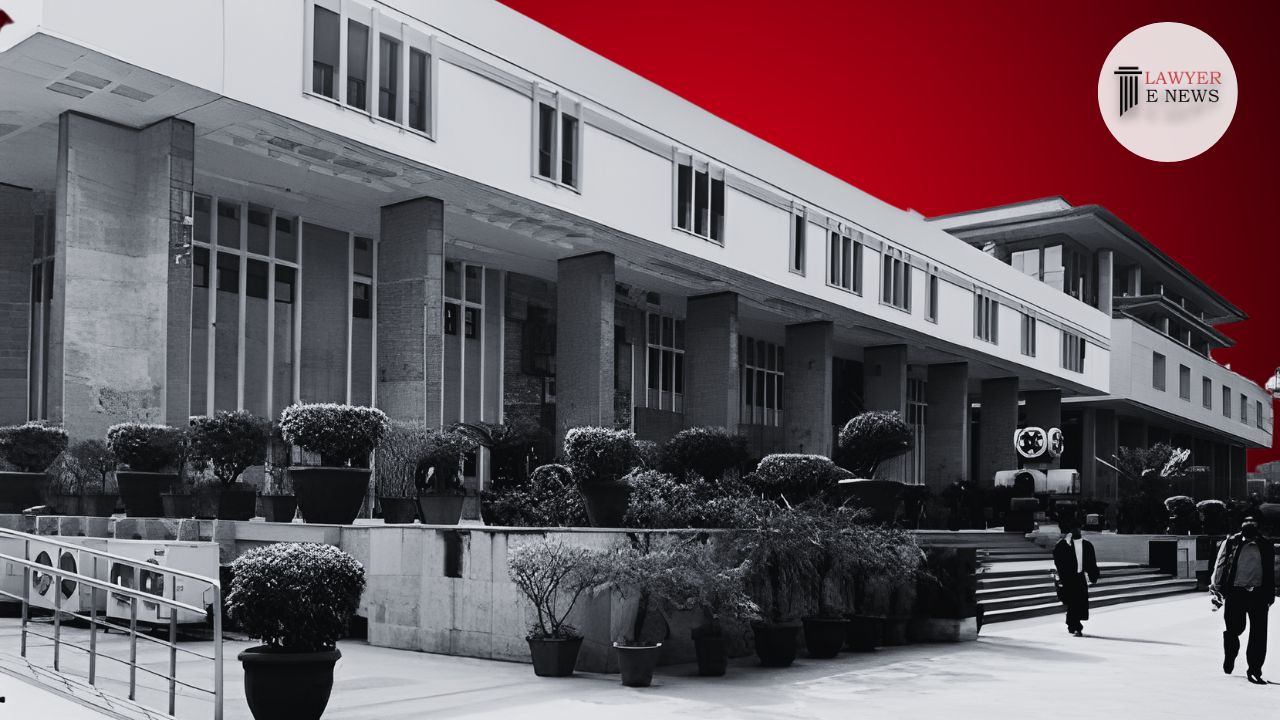
Under the Prevention of Corruption Act, Senior Civil Judge (West) Lakhanpal of the Tis Hazari Courts in New Delhi has been charged with criminal misconduct by a public servant.

According to the first information report, Lakhanpal's husband, an attorney named Alok Lakhanpal, amassed enormous assets between July 2006 and September 2016.

According to the FIR, the two amassed disproportionate assets totaling 2,99 crores during the specified time frame.

Lakhanpal and her husband possessed movable assets totaling 1.09 lakh at the beginning of the relevant period. At the end of the evaluation period, it reached 3.53 million.

According to the FIR, their income during the specified period was 1.05 million, while their expenditures were 51.73 million.

"It is pertinent to note that Ms. Rachna Tiwari Lakhanpal has not informed the department about the 9,40,990 in unaccounted cash that was recovered during the house search, nor has she disclosed the actual value of house no. R-546, New Rajinder Nagar, New Delhi, which is 1,605,000. Even Alok Lakhanpal participated actively in the acquisition of numerous assets in his own name and in the names of his relatives. Thus, he is also liable for abetting the crime under section 109 of the Indian Penal Code, and Rachna Tiwari Lakhanpal, Senior Civil Judge (under suspension) is liable for the crime of acquiring disproportionate assets under sections 13(1)(e) and 13(2) of the PC Act 1988 "It's been stated.

In 2016, Tiwari was caught accepting bribes, leading to her and her husband's arrest.

She subsequently obtained bail in that case.

Latest Legal News