-
by sayum
24 August 2026 6:22 AM







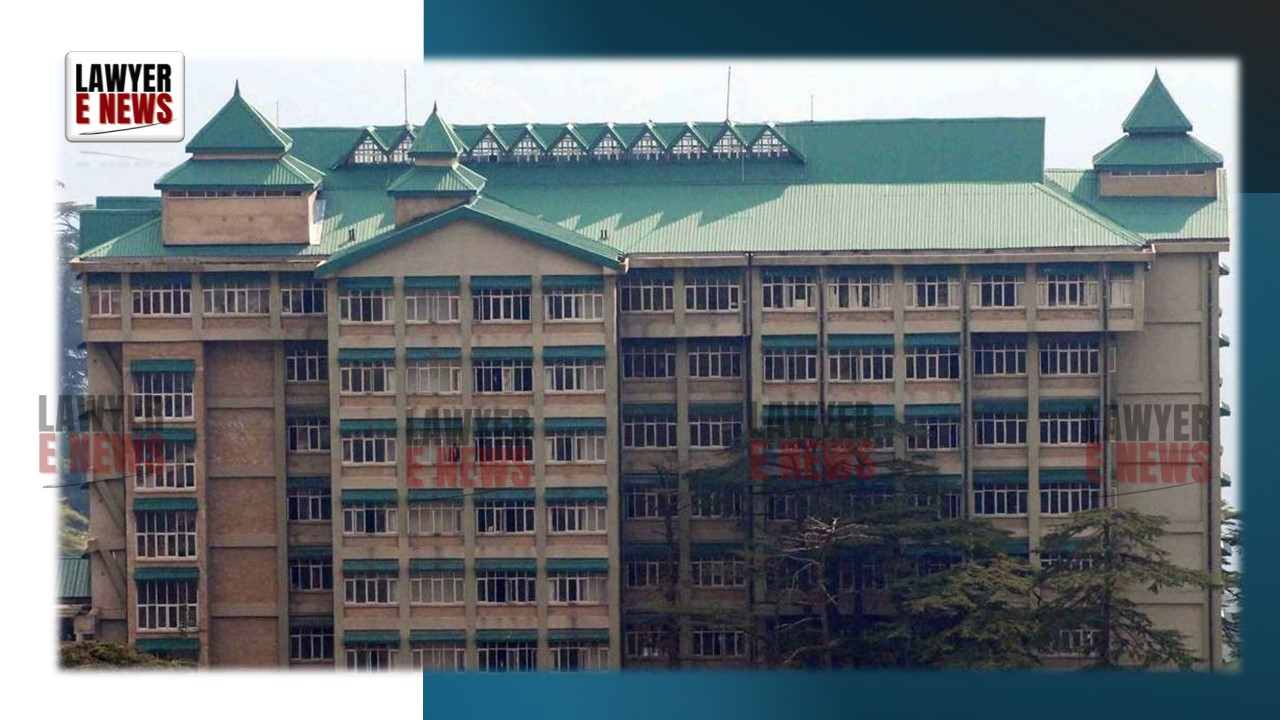
"Marriage Proves Intent Was Not Deceptive, Allegations Fail Rape Test of False Promise" — In a significant ruling Himachal Pradesh High Court quashed an FIR alleging rape, cheating, IT Act offences, and criminal conspiracy, observing that the complaint arose from emotional turmoil following marital discord and not from an act of criminal misconduct. The judgment in Shubham Parmar & Ors. v. Kashish Sharma & Anr., was passed by Justice Virender Singh, under Section 528 of the Bharatiya Nagarik Suraksha Sanhita, 2023 (BNSS).
The case, stemming from a romantic relationship that led to marriage and then divorce, was found by the Court to have no criminal substratum. The High Court held that compelling the petitioners to face trial after the parties had solemnized marriage, later dissolved by mutual consent, would amount to a “misuse of criminal justice system” and “abuse of process of law.”
Court Holds Allegations of Rape on False Promise of Marriage Collapse in View of Subsequent Matrimony
Justice Virender Singh examined the allegations made by the complainant, Kashish Sharma, which included a detailed account of alleged rape, coercion, blackmail through morphed videos, and repeated threats by petitioner Shubham Parmar. However, despite these grave charges, the Court noted a key legal inconsistency: the parties had solemnized marriage after the alleged incident of rape.
“From the admitted fact that the complainant married the petitioner on 9.5.2019, nearly three months after the alleged incident of 10/11.2.2019, and subsequently entered into a settlement and obtained mutual divorce, it cannot be said that the initial promise to marry was false from inception,” the Court observed.
Referring to the landmark ruling in Sonu @ Subhash Kumar v. State of U.P., (2021) AIR SC 1405, the Court reaffirmed: “To establish rape based on a false promise to marry, it must be shown that the promise was false at the time it was made and given in bad faith solely to secure sexual consent.”
The judgment further cited Prithvirajan v. State, Nitin Nikhare v. State of Maharashtra, and Madhukar v. State of Maharashtra to reinforce the legal threshold for prosecuting rape in relationships arising from failed romantic or marital promises.
Marriage, Divorce, and Compromise Make Continuation of Proceedings Redundant
The FIR in question—No. 135 of 2019, dated 16.11.2019—was registered under serious provisions including Sections 376 (rape), 354 (assault on woman), 292 (obscenity), 420 (cheating), 498A (cruelty), 506 (criminal intimidation), and Sections 65, 66B, 67, 67A of the Information Technology Act, among others.
The High Court took note that the complainant, despite her earlier allegations of sexual exploitation and digital circulation of morphed explicit content, had later entered into marriage with the petitioner, and the couple jointly obtained a divorce decree on 25.6.2025 by mutual consent under Section 13B of the Hindu Marriage Act, 1955.
“Continuing criminal proceedings in such circumstances will only revive past trauma, disrupt settled lives, and burden judicial resources with no realistic possibility of conviction,” the Court said.
It noted that the complainant was given several opportunities to contest the quashing petition, but she chose not to appear or oppose the plea, effectively reinforcing the inference that she no longer wished to pursue the case.
Digital Offences Alleged Under IT Act Also Dismissed in View of Compromise and Lack of Evidentiary Purpose
While the complainant had alleged creation and dissemination of an obscene MMS by the petitioner, the Court declined to examine the digital evidence in light of the parties’ subsequent settlement and mutual divorce.
“It would serve no fruitful purpose to reopen technical investigations when the complainant herself has moved on and has not supported the prosecution,” Justice Singh held, reiterating the settled law that courts can quash proceedings even in serious offences if the complainant resiles and broader justice so demands.
High Court Cautions Against Weaponization of Rape Law in Domestic Disputes
Referring to its own recent ruling in Mahavir & Ors. v. State of H.P. and the Supreme Court’s decision in Jasveer Singh Sodhi v. State of H.P., the High Court emphasized that:
“Allegations of grave offences like rape, when filed as a reaction to matrimonial breakdown or as an extension of civil disputes, must be judicially scrutinized with caution. Not every failed relationship or abusive marriage can be converted into a criminal prosecution under IPC Sections 376 or 498A.”
The Court also relied on the complainant’s own admission in the mutual divorce petition that criminal complaints arose due to “major differences” between the parties, not as a result of pre-marital deception or criminal intention.
“This Court is of the view that the FIR was born out of an emotional outburst, not out of genuine criminality,” the bench held.
FIR Quashed; Trial Would Be Abuse of Process
In conclusion, the Court ruled: “If the petitioners are forced to face the trial, arising out of FIR in question, the same would be nothing but abuse of process of law... The ingredients of the offences under which the FIR was registered do not survive in the face of admitted facts and developments.”
Accordingly, FIR No. 135 of 2019 dated 16.11.2019 and all proceedings arising therefrom were quashed, and all miscellaneous applications were disposed of.
Date of Decision: January 6, 2026