-
by sayum
01 August 2026 2:00 PM







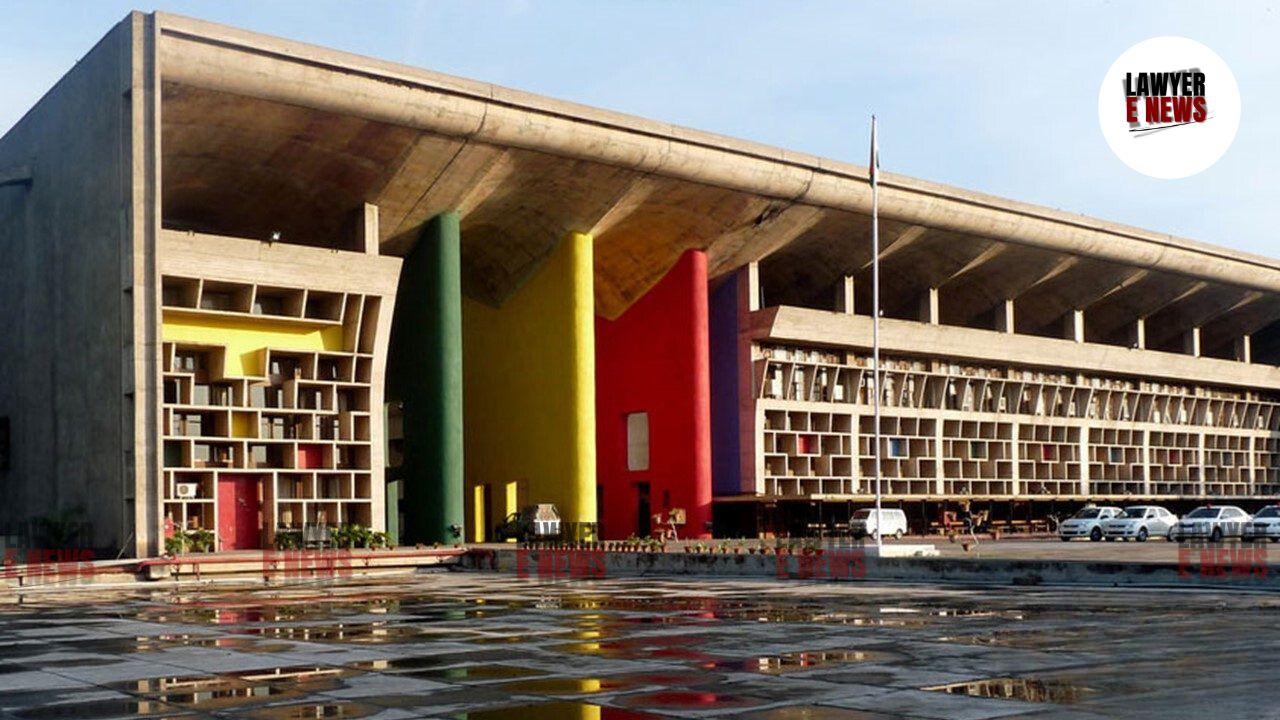
"Assignment of Debt Does Not Extinguish Excluded Rights of Creditors," Court Affirms in Pradeep Aggarwal vs. RBI - The High Court of Punjab and Haryana has dismissed the petitions of personal guarantors challenging the recovery actions initiated by financial creditors after the approval of the corporate debtor's resolution plan. The court upheld the financial creditors' right to pursue remedies against personal guarantors, emphasizing that the rights retained by the creditors were not extinguished by the assignment of debt to the new resolution applicant.
Petitioners Pradeep Aggarwal, Vikas Aggarwal, Kamlesh Devi Aggarwal, Archana Aggarwal, and Sapna Aggarwal provided personal guarantees for term loans and working capital facilities granted to M/s Asian Colour Coated Ispat Limited (ACCIL) by a consortium of lenders between 2010 and 2015. In 2016, ACCIL's account was declared a Non-Performing Asset (NPA), leading to proceedings under the Insolvency and Bankruptcy Code (IBC). A resolution plan submitted by JSW Steel Coated Products Limited was approved by the National Company Law Tribunal (NCLT) in 2020, and the debt was subsequently assigned to Hasaud Steel Limited, a special purpose vehicle (SPV) of JSW Steel Coated Products Limited.
The High Court reiterated the finding of the National Company Law Appellate Tribunal (NCLAT) that financial creditors retained "excluded rights," which allowed them to pursue personal guarantors. The court noted that the resolution plan explicitly carved out these rights, thereby preserving the creditors' ability to enforce guarantees despite the assignment of debt.
The court addressed the petitioners' argument regarding the extinguishment of subrogation rights under Sections 140 and 141 of the Indian Contract Act, 1872. It was observed that insolvency resolution under the IBC treats the rights of personal guarantors differently, prioritizing the interests of financial creditors and the revival of the corporate debtor over the guarantors' rights.
The court emphasized that the petitioners' appeals against the NCLAT's decision had been dismissed by the Supreme Court, and this dismissal in limine did not necessitate a re-examination of the issues by the High Court. It was highlighted that the Supreme Court's dismissal underscored the correctness of the NCLAT's decision.
The court extensively discussed the principles of insolvency resolution, particularly the preservation of financial creditors' rights under approved resolution plans. It affirmed that the IBC operates as a comprehensive code, and its provisions override conflicting laws, including the RBI's prudential norms and the Transfer of Property Act. The judgment highlighted the importance of upholding the creditors' rights to ensure the effective resolution of corporate debtors and the stability of the financial system.
Justice Lisa Gill remarked, "The assignment of debt under the Resolution Plan cannot be equated with general principles of assignment as the IBC is a self-contained Code with a non-obstante clause as contained in Section 238 thereof. The financial creditors are free to avail rights and remedies as permissible under applicable laws in respect of 'excluded rights.'"
The High Court's decision underscores the judiciary's commitment to preserving the integrity of the insolvency resolution process and protecting the rights of financial creditors. By affirming the creditors' ability to enforce personal guarantees despite the resolution of the corporate debtor, the judgment reinforces the legal framework governing insolvency and bankruptcy in India.
Date of Decision: July 1, 2024