-
by sayum
25 August 2026 9:55 AM







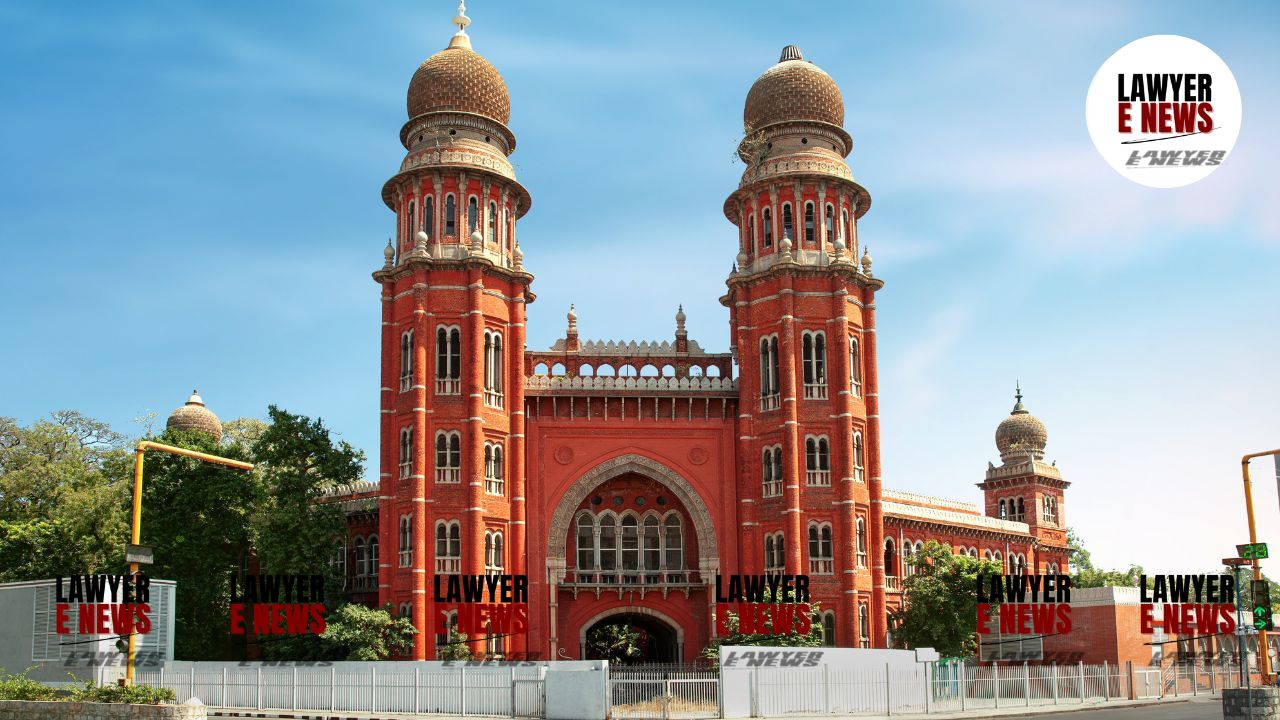
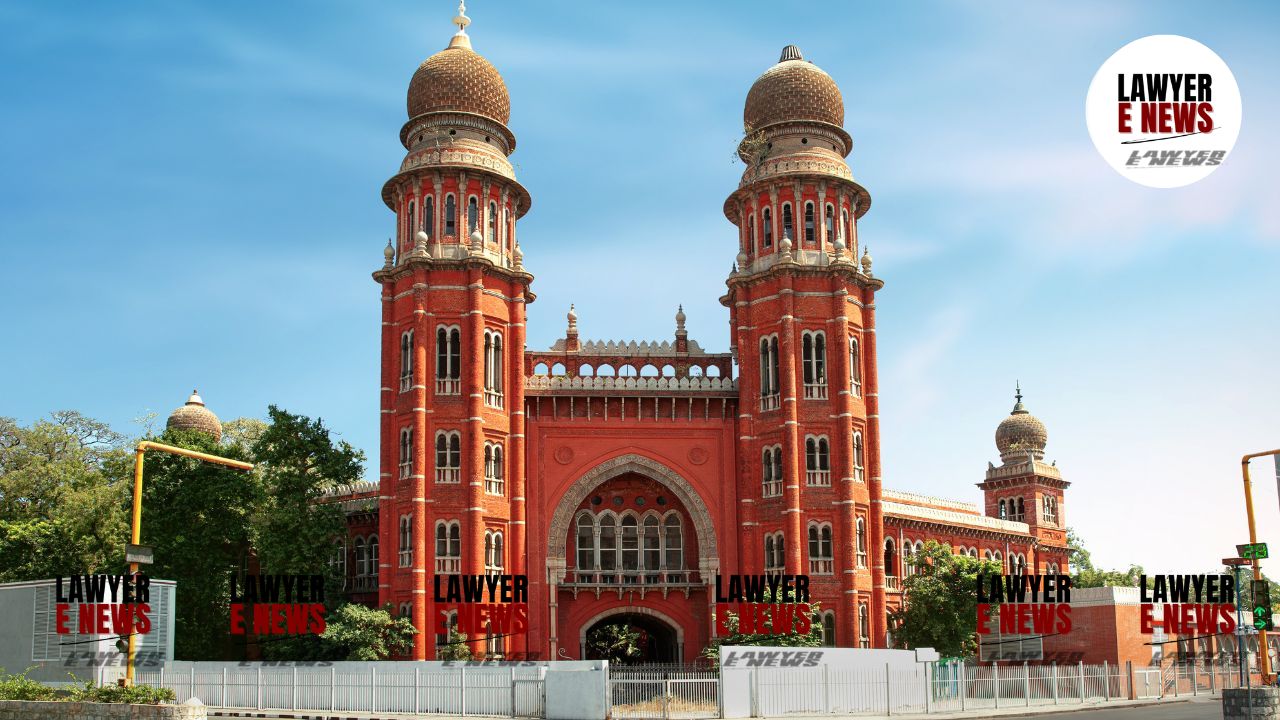
“Dummy appeals filed merely to overcome limitation bar cannot be treated as valid institution of proceedings,” observed Justice Dr. Anita Sumanth of the Madras High Court, rejecting delay condonation petitions filed by the State of Tamil Nadu in a set of tax revision cases against SPI Cinemas. The ruling, delivered on 17 November 2025, brings to light judicial disapproval of bureaucratic practices that subvert procedural discipline under the Tamil Nadu Value Added Tax Act, 2006 (TNVAT Act).
The case—The State of Tamil Nadu v. SPI Cinemas Pvt. Ltd.—was heard by a Division Bench comprising Justice Dr. Anita Sumanth and Justice N. Senthilkumar. It involved the State’s petitions to condone a delay of 78 days in filing tax revision petitions under Section 60 of the TNVAT Act, following adverse decisions by the Tamil Nadu Sales Tax Appellate Tribunal (STAT). However, the Bench delivered divergent opinions, leading to the matter being referred to the Hon’ble Chief Justice for resolution.
“The Appeal Filed Was Not Even in Prescribed Form – It Was a Template Filed Solely to Beat Limitation”: Justice Anita Sumanth
In her detailed ruling, Justice Dr. Anita Sumanth denied the delay condonation, finding the appeal process a textbook example of "administrative indifference" and "litigation by template." Noting the filing of what the State itself termed a "dummy appeal" online, she held:
“The appeal filed online on 08.05.2024 was not in Form EE, was unverified, lacked questions of law, and contained only boilerplate grounds. This cannot qualify as a valid institution under law.”
The Court highlighted that the Department delayed re-presentation by an additional 186 days, during which period it substantially altered the grounds of appeal and finally framed questions of law. Justice Sumanth ruled that the earlier filing was only a “tactic to freeze the limitation clock,” which, when exposed to judicial scrutiny, revealed no “sufficient cause” under Section 5 of the Limitation Act, 1963.
She also invoked the Supreme Court’s dictum in Office of the Chief Post Master General v. Living Media India Ltd., (2012) 3 SCC 563, stating:
“Condonation of delay is an exception and should not be used as an anticipated benefit for government departments. The law shelters everyone under the same light and should not be swirled for the benefit of a few.”
“Judicial Discretion Must Recognize Bureaucratic Complexities When Government Is Litigant”: Justice N. Senthilkumar Allows Delay
Dissenting from his sister judge, Justice N. Senthilkumar allowed the petitions for condonation, invoking the Supreme Court's liberal approach in government litigation as laid down in State of Haryana v. Chandra Mani, (1996) 3 SCC 132.
Referring to the vacancy of the Deputy Commissioner (Legal) and the Joint Commissioner during the crucial period of appeal vetting, he concluded that the delay was procedural and not wilful:
“The petitioner has shown sufficient cause in the additional affidavit. The delay is administrative and unintentional. The departmental process is inherently slow due to file movements and statutory approvals.”
Emphasizing that justice should not be denied at the threshold, he held:
“When the aggrieved party is the State, the Court must consider the systemic nature of delay. Condoning such delay ensures that the merits of the matter—particularly involving substantial questions of tax law—are addressed.”
State Sought Reversal of Tribunal Order Deleting Penalty for Alleged Turnover Suppression
The case arose from a series of assessments under the TNVAT Act for the years 2009–10 to 2013–14, where SPI Cinemas was subjected to penalties under Section 27(3) for alleged wilful non-disclosure of taxable turnover. The Tribunal, however, had deleted the penalty, prompting the State to move the High Court.
The Revenue contended that penalty under Section 27(3) is mandatory upon detection of suppression, relying on State of Tamil Nadu v. Vijay Steels and Commissioner of Sales Tax v. H.M. Esufali, arguing that:
“Mens rea is not required. Once suppression is found, penalty must follow.”
However, the delay in initiating the revision proceedings became the focal issue—overshadowing the merits for the time being.
Observations on the “Dummy Appeal” Tactic
Justice Sumanth expressed strong disapproval over the Revenue’s practice of filing “dummy” or template-based appeals solely to buy time under limitation:
“This is not a solitary instance. Such dummy appeals are filed routinely and even those are often filed beyond limitation. The practice fundamentally undermines the integrity of judicial process.”
She noted that the real appeal grounds were drafted only after the 186-day re-presentation delay, and such conduct amounted to an abuse of process.
“An appeal is not merely a placeholder to stop the clock. It is a legal invocation of appellate jurisdiction, which must be in prescribed form, properly verified, and accompanied by substantial questions of law.”
Split Verdict: Matter Referred to Hon’ble Chief Justice
With Justice Sumanth dismissing the condonation and Justice Senthilkumar allowing it, the matter now stands referred to the Hon’ble Chief Justice of the Madras High Court under Rule 36 of the Madras High Court Original Side Rules, for nomination of a third judge to resolve the cleavage of opinion.
In the meantime, the Court also recalled the earlier order condoning delay in T.C.No.63 of 2025 (related to the year 2009–10), which had been allowed without notice to the respondent. The Registry was directed to list that delay petition afresh.
The split verdict marks a significant moment in judicial accountability and administrative discipline in tax litigation. On one hand, it upholds the need for institutional efficiency in government litigation, while on the other, it acknowledges the realities of administrative delay.
While one judge found no excuse for filing defective appeals to dodge limitation, the other insisted that access to justice should not be sacrificed for procedural lapses.
The final word now rests with the Chief Justice’s nominee, who will have to balance the competing considerations of procedural integrity and justice on merits.
Date of Decision: 17 November 2025