-
by sayum
12 October 2026 7:53 AM








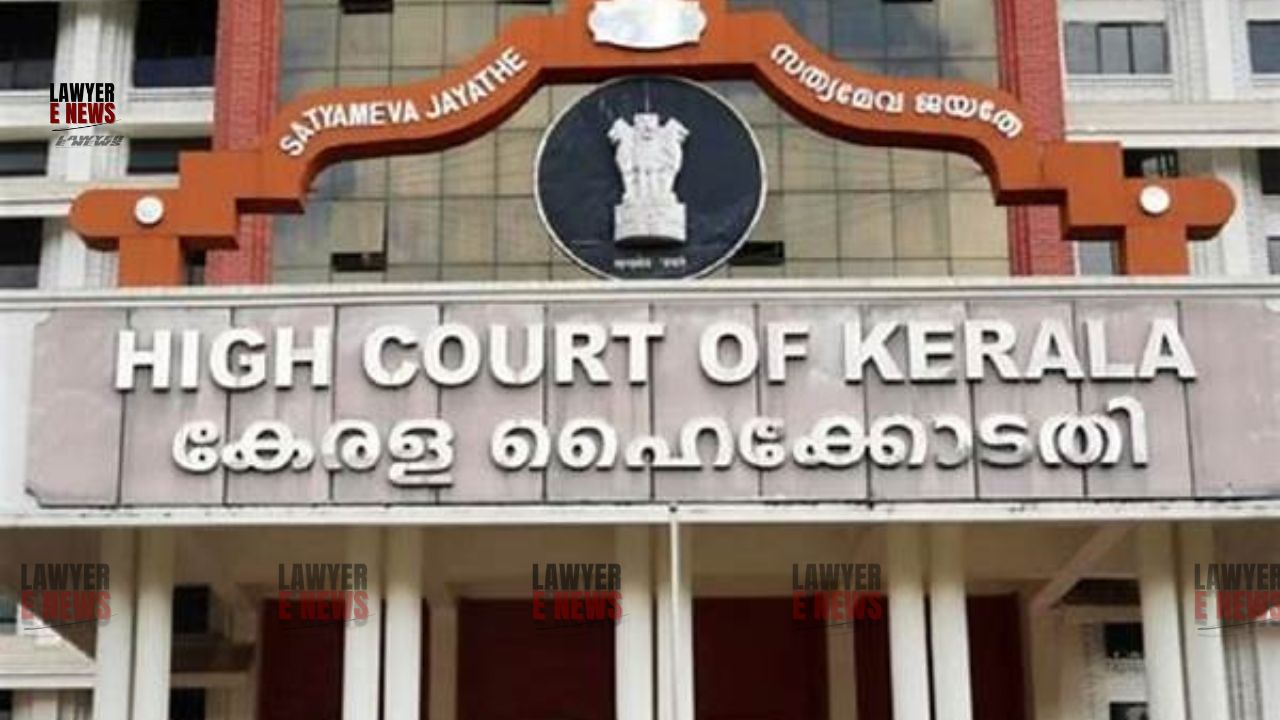
"In the interests of justice, the parties ought to be afforded an opportunity to adduce evidence to substantiate their contentions." Kerala High Court, in a judgment dated 9 October 2026, held that a Family Court cannot summarily dismiss a petition for the recovery of gold ornaments and patrimony merely on the ground that the evidence adduced by the petitioner is insufficient, particularly when the respondent is set ex-parte.
A division bench comprising Justice Sathish Ninan and Justice P. Krishna Kumar observed that when a party's oral testimony remains uncontroverted due to the respondent's absence, the trial court should, at the minimum, provide the petitioner an opportunity to lead further evidence rather than rejecting the claim entirely.
The appellant-wife had approached the Family Court, Pathanamthitta, seeking the recovery of 30 sovereigns of gold ornaments and Rs. 3,00,000 allegedly given as patrimony to her husband and mother-in-law. The respondent-husband failed to enter an appearance before the trial court and was consequently set ex-parte. Despite the uncontroverted evidence presented by the wife, the trial court dismissed the petition, citing insufficient proof to establish the claims.
The primary question before the High Court was whether a Family Court is justified in dismissing a petition for recovery of property when the respondent is ex-parte and the petitioner's testimony remains unchallenged. The court also examined whether a trial court is duty-bound to provide an opportunity for further evidence if it finds the initial material on record insufficient for granting the claimed relief.
Nature of Ex-Parte Proceedings
The bench noted that in ex-parte proceedings, the burden on the petitioner is balanced by the fact that the testimony goes untested. The court highlighted that where the respondent chooses not to appear or contest the pleadings, the standard for evidence should be applied with a view to ensuring substantial justice. The court remarked that the appellant appeared to have acted under the impression that her unchallenged testimony would suffice for a decree.
Trial Court’s Erroneous Assessment
The High Court found that the trial court’s reasoning for dismissal was flawed, specifically noting that the trial court erroneously claimed no marriage photographs were produced, whereas Ext. A2, a photograph, was actually marked in evidence. The bench observed that the trial court failed to exercise its discretion to assist the party in bridging evidentiary gaps before resorting to a dismissal.
No Absolute Rejection Based on Minor Inconsistencies
Regarding the respondent's argument that the appellant’s pleadings were inconsistent—specifically regarding the exact weight of gold—the High Court clarified that such minor discrepancies in pleadings do not warrant an outright dismissal of the entire suit. The court held that these are matters that can be clarified through proper evidence during trial.
"We do not find any such apparent conflict in the appellant's case as would justify rejection of her claim in its entirety."
Opportunity for Fair Trial
The bench emphasized that the primary objective of a Family Court is to resolve disputes through a process that ensures justice for both parties. By denying the appellant an opportunity to substantiate her claim despite the ex-parte status of the respondent, the trial court denied the petitioner a fair opportunity to prove her case.
"We are of the view that in the interests of justice, the parties ought to be afforded an opportunity to adduce evidence to substantiate their contentions."
The court concluded that the interests of justice necessitated setting aside the impugned judgment. The matter was remitted back to the Family Court for a fresh hearing, allowing both parties to lead evidence to substantiate their respective stands, untrammeled by the trial court's previous observations.
Date of Decision: 09 October 2026