-
by sayum
13 October 2026 6:59 AM







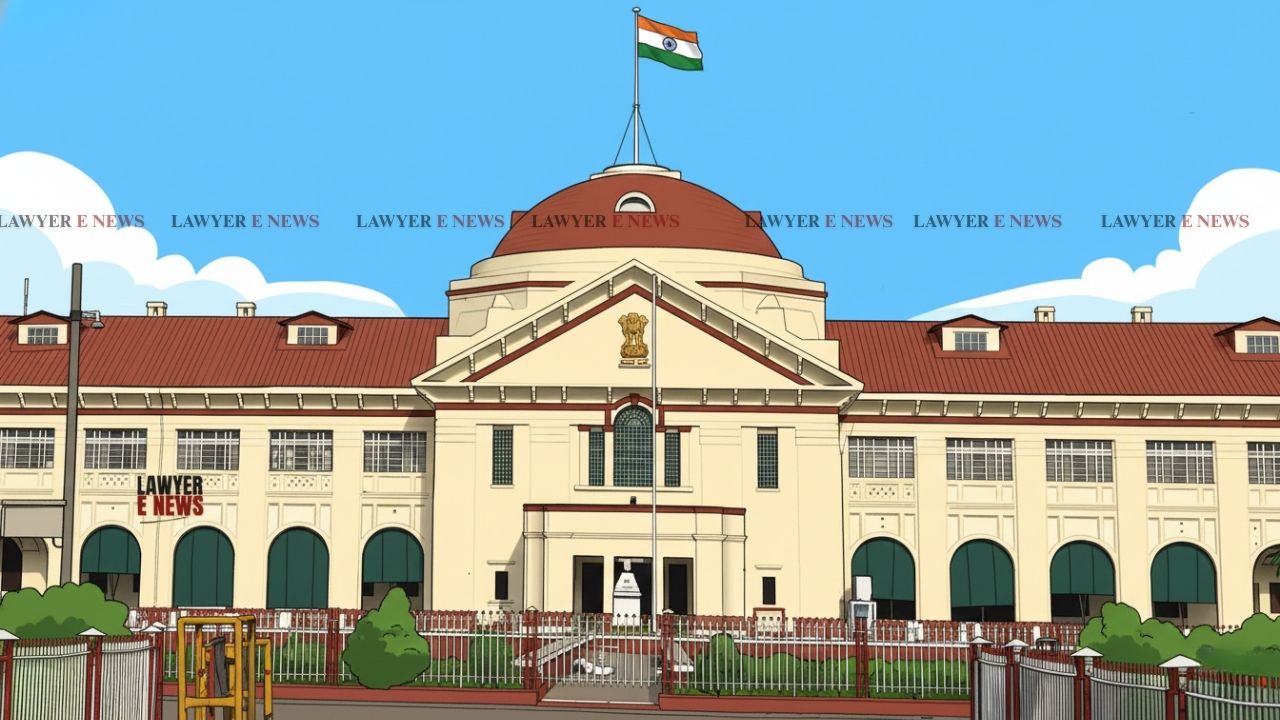
"The court has always to be on guard to see that the statement of the deceased was not as a result of either tutoring or prompting or a product of imagination." Patna High Court, in a significant ruling dated 06 October 2026, set aside the conviction of a husband under Section 304B of the Indian Penal Code (IPC), holding that the prosecution failed to establish the foundational ingredients of dowry death—namely, cruelty or harassment "soon before death" related to dowry demands.
A division bench of Justice Rajeev Ranjan Prasad and Justice Sunil Dutta Mishra observed that in the absence of cogent evidence proving these statutory requirements, the reverse burden of proof under Section 113B of the Indian Evidence Act cannot be invoked against an accused.
The case originated from a tragic incident in October 2020 where the victim sustained fatal burn injuries. The prosecution alleged that the victim’s husband and in-laws had been subjecting her to cruelty over a demand for a motorcycle. While the trial court had acquitted the parents-in-law, it convicted the husband, leading to cross-appeals before the High Court.
The primary legal issue before the court was whether the prosecution had succeeded in proving the essential ingredients of Section 304B IPC and if the fardbeyan recorded by the police could be relied upon as a valid dying declaration to secure a conviction.
Court Rejects Antedated Fardbeyan
The bench meticulously scrutinized the fardbeyan, noting that it was not recorded in the presence of any doctor or magistrate, and its authorship remained unproved. Crucially, the court found evidence of antedating, as a doctor's initial on the second page of the document was dated 05 October 2020, contradicting the police's claim that the document was forwarded on 04 October 2020. The court held that the lack of medical certification regarding the victim's "fit state of mind" at the time of recording rendered the fardbeyan unsafe to rely upon as a dying declaration.
Evidence of Cruelty Lacking
The court further analyzed the testimony of prosecution witnesses, noting a lack of corroboration regarding the alleged dowry demands. The bench observed that the witnesses, who were closely related to the deceased, failed to provide specific details or reliable accounts of harassment occurring in close proximity to the victim’s death. Without establishing this "proximate link," the prosecution’s case under Section 304B IPC crumbled, as the statutory presumption under Section 113B of the Indian Evidence Act only arises once the prosecution discharges its initial burden.
Court Explains Rule Of Caution
The court emphasized that while a dying declaration can be accepted without a doctor’s certificate if the court is satisfied of its veracity, the situation here demanded the strict application of the "rule of caution." The lack of an independent witness, the suspicious delay in transmitting the FIR to the jurisdictional magistrate, and the failure of the investigating officer to account for the timeline created a "huge dent" in the prosecution's foundation, necessitating an acquittal.
"The prosecution has not been able to demonstrate beyond all reasonable doubts that there was a demand of dowry and that soon before the occurrence, the victim was tortured and harassed for non-fulfillment of the demand of dowry. Until these two ingredients are proved beyond all doubts, the reverse burden would not come on the accused to prove their innocence."
Failure To Put Incriminating Material To Accused
The court also highlighted a procedural lapse during the trial, noting that the accused was not questioned about the fardbeyan during his statement under Section 313 of the Code of Criminal Procedure (CrPC). This failure to bring crucial incriminating evidence to the notice of the accused further weakened the prosecution's case. Consequently, the High Court dismissed the appeal against the acquittal of the parents-in-law and allowed the husband’s appeal, setting aside his conviction and ordering his immediate release.
Date of Decision: 06 October 2026