Section 151 CPC Cannot Be Invoked For Restoration Of Possession When Statutory Remedy Under Section 144 Exists: Calcutta High Court 'Mere Assertion Of Higher Rent By Landlord Cannot Oust DRC Act': Delhi High Court Sets Aside Eviction Decree, Remands Matter Back Sections 27 & 65B Evidence Act Flouted | Police Cannot Jeopardise Liberty On Surmises: Supreme Court Awards ₹6 Lakh Reparation To Acquitted Undertrial Jailed For 6 Years RTI Act | Registrar Can Access Co-Operative Society Records For Information Applicant Without Prior Inquiry Satisfaction: Supreme Court Textiles Committee Act | Job Work Processing Of Handloom/Powerloom Fabric Not 'Manufacture', Cannot Borrow Definition From Central Excise Act: Supreme Court Order 21 CPC | Executing Court Must Adjudicate Third-Party Claims, Separate Suit Explicitly Barred Under Rule 101: Supreme Court Wakf Act | Gazette Notification Under Sec 5(2) Final If Unchallenged Within Limitation; Suit For Injunction Maintainable Without Title Declaration: Supreme Court Land Acquisition Act | Acquisition For Housing Society Requires Prior Approval Of Concrete Layout Scheme; Fraud Overrides Res Judicata & Delay: Supreme Court Electricity Act | Consumers Facing Power Theft Charges Entitled To Procedural Safeguards Under Section 126; Can File Objections & Appeal Under Section 127: Supreme Court SARFAESI Act | Supreme Court Directs Full & Final Settlement Of Debt Assigned To ARC To Save Running Enterprise, Disposes Section 7 IBC Proceedings IBC | CoC Cannot Withdraw Approved Resolution Plan From NCLT Merely Because Corporate Debtor's Financial Position Improved: Supreme Court Mere Presence As Customer At Spa Centre Does Not Attract Offences Under Sections 3, 4 & 5 Immoral Traffic (Prevention) Act: Andhra Pradesh High Court Section 376 IPC | Absence Of External Injuries Or Semen Does Not Discredit Credible Testimony Of Prosecutrix; Minor's Consent Immaterial: Allahabad High Court Probate Cannot Be Denied Merely Due To Disinheritance Of Natural Heirs If Propounder Successfully Removes Suspicious Circumstances: Bombay High Court Challenge To Decades-Old Patta Cancellation Barred By Delay & Laches; Litigant Sleeping Over Rights Cannot Unsettle Settled Position: Kerala High Court POCSO | Conviction Cannot Be Sustained On Victim’s Testimony If Found Inconsistent With FIR And Section 164 CrPC Statements: Calcutta High Court Preventive Detention | Unexplained Delay And Failure To Seek Cancellation Of Bail Vitiate Detention Order: Kerala High Court Once Execution & Attestation Are Proved, Suspicion Of Delay No Longer Operates: Bombay High Court Grants Probate In 26-Year-Old Will Dispute Tenant Cannot Claim Valid Surrender Of Premises By Handing Over Keys To One Co-Owner Who Is Also Company Director: Delhi High Court Taxation Law | Assessee Cannot Challenge Show Cause Notice After Opting For Settlement Commission: Delhi High Court Order 21 Rule 10 CPC | Decree For Mere Declaration Not Executable, Executing Court Cannot Direct Recovery Without Consequential Relief: Madhya Pradesh High Court Section 65B Indian Evidence Act | Electronic Records Not Accompanied By Certificate Are Inadmissible; Oral Evidence Cannot Substitute Mandatory Statutory Compliance: Madras High Court Reservation Beyond 50% Ceiling Without Extraordinary Circumstances Violates Articles 14, 15 And 16: Karnataka High Court Magistrate Can Take Cognizance Of Hate Speech Delivered In Closed Premises If Circulated On Social Media: Madras High Court No Development Cut Applicable On Land Acquisition Compensation When Both Acquired Land And Exemplar Are Small Plots: Punjab & Haryana High Court 'Extremely Barbaric': Orissa High Court Commutes Death Sentence To Life Imprisonment For Man Who Stabbed Wife 49 Times Motor Vehicles Act | Breach Of Licence Condition Doesn't Absolve Insurer Of Statutory Liability Towards Third Parties; 'Pay & Recover' Applies: Punjab & Haryana High Court Is Prior Notice To Judgment Debtor Mandatory In Possession Or Eviction Executions Filed Within Two Years? MP High Court Refers Question To Larger Bench Section 5 Limitation Act Inapplicable To Persona Designata; Quasi-Judicial Appellate Authority Cannot Condone Delay Absent Express Enabling Provision: Punjab & Haryana High Court

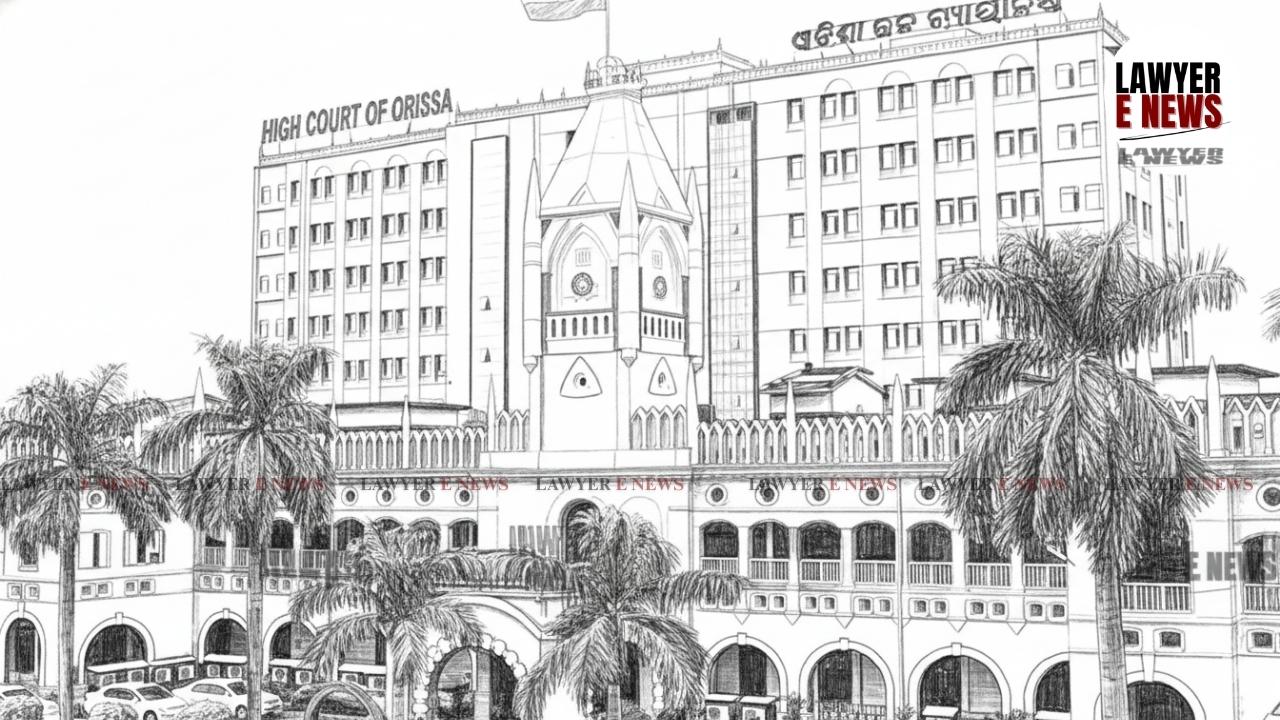
'Extremely Barbaric': Orissa High Court Commutes Death Sentence To Life Imprisonment For Man Who Stabbed Wife 49 Times

27 October 2026 2:40 PM

By: sayum


"The community may entertain such a sentiment when the crime is viewed from the platform of the motive for, or the manner of commission of the crime, or the anti-social or abhorrent nature of the crime." Orissa High Court, in a significant ruling on August 25, 2026, held that while a crime may be extremely barbaric and brutal, it does not automatically satisfy the "rarest of rare" test for the imposition of capital punishment.

A division bench comprising Justice Manash Ranjan Pathak and Justice Sashikanta Mishra observed that an emotional or moral approach has no place in law, and that the judiciary must perform a rigorous balancing exercise between aggravating and mitigating circumstances before opting for the death penalty.

Court Rejects 'Rarest of Rare' Invocation

The case concerned a condemned prisoner who had murdered his wife by stabbing her 49 times and attempted to murder his six-year-old daughter by slitting her throat, mere days after the birth of his second child. While the trial court had sentenced the accused to death, the High Court noted that the trial court had "embarked upon a moral journey laced with highly emotive considerations" rather than adhering to the strict legal mandate of weighing the circumstances of both the crime and the offender.

Balancing Aggravating and Mitigating Factors

The bench acknowledged several aggravating factors, including the extreme brutality of the 49 stab wounds, the fact that the crime was committed within the matrimonial home, and the attempt on the life of a minor child. However, the High Court found that the mitigating circumstances, such as the absence of prior criminal antecedents, the accused’s exemplary conduct in custody, and his engagement in productive activities like yoga and reading, created a possibility of reformation that precluded the death sentence.

Court Explains Legal Threshold For Death Penalty

The High Court emphasized that life imprisonment is the rule and the death sentence is the exception. The judges noted that the trial court failed to properly determine the balance between the two, instead focusing on the trauma suffered by the victims. The bench clarified that "law moves on hard facts alone," and that in the absence of evidence of criminal tendencies, the extreme penalty was not warranted despite the depravity of the act.

"A far more just, reasonable and proper course would be to expand the options and to take over what, as a matter of fact, lawfully belongs to the Court i.e. the vast hiatus between 14 years' imprisonment and death."

Imposing 'Expanded Option' of Life Imprisonment

Finding that a standard life sentence, which could lead to premature release after 14 years, was inadequate for such a heinous crime, the High Court invoked the principle of the "expanded option of life imprisonment" as established by the Supreme Court in Swamy Shraddananda (2) v. State of Karnataka. The court directed that the convict shall not be eligible for remission until he has served a minimum of 35 years in prison.

Clarification on Charges and Compensation

The bench also addressed the contention regarding the framing of charges under Section 307 (attempt to murder), Section 326 (grievous hurt), and Section 324 (hurt) of the IPC. The Court held that Section 307 IPC, being the graver offence, encompasses the other two, and therefore set aside the convictions under Sections 324 and 326 IPC to prevent double jeopardy. Furthermore, in a welfare-oriented direction, the Court ordered the State to pay Rs. 10 lakhs each to the two minor child victims, to be kept in fixed deposits until they attain the age of majority.

Outcome of the Death Reference

The High Court confirmed the conviction under Section 302 IPC and Section 307 IPC, modified the death sentence to a 35-year mandatory custody term, and set aside the convictions under Sections 324 and 326 IPC. The judgment underscores the judiciary's role in ensuring that even in cases of extreme brutality, the sentencing process remains anchored in established legal principles rather than purely emotive responses.

Date of Decision: 25 August 2026

 

Latest Legal News