Detailed Description Of Concealment Not Mandatory Under Section 27 Evidence Act: Bombay High Court Upholds Murder Conviction Child Is Not A Pawn To Prove Mother's Adultery: Andhra Pradesh High Court Dismisses Husband's DNA Test Petition In Desertion Divorce Case Shareholder Ratification Cannot Cure Fraud Under SEBI's PFUTP Regulations: Supreme Court Restores Rs. 70 Lakh Penalty on Company When High Court Judges Themselves Disagree on the Answer, Can a Law Graduate Be Penalised for Getting It Wrong? Supreme Court Says No Superficial Burns Don't Mean Silence: Supreme Court Explains Why 80-90% Burn Victim Could Still Make a Valid Dying Declaration Daughter's Eyewitness Account, Dying Declaration Seal Husband's Fate: Supreme Court Upholds Life Sentence for Wife-Burning Murder Supreme Court Rejects Rs. 106 Crore Compensation Claim; Directs SECL to Supply Coal to Prakash Industries at 2014 or 2019 Prices for Wrongfully Suspended Period Section 319 CrPC | Trial Court Cannot Conduct Mini Trial While Deciding Application to Summon Additional Accused: Supreme Court Accused Can't Be Left Without Documents To Defend: Calcutta High Court Directs Adjudicating Authority To First Decide Whether Complete 'Relied Upon Documents' Were Served In PMLA Proceedings Husband Who Took Voluntary Retirement at 47 Cannot Escape Maintenance Duty: Delhi High Court Upholds ₹10,000/Month to Wife and Daughter Cannot Claim Monopoly Over a Deity's Name: Gujarat High Court Dismisses Trademark Injunction Against 'Kshetrapal Construction' Eviction Appeal Cannot Require Actual Surrender Of Possession, Symbolic Possession Sufficient: J&K High Court Amendment Introducing Time-Barred Relief And Changing Nature Of Suit Cannot Be Allowed: Karnataka High Court Counter Claim Is An Independent Suit: MP High Court Rules Properties Beyond Territorial Jurisdiction Cannot Be Dragged Into Counter Claim Co-Sharer Cannot Be Bound By Passage Carved Out Without His Consent: Punjab & Haryana High Court Modifies Concurrent Decrees ‘Prima Facie True’ Is Enough to Deny Liberty: Punjab & Haryana High Court Refuses Bail in Babbar Khalsa Terror Conspiracy Case High Court Cannot Quash FIR for Forgery When Handwriting Expert's Report Is Still Awaited: Supreme Court Supreme Court Calls for Paternity Leave Law, Says Father's Absence in Child's Early Years Leaves a "Quiet Cost" That Lasts a Lifetime Three-Month Age Cap for Adoptive Mothers' Maternity Benefit Struck Down: Supreme Court Reads Down Section 60(4) of Social Security Code Bank Cannot Rely on Charter Party Agreement to Justify Remittance Contrary to Customer's Instructions: Supreme Court 19 Candidates Linked to Accused, Papers of Five Subjects Leaked: Allahabad High Court Upholds Cancellation of UP Assistant Professor Exam Result

Explanation Given For Seeking Condonation of Huge Delay of 1,633 Days Cannot Be Accepted – Supreme Court on State’s Inefficiency

07 May 2024 8:19 AM

By: Admin


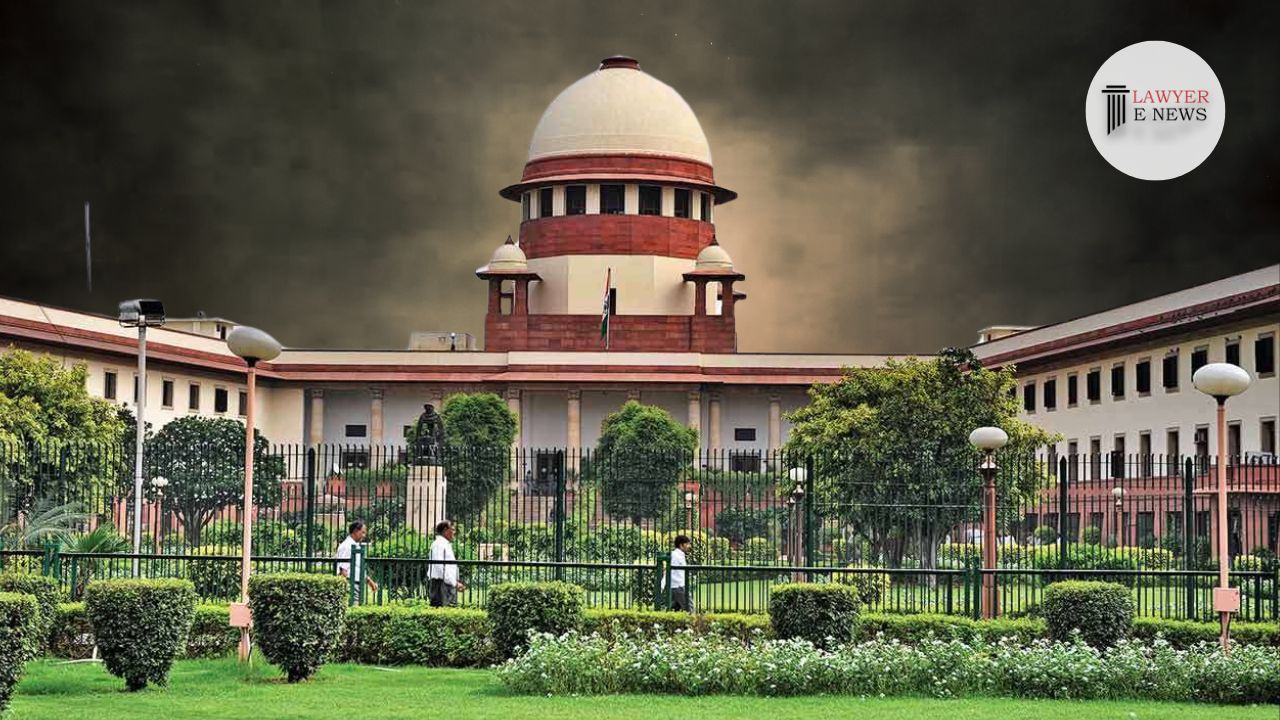
The Supreme Court of India has dismissed a Special Leave Petition (SLP) filed by the State of U.P., citing the state’s failure to provide a valid justification for a delay of 1,633 days in challenging a High Court order.

The judgment revolved around the question of whether the condonation of a substantial delay in filing an SLP could be permitted based on the reasons provided by the state government.

The SLP aimed to overturn a decision from November 13, 2009, by the High Court. However, the petition was not filed until years later, in 2014. The state attributed the delay to administrative hurdles and legal misadvice, asserting that these factors impeded the timely filing of the petition.

Condonation of Delay: The justices criticized the state’s management of its legal affairs, noting that the presence of the state in the High Court hearings negated any claims of ignorance about the order. Justice Ravikumar highlighted, “The explanation given for seeking condonation of huge delay…cannot be accepted,” indicating that bureaucratic delays and mismanagement are unacceptable excuses.

Misrepresentation of Facts: The judgment also pointed out inaccuracies in the state’s representation of related legal precedents, which misled the court about the status of similar cases. This misrepresentation diminished the credibility of the state’s application for delay condonation.

Decision Concluding its findings, the Supreme Court dismissed the condonation of delay application, along with the SLP itself, firmly stating that inefficiencies and errors on the state’s part do not constitute “sufficient cause” under the law.

Date of Decision: May 3, 2024

State of U.P. & Another vs. Mohan Lal

Latest Legal News