
-
by sayum
26 August 2026 1:49 PM







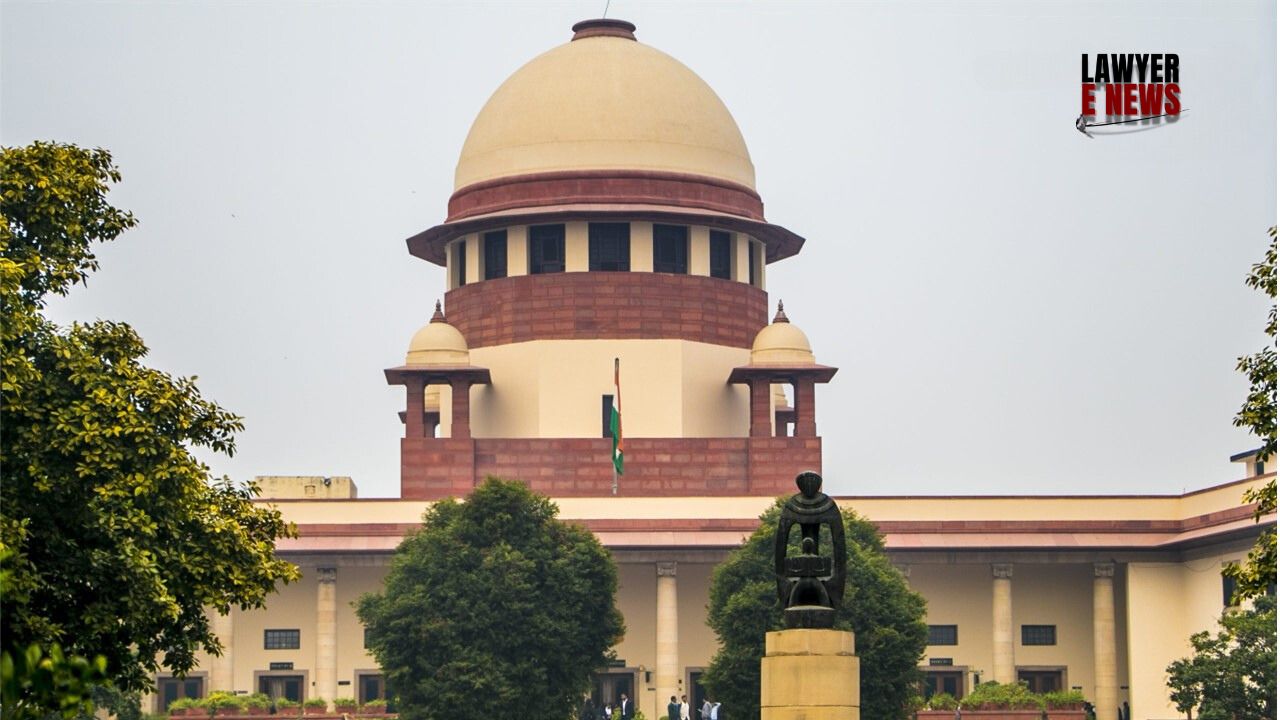
“Explanation by Court Before Remand Is Not Compliance with Section 43B UAPA or Article 22(1) – Arrest and Remand Stand Quashed” – In a significant reiteration of procedural safeguards under anti-terror laws, the Supreme Court of India set aside the arrest and remand of the appellants under the Unlawful Activities (Prevention) Act, 1967 (UAPA), solely on the ground that written “grounds of arrest” were not furnished to the accused at the time of arrest.
The Court emphasized that oral explanations or post-facto justifications by remand courts or supply to defence counsel are not a substitute for contemporaneous written communication of arrest grounds to the accused, which is mandated under Section 43B of UAPA and Article 22(1) of the Constitution of India.
“Distinction Between ‘Reasons’ and ‘Grounds’ of Arrest Not Mere Semantics – Grounds Must Be Specific, In Writing, and Contemporaneous”
The appellants, Ahmed Mansoor and others, were arrested for alleged offences under Sections 153A, 153B, 120-B, and 34 of the IPC and Sections 13 and 18 of the UAPA, based on accusations of unlawful and conspiratorial activities. However, they challenged their arrest and subsequent remand proceedings on the limited ground that they were never furnished the "grounds of arrest" in writing at the time of arrest, a safeguard that is explicitly required under Section 43B of UAPA and Article 22(1) of the Constitution.
The Madras High Court had previously dismissed their challenge, relying on the fact that the grounds were read out or explained during the remand proceedings and that a copy was later handed to their counsel.
“Mere Explanation by Court Not Enough – Arrest Memo Must Contain Specific Written Grounds at the Time of Apprehension”
The Bench comprising Justice M.M. Sundresh and Justice Vipul M. Pancholi found this non-compliance fatal to the arrest and remand proceedings, squarely relying on and reinforcing the precedents laid down in Pankaj Bansal v. Union of India (2024) 7 SCC 576, Prabir Purkayastha v. State (NCT of Delhi) (2024) 8 SCC 254, and Vihaan Kumar v. State of Haryana (2024).
The Court categorically observed:
“Suffice it is to state that the explanation by the Court before whom the arrestees are produced can never be an adequate compliance of furnishing the grounds of arrest at the time of securing an accused.”
Emphasizing the mandatory nature of this safeguard, the Court declared:
“The requirement of communicating the grounds of arrest in writing is not merely a formality but essential to enable the arrested person to seek legal remedy at the earliest, which is part of the fundamental right to life and liberty under Article 21.”
“Grounds of Arrest Must Be Personal, Written, and Timely – Proforma Arrest Memos Are Constitutionally Inadequate”
The Court drew a sharp and constitutionally significant distinction between “reasons for arrest” and “grounds of arrest”:
Reasons for arrest (as commonly found in arrest memos) are generic, stating formal grounds like ensuring investigation, preventing evidence tampering, etc.
Grounds of arrest, on the other hand, must be specific, personal to the accused, and must contain the factual basis justifying the arrest.
In Prabir Purkayastha, which was followed in this case, the Court had already clarified:
“The ‘grounds of arrest’ must convey to the accused the basic facts on which he is being arrested so as to enable him to defend himself and seek bail. Reading out or giving to counsel later does not suffice.”
Further relying on Pankaj Bansal, the Bench reaffirmed:
“It would be necessary, henceforth, that a copy of such written grounds of arrest is furnished to the arrested person as a matter of course and without exception.”
Court Reaffirms Binding Nature of Precedents under Article 141 – Rejects Misreading by High Court
The Court held that the High Court had misconstrued binding precedents, stating:
“We are of the firm opinion that once this Court has interpreted the provisions of the statute in context to the constitutional scheme... the said ratio becomes the law of the land binding on all the courts in the country by virtue of Article 141 of the Constitution of India.”
Citing the decision in Vihaan Kumar, the Court reiterated that furnishing grounds of arrest is not a procedural nicety, but a constitutional necessity for making Article 22(1) and Article 21 effective and meaningful.
Arrest and Remand Proceedings Set Aside; Liberty Given to State to Act Afresh as per Law
While the Supreme Court did not go into the merits of the allegations under UAPA, it found the arrest and remand to be constitutionally infirm due to non-compliance with Section 43B UAPA and Article 22(1).
“We are inclined to hold that the present appeal deserves to succeed only on the ground that the mandate of furnishing the grounds of arrest at the time of securing the appellants has not been complied with.”
However, the Court clarified that this would not preclude the State from initiating fresh proceedings in accordance with law, if appropriate.
The appeal was accordingly allowed, and the orders of arrest and remand were set aside.
Strong Reinforcement of Procedural Safeguards Under UAPA
This judgment marks a continued and deliberate effort by the Supreme Court to reassert the procedural safeguards surrounding arrests under stringent laws like the UAPA. It sends a clear signal to investigative agencies and trial courts that constitutional protections cannot be diluted, even in cases involving alleged threats to national security.
The decision ensures that accused persons are not left in the dark about the basis of their detention, thereby upholding their right to legal counsel, bail, and fair trial – principles embedded in Articles 21 and 22 of the Constitution.
Date of Decision: 14 October 2025





