-
by sayum
25 August 2026 11:12 PM







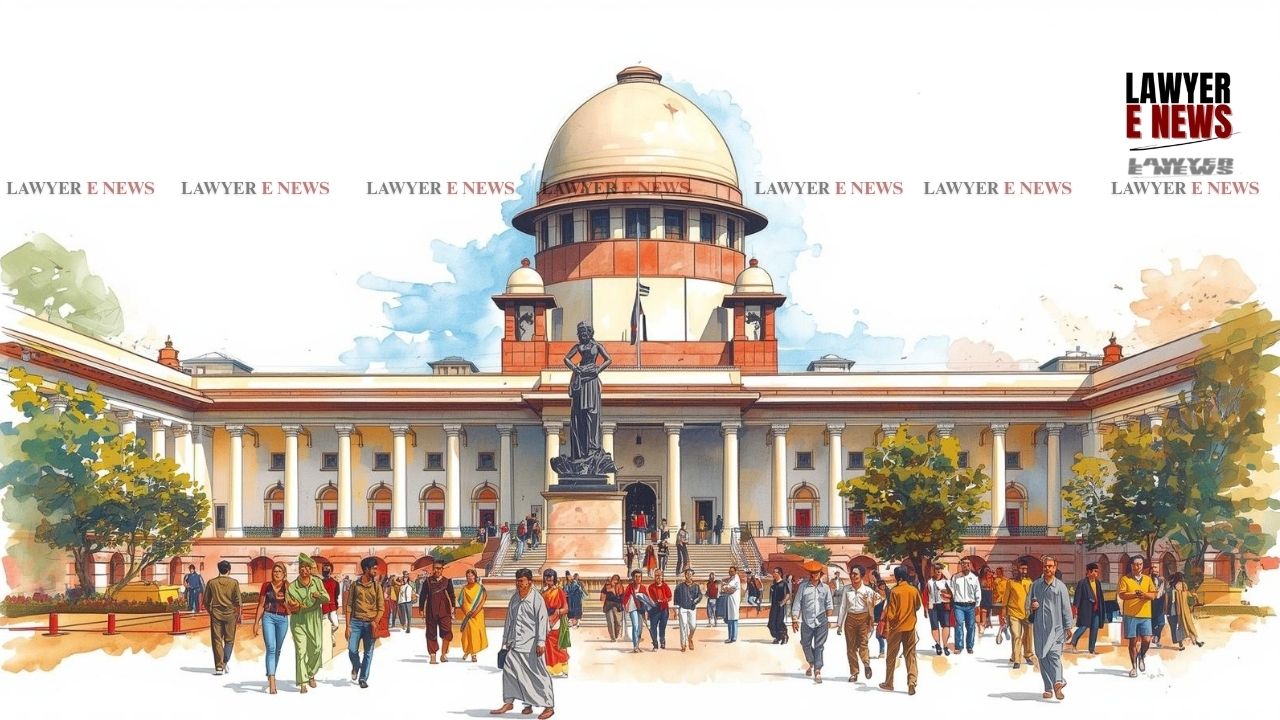
“Excise Duty is Attracted on Manufacture of Goods, Not on Immovable Structures” — In a significant judgment Supreme Court of India settled a long-disputed question on excise duty applicability on bought-out items supplied directly to the site for assembling a boiler system. The Court held that the final steam-generating plant, erected and embedded at the buyer’s site, was an immovable property and hence did not fall within the ambit of "excisable goods" under the Central Excise Act, 1944.
Striking down the show cause notice and quashing the duty demand raised under Section 11A, the Court clarified that “valuation under Section 4 of the Act cannot determine excisability under Section 3”, and excise cannot be levied merely based on the transaction value when the product is not “goods” in the first place.
Supreme Court Quashes Excise Demand for Immovable Boiler System
On 10 November 2025, a Division Bench of Justices J.B. Pardiwala and Sandeep Mehta delivered a landmark ruling in Lipi Boilers Ltd. v. The Commissioner of Central Excise, Aurangabad, addressing the applicability of excise duty on bought-out items directly delivered to the site and used in the erection of a boiler. The Supreme Court held that the final product—a boiler system erected at site—resulted in an immovable property, and thus not “goods” within the meaning of the Central Excise Act, 1944. Accordingly, no excise duty could be levied, and the extended limitation period invoked under Section 11A(1) was also held to be invalid. The Court allowed the appeal, setting aside the CESTAT’s ruling.
Bought-Out Items, CKD Boilers, and Site Assembly
The appellant, Lipi Boilers Ltd., a manufacturer of boiler systems under Chapter 84 of the Central Excise Tariff Act, entered into a contract with Shri Maroli Vibhag Khand Udyog Sahakari Mandali Ltd. to supply and assemble a 50 TPH capacity, bagasse-fired boiler system. The contract covered the design, manufacture, procurement, and supply of boiler parts and components.
Due to the massive size and engineering requirements of the boiler, the appellant cleared part of the system in completely knocked down (CKD) condition from its factory, while other bought-out items like fans, valves, and pumps were sourced from third-party vendors and delivered directly to the erection site.
On 28 April 2005, a show cause notice was issued alleging that the assessee failed to include the value of ₹14.02 lakhs worth of bought-out items in the assessable value of the boiler, resulting in short payment of excise duty to the tune of ₹2.24 lakhs. The Department invoked the extended limitation period of five years under the proviso to Section 11A(1), alleging suppression with intent to evade duty.
Both the Assistant Commissioner and the Commissioner (Appeals) accepted the assessee’s contentions, finding that the final product was immovable and not subject to excise. However, on appeal by the Revenue, the CESTAT reversed those findings, holding the bought-out items to be essential parts of the boiler and includible in the assessable value.
Whether the Final Product Assembled at Site is “Excisable Goods”
The Supreme Court observed that under Section 3 of the Central Excise Act, excise duty is leviable on manufacture of excisable goods. Section 4 is a machinery provision meant for valuation, applicable only when goods are excisable. Referring to the seminal case Bombay Tyre International Ltd., the Court held:
“Section 3 provides for the levy; Section 4 provides for the measure. It is trite law that valuation under Section 4 becomes relevant only if excisability under Section 3 is first established.” [Para 43]
The Court extensively cited Quality Steel Tubes v. CCE and Mittal Engineering Works v. CCE to reaffirm that installation and erection of immovable plants at site are not excisable. It held that:
“Erection and installation of a plant cannot be held to be excisable goods. If such wide meaning is assigned, it would result in bringing into the net of excise duty all manner of plants and installations.” [Para 49]
The Court noted that the final product came into existence only after civil construction involving cement, bricks, steel reinforcements, and grouting—rendering the entire structure immovable. Citing its own recent judgment in Bharti Airtel Ltd. v. CCE, Pune (2024), it reiterated:
“If an item cannot be dismantled without substantial damage and cannot be reassembled, it is immovable and thus not ‘goods’.” [Para 47]
Consequently, the final steam generating plant was held to be immovable and not exigible to excise under Section 3.
Bought-Out Items: Not Includible in Assessable Value of Boiler
The Court further held that the value of bought-out items could not be added to the assessable value since:
“If the final product is not excisable goods, then the contract price cannot be used to compute excise duty under Section 4.” [Para 64]
It also rejected the Revenue’s reliance on tariff headings under Chapter 84:
“The presence of a product in the tariff schedule does not determine its excisability. The first and primary enquiry must be whether the item is movable goods.” [Para 66]
No Scope for Applying the “Utility Test” or Part vs. Accessory Debate
The Court clarified that the Revenue and CESTAT had misplaced their focus by attempting to establish whether the bought-out items were essential parts of the boiler:
“The question of utility arises only if the final product is excisable. Once it is established that the product is immovable and hence not ‘goods’, the inquiry into whether a part is essential becomes moot.” [Para 69]
Excise Duty Collected from Buyer Not Proof of Excisability
The Revenue argued that the assessee had collected excise duty from the buyer and claimed CENVAT credit, thereby implying that bought-out items were part of dutiable goods. The Court rejected this:
“Even if excess excise was collected, the proper recourse is under Section 11D—not by artificially inflating assessable value under Section 4.” [Para 73]
Limitation: Extended Period Under Section 11A(1) Held Invalid
The Court rejected the Revenue’s invocation of the five-year extended limitation period. It noted that:
Quoting from Pahwa Chemicals Pvt. Ltd. v. CCE and Continental Foundation v. CCE, the Court reiterated:
“Mere failure to declare does not amount to wilful suppression. There must be a positive act to evade duty.” [Para 77]
Thus, the extended limitation could not be invoked, and the show cause notice itself was declared invalid.
Excise Duty Demand Quashed, Show Cause Notice Set Aside
In a detailed judgment that combines clarity of reasoning with authoritative exposition of excise law principles, the Supreme Court ultimately held:
“The value of the duty paid bought out items which were delivered directly at the buyer’s site is not liable to be included in the value of the boiler cleared from the factory in CKD condition, for the purpose of assessment of excise duty.” [Para 82]
“The show cause notice issued under the proviso to Section 11A(1) is not legal and hence invalid.” [Para 83]
Accordingly, the appeals were allowed, and the CESTAT’s impugned order was set aside. No excise duty, interest, or penalty was found payable.
Date of Decision: 10 November 2025