-
by sayum
23 August 2026 2:56 PM







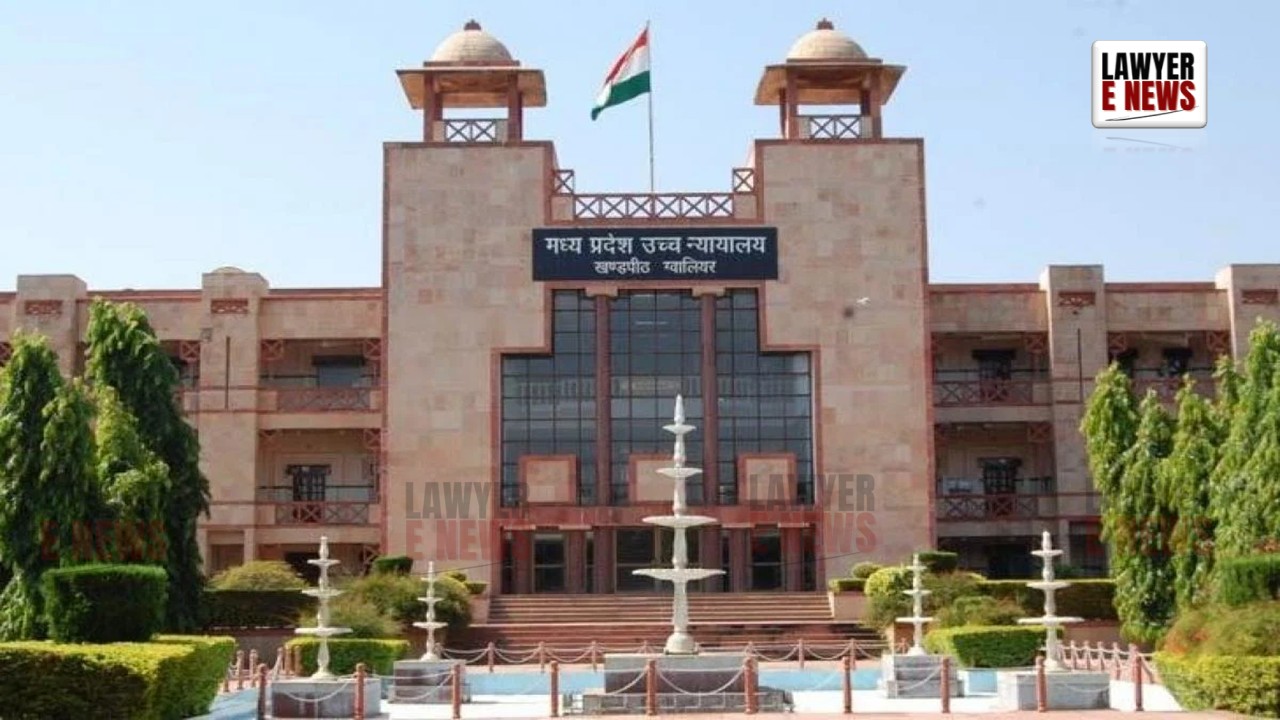
“Sexual Acts Within Marriage Not Rape under IPC”, In a detailed and nuanced interpretation of the law relating to marital rape and unnatural offences between spouses, the Madhya Pradesh High Court on 7 January 2026, partly quashed proceedings initiated against a husband under Sections 376(2)(n) and 377 IPC, observing that sexual acts between legally married spouses, where the wife is not a minor, are covered by the marital rape exception under Section 375 IPC.
Justice Rajesh Kumar Gupta, deciding Misc. Criminal Case No. 54650 of 2023, held that “no offence under Section 376 or Section 377 IPC can be sustained in a case involving a major wife, where the acts—though alleged to be without consent—occur within a subsisting marital relationship”.
However, the Court refused to quash proceedings under Sections 498A, 294, and 323 IPC, ruling that allegations of cruelty, assault, and abuse are distinct and triable, and must proceed to trial.
“Marital Rape Exception Still Part of Indian Law—Consent Not Material Between Spouses if Wife Is a Major”
The High Court categorically held that sexual intercourse by a husband with his wife cannot amount to ‘rape’ under Section 376 IPC, as long as the wife is not under 18, even if the act is alleged to be without her consent.
Citing Exception 2 to Section 375 IPC, the Court reiterated the settled position: “Sexual intercourse by a man with his own wife, where the wife is not under 18 years of age, is not rape. This legal exception stands, and unless repealed or read down by the legislature or Constitutional courts, it must be enforced.”
Justice Gupta placed reliance on the Supreme Court’s ruling in Kuldeep Singh v. State of Punjab (2025 INSC 130), where similar allegations were quashed on the ground that intercourse within marriage does not constitute rape, absent force, coercion, or evidence of criminal intent.
“Prosecution Under Section 377 for Acts Within Marriage is Repugnant Post-2013 Amendments and Navtej Johar Judgment”
A major part of the ruling dealt with the increasing invocation of Section 377 IPC in matrimonial disputes. The Court examined this in light of the 2013 Criminal Law Amendment and the landmark Constitution Bench ruling in Navtej Singh Johar v. Union of India [(2018) 10 SCC 1].
While Section 377 historically penalised “carnal intercourse against the order of nature,” the Court noted that the expanded definition of rape under Section 375 IPC now subsumes many acts that earlier fell under Section 377.
The Court stated: “Where the same act is excluded from criminal liability under Section 375 due to the marital relationship, it cannot be simultaneously prosecuted under Section 377. Such interpretation would lead to legal absurdity and violate principles of harmonious construction.”
The Court held that post-Navtej Singh Johar, consensual acts of a sexual nature—whether oral, anal, or otherwise—are no longer deemed ‘unnatural’ per se, and that the definition of rape under Section 375, read with its exception, must prevail in the context of heterosexual marital relations.
“Forced Unnatural Acts by Husband May Not Be Rape, But Can Be Cruelty Under Section 498A”
While quashing the charges of rape and unnatural offence, the Court was careful to note that coerced or non-consensual sexual conduct within marriage may still fall within the definition of cruelty under Section 498A IPC.
Justice Gupta clarified: “Forced unnatural sex by a husband upon his wife cannot be prosecuted as rape, but may constitute cruelty punishable under Section 498A. The prosecutrix is not remediless—but the remedy must be pursued under the appropriate statutory provision.”
This distinction, the Court held, preserves the legislative intent while allowing space for redress in cases of sexual abuse within marriage without distorting the existing marital rape exception under Indian law.
“FIR a Counterblast to Divorce Proceedings—Bhajan Lal Principles Apply”
The Court noted that the FIR was lodged a day after the petitioner-husband initiated divorce proceedings, and held that this timing, coupled with vague and omnibus allegations, indicated that the FIR was likely motivated by personal vendetta, falling within the Bhajan Lal principles for quashing.
Referring to the landmark case State of Haryana v. Bhajan Lal [1992 Supp (1) SCC 335], the Court found the following applicable:
“Where the FIR is manifestly attended with mala fide intent, to wreak vengeance on the accused, the criminal proceedings can be quashed under Section 482 CrPC.”
The Court noted that no medical evidence corroborated allegations of unnatural sex, and that the FIR lacked dates, specifics, or consistent narrative. Further, WhatsApp chats and photographs presented by the husband indicated an absence of coercion or hostility, at least up to the relevant period.
“Marital Relationship Cannot Be Criminalised on General Allegations—Law Must Balance Protection With Misuse”
In strong words, Justice Gupta expressed concern over the emerging trend of invoking Section 377 IPC as part of 'package litigation' in matrimonial disputes, often accompanied by Sections 498A, 294, 323, and maintenance proceedings.
The Court quoted its own coordinate bench’s observation in Rajan v. State of M.P. (MCRC No. 35596/2018, decided 17.08.2023):
“Matrimonial disputes today are increasingly accompanied by a fixed package of allegations—498A, 377, cruelty, and multiple complaints—reflecting an abuse of the criminal justice system.”
The Court added: “Human beings may lie, but circumstances do not. Where the complaint is not supported by evidence and appears retaliatory, courts must intervene to prevent harassment under colour of law.”
FIR Partly Quashed, Trial to Proceed for Cruelty, Assault and Abuse
After extensive analysis, the Madhya Pradesh High Court partly allowed the petition, with the following operative direction:
“The FIR registered in Crime No. 971/2023 is quashed to the extent of offences under Sections 376(2)(n) and 377 IPC. However, proceedings under Sections 498A, 294, and 323 IPC shall continue in accordance with law.”
The Court clarified that trial on these remaining charges must be conducted without being influenced by the quashed charges, and that the validity and sufficiency of these offences would be tested at trial based on evidence.
This judgment underscores the complex interplay between criminal law and matrimonial rights, reaffirming that marital rape is not recognised as an offence under current Indian law, while also protecting women from cruelty and abuse within marriage.
By holding that Sections 376 and 377 IPC cannot be invoked between legally married spouses where the wife is a major, the Madhya Pradesh High Court aligns itself with established precedent, while cautioning against misuse of law in matrimonial litigation.
Date of Decision: 07 January 2026