-
by sayum
24 August 2026 3:22 PM








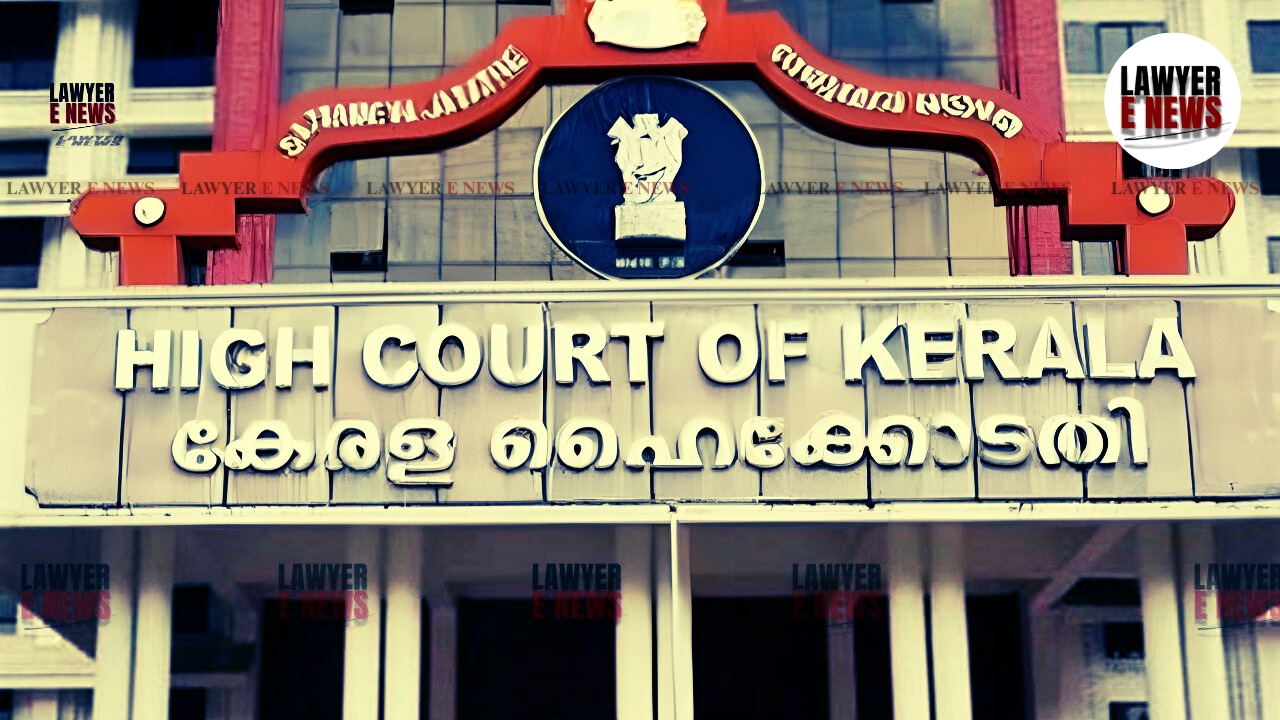
In a latest Judgement Supreme Court of India decisively holding that once an eviction order is passed under Section 12(3) of the Kerala Buildings (Lease and Rent Control) Act, 1965, a fresh application under Section 12(1) before the Rent Control Appellate Authority is not a mandatory prerequisite to sustain the eviction in appeal. Reversing the Kerala High Court’s ruling, the apex court restored the eviction order against a tenant who had failed to pay rent for over five years despite repeated judicial directions and a money decree against him.
“If Law Is to Serve Justice, It Cannot Be Read to Produce Absurdity” — Supreme Court Rejects Procedural Formalism in Eviction Appeals
Addressing the deeper jurisprudential undercurrent, a Bench of Justices Rajesh Bindal and Manmohan made a compelling statement: “Human beings, and not artificial intelligence or computers, are entrusted with the duties of administration of justice as laws are to be interpreted with empathy and pragmatism and as a force of justice, not absurdity.”
The court strongly rejected the Kerala High Court’s view that the landlord must reinitiate the summary eviction procedure under Section 12 before the Appellate Authority, terming it as a mechanical and unjust interpretation of the Rent Control Act.
Supreme Court Clarifies Key Procedural Rule in Rent Control Appeals
On November 21, 2025, the Supreme Court of India in P.U. Sidhique & Others v. Zakariya delivered a pivotal ruling addressing the scope and procedure under Section 12 of the Kerala Buildings (Lease and Rent Control) Act, 1965. The Court held that the Rent Control Appellate Authority is not required to initiate the Section 12 process afresh once an eviction order is passed under Section 12(3) by the Rent Controller. The decision overturns a controversial judgment by the Kerala High Court and reinforces a pro-landlord interpretation aligned with the object of the legislation — preventing misuse of statutory protections by delinquent tenants.
Tenant Defaults for Over 5 Years, Landlords Seek Eviction of Prime Commercial Premises
The case arose from the prolonged non-payment of rent by the respondent-tenant, who occupied two high-value commercial shops in Kochi. Despite fixed monthly rents of ₹99,187 and ₹55,000, the tenant defaulted from early 2020. The landlords initiated eviction proceedings in 2020 under Section 11(2)(b) of the Rent Control Act and later invoked Section 12 due to continuing default. A separate civil suit (OS No.71/2021) for recovery of arrears was decreed in the landlords’ favour for over ₹26 lakhs, and no stay of that decree was in force.
Despite an express order passed by the Rent Controller on September 25, 2024, directing the tenant to deposit a staggering ₹57.81 lakhs and ₹36.86 lakhs respectively in two petitions, the tenant made no deposits, prompting the Rent Controller to invoke Section 12(3) on November 7, 2024, and order eviction.
Is Repetition of Section 12 Procedure in Appeal Mandatory?
At the core of the dispute was whether the Rent Control Appellate Authority, while entertaining an appeal under Section 18 against an eviction order passed under Section 12(3), must itself reinitiate the Section 12(1) process and give the tenant fresh opportunity to deposit arrears.
Rejecting this proposition, the Supreme Court held:
“The Appellate Authority is not the Court of first instance. It only tests the legality of the Rent Controller’s order. It is not required to redetermine arrears or conduct fresh proceedings under Section 12(1).”
The court further emphasized that eviction under Section 12(3) operates by force of law if the tenant fails to deposit arrears without sufficient cause. Repetition of this mechanism in appeal, the Court said, was both “superfluous and unnecessary.”
Section 12(3) Eviction Stands Unless Reversed on Merits, Not Reinitiated Procedurally
The Court analyzed Section 12 in detail:
Crucially, the Court rejected the tenant’s argument that fresh four weeks must be granted by the Appellate Authority. It held that no such statutory requirement exists under the Act:
“Nowhere the Act stipulates that even the Appellate Authority has to mandatorily give four weeks’ time... especially when seven months had already elapsed.”
Further, the tenant’s reliance on the Full Bench decision in Zeenath Ibrahim was deemed misplaced. The Supreme Court clarified:
“The Full Bench only held that a Section 12(1) application is maintainable in appeal, not that it is mandatory to reinitiate the procedure.”
Similarly, the three-judge ruling in Manik Lal Majumdar was held not to support the tenant’s case, as it did not mandate repetition of Section 12 procedure in appeal but only empowered appellate authorities to use discretion in such cases.
Tenant’s Conduct and Statutory Abuse Criticized
The Court took judicial notice of the prolonged default: “The Respondent-tenant is occupying two premier shops in the heart of Kochi, Kerala ‘without paying a farthing’ for the last more than five years.”
It condemned the tenant’s use of procedural objections to stall eviction despite a subsisting money decree and called such conduct a misuse of the Rent Control law’s protective mechanism: “Though Sections 11 and 12 provide for a summary procedure, the Respondent-tenant has turned the procedure on its head.”
In a strong rebuke, the Court added: “If the High Court’s view is accepted, it would turn the summary procedure ‘on its head’ and delay the eviction of an intransigent and recalcitrant tenant.”
Appellate Authority's Eviction Orders Restored
The Court restored the Rent Control Appellate Authority’s orders dated March 19, 2025, and set aside the Kerala High Court’s ruling dated May 22, 2025. The tenant was directed to vacate by December 31, 2025, subject to filing an undertaking within two weeks. Failing this, landlords are free to initiate execution proceedings immediately.
Date of Decision: November 21, 2025