-
by sayum
01 October 2026 8:21 AM







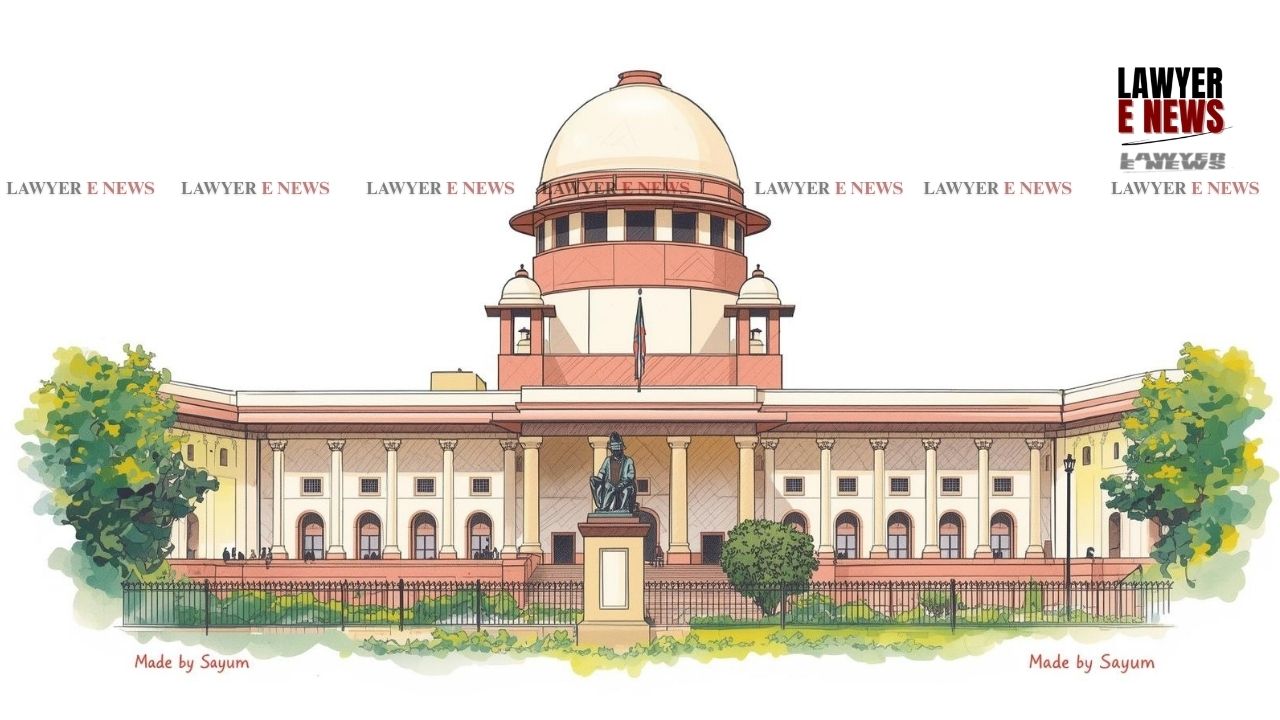
"Every lawyer has a duty to act decently in the Court premises not only with his own clients but, also towards the lawyers appearing from the other side and also to the parties against whom he is appearing." Supreme Court, in a significant ruling, held that indecent behavior by an advocate within court premises constitutes professional misconduct, even if the act is not directly linked to ongoing judicial proceedings.
A bench comprising Justices Prashant Kumar Mishra and Shree Chandrashekhar observed that the Bar Council of India (BCI) possesses the authority to discipline lawyers for conduct that violates the decorum of the court, regardless of whether the lawyer was representing the complainant.
The dispute arose from an incident in 2005 wherein the respondent alleged that the appellant-advocate physically assaulted and threatened him within the toilet of the Karkardooma Courts complex following a labor court hearing. Although the appellant was not the respondent’s counsel, the latter lodged a complaint with the Bar Council of Delhi, leading to the BCI’s disciplinary committee suspending the appellant for one year in 2012. The advocate subsequently challenged this order before the Supreme Court, citing a lack of procedural fairness and an improper refusal of an adjournment during his hearing.
The primary question before the court was whether an advocate can be held liable for professional misconduct under the Advocates Act, 1961, for an altercation occurring within court premises with a person he was not legally representing. The court also examined whether a 21-year pendency of proceedings warranted a remand back to the disciplinary authority or if the matter could be adjudicated finally by the Supreme Court to ensure the ends of justice.
Court’s Observations and Judgment
The bench acknowledged that the disciplinary proceedings had been marred by procedural lapses, noting that the appellant was not provided a sufficient opportunity to be heard when his adjournment plea was summarily rejected. However, the court explicitly refused to remand the matter for a fresh hearing, emphasizing the significant passage of time since the complaint was filed.
Delay As A Factor In Disposal
Observing that over two decades had elapsed since the initial filing, the court prioritized the finality of the proceedings over a technical rehearing. The bench noted that while the BCI’s decision-making process was flawed, the objective of the Advocates Act would be better served by a final judicial intervention rather than prolonging the litigation for the parties involved.
Duty Of Decorum In Court Premises
Regarding the scope of "professional misconduct," the court firmly rejected the argument that a lawyer is only accountable for behavior toward their own clients. The judges clarified that the court premises are a sanctuary for justice where all stakeholders must maintain professional standards.
"Any indecent behavior inside the Court premises can be taken cognizance of by the concerned State Bar Council or the Bar Council of India, as the case may be, and the case would not be thrown out only on this ground alone."
Distinguishing Conduct From Representation
The court noted that the incident occurred when the appellant was appearing for an opposite party in a labor dispute. While the lack of a formal attorney-client relationship meant the incident did not strictly involve the conduct of a case, it remained a grave concern under the disciplinary umbrella of the Advocates Act, 1961, due to the location of the incident.
Final Order and Warning
Given that the incident primarily concerned the appellant’s temper and individual conduct rather than an obstruction of judicial process or professional negligence, the court found the one-year suspension order disproportionate in the present circumstances. The bench modified the BCI order, replacing the suspension with a formal warning to the appellant to maintain professional decorum at all times.
"We deem it appropriate to dispose of the Civil Appeal by issuing warning to the appellant, Sudhendu Prakash Gautam, that he shall always behave properly in the Court premises while dealing with the lawyer on the opposite side, his own client; as also the party on the opposite side as well."
The appeal was disposed of with the directive that the appellant must ensure his behavior aligns with the dignity expected of a member of the legal profession.
Date of Decision: 30 July 2026