-
by sayum
26 August 2026 12:18 PM







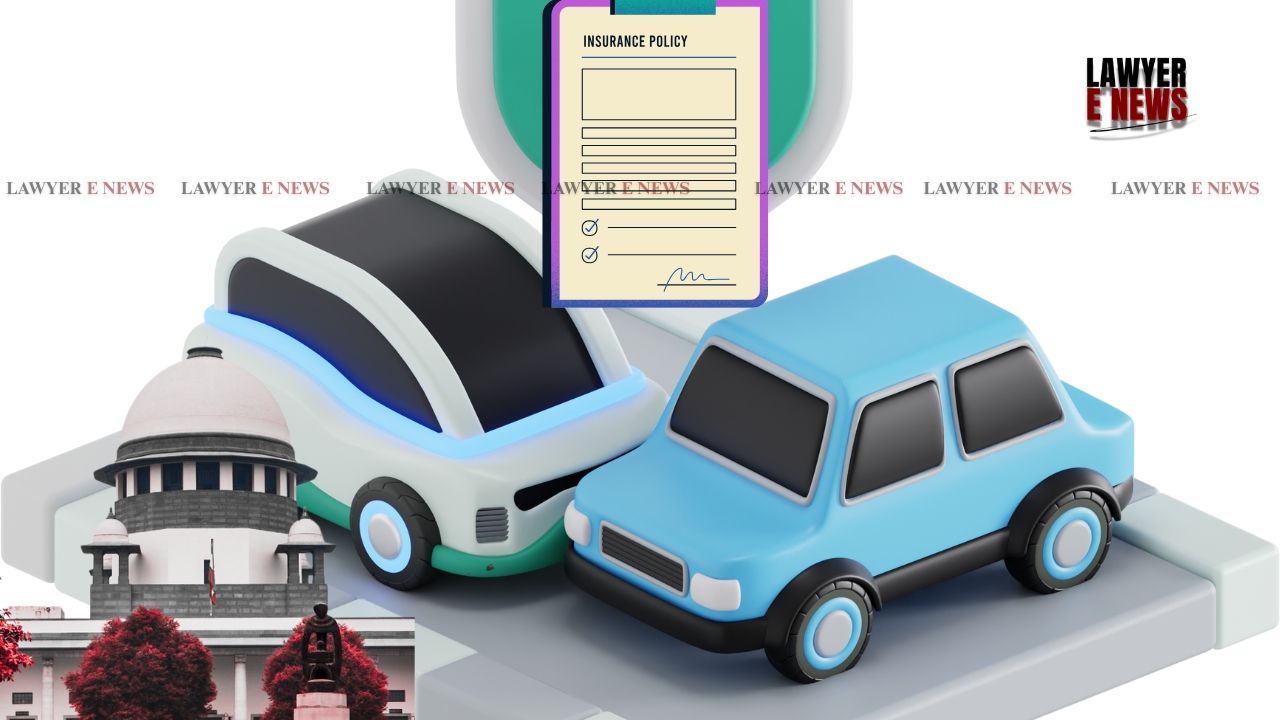
"Going by the series of decisions of this Court, it is only proper that the insurer be directed to satisfy the award, which however can be recovered by the insurer from the insured-owner of the vehicle" – In a significant judgment Supreme Court of India reaffirmed the application of the “pay and recover” principle in motor accident claims, holding that even when a driver does not possess a valid driving licence, the insurance company must first pay compensation to third-party victims and then recover the amount from the vehicle owner.
The ruling came in the case of Sunita & Others v. Abdul Samad (since deceased) by his LRs & Another, where the appellants – legal heirs of a deceased accident victim – challenged the exoneration of the insurer by the High Court and Tribunal under Section 149(2)(a)(ii) of the Motor Vehicles Act, 1988, due to the driver not having a valid licence at the time of the accident.
The dispute originated from a tragic road accident that resulted in the death of a man, whose wife, children, and mother filed a compensation claim before the Motor Accident Claims Tribunal (MACT). The Tribunal, by order dated July 9, 2013, awarded compensation of ₹7,11,015/- with 6% interest but dismissed the claim against the insurance company, absolving it of liability due to the driver lacking a valid driving licence.
On appeal, the High Court of Karnataka at Kalaburagi enhanced the compensation to ₹25,94,500/- through its judgment dated January 7, 2019, but upheld the insurer’s exoneration, citing breach of policy terms under Section 149(2) of the MV Act.
The High Court observed:
“The respondents had failed to produce the Driving Licence and... the Tribunal had come to the conclusion that the rider of the offending vehicle was not having a valid Licence... The Insurer has discharged its burden... and the Insurer was exonerated.”
Aggrieved by this outcome, the claimants approached the Supreme Court through a Special Leave Petition.
Can Insurer Be Directed to Pay Compensation Despite Driver’s Invalid Licence?
The crux of the appeal centered on whether an insurer, though not statutorily liable due to the driver’s invalid licence, can still be directed to first pay the awarded compensation and later recover it from the owner – under the “pay and recover” doctrine developed in prior jurisprudence.
The appellants relied heavily on recent authoritative pronouncements, especially Rama Bai v. Amit Minerals (2025 SCC OnLine SC 2067), where the apex court reinforced that breach of licence condition by itself does not disentitle third-party victims from compensation.
Court’s Observations and Application of ‘Pay and Recover’ Principle
In a detailed judgment, a bench of Justice Pamidighantam Sri Narasimha and Justice Atul S. Chandurkar clarified that the insurer’s liability to third-party victims remains intact under the “pay and recover” rule, even where the policy conditions are breached due to absence of a valid licence.
Citing its consistent jurisprudence, the Court observed: “In view of the fact that the ‘principle of pay and recover’ was adopted even in case of ‘no valid licence’, we are of the opinion that the said principle can be applied in the facts and circumstances of the present case.”
The Bench drew support from a line of precedents:
Reaffirming the trend, the Court stated: “Going by the series of decisions of this Court, it is only proper that the insurer be directed to satisfy the award, which however can be recovered by the insurer from the insured-owner of the vehicle.”
The Court acknowledged the insurance company’s statutory defense under Section 149(2)(a)(ii) (driver not duly licensed), and agreed with the High Court that this breach technically exonerated the insurer from liability. However, relying on equitable principles and the protection afforded to third-party victims, the Court invoked the doctrine of ‘pay and recover’.
Accordingly, the Supreme Court allowed the appeal, setting aside the High Court’s direction that insulated the insurer from liability. It directed the insurance company to pay the entire compensation amount of ₹25,94,500/- to the claimants within three months, and granted it liberty to recover the sum from the vehicle owner.
“We allow the appeal and direct Respondent No. 3 – Insurance Company to pay compensation to the claimant(s) and recover the same from the owner of the vehicle. The amount shall be paid within a period of three months from today.”
The Supreme Court has once again underscored the humanitarian and remedial role of compensation laws under the Motor Vehicles Act, reaffirming that technical breaches by the vehicle owner or driver cannot be used to defeat the rights of innocent third-party victims. The ‘pay and recover’ principle, now a well-established judicial tool, was robustly applied to ensure timely relief for the claimants, while preserving the insurer’s right of recovery.
This judgment also brings clarity to Section 149(2) and continues the judiciary’s effort to balance statutory defenses of insurers with the social welfare objective of the Motor Vehicles Act.
Date of Decision: October 6, 2025