-
by sayum
25 August 2026 11:12 PM







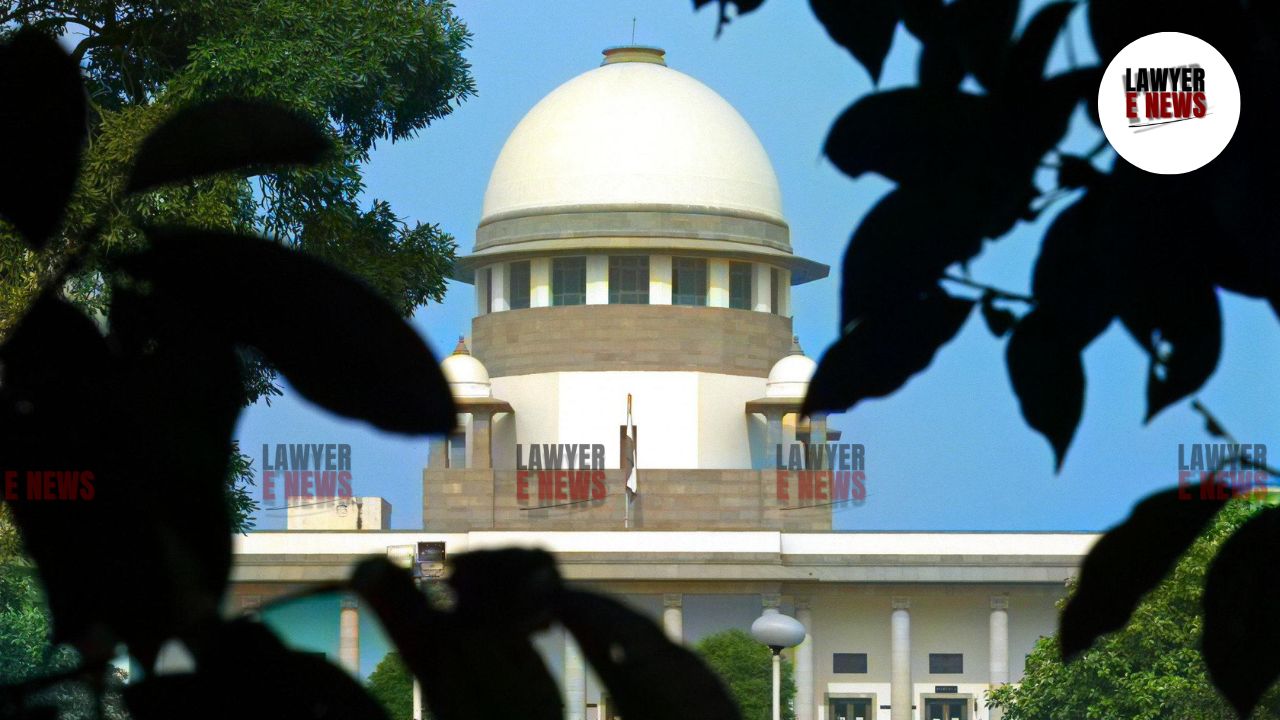
"The Claimant Cannot Be Left Remediless Merely Because the Owner Overloaded the Vehicle or Breached the Policy" – In a decision that safeguards the rights of third-party claimants despite violations of insurance terms by vehicle owners, the Supreme Court of India on 10 November 2025 held that even when there is a breach of policy—such as carrying excess passengers—the insurer cannot be entirely absolved of its liability. Instead, the insurer must pay the compensation to the victim and then recover the amount from the vehicle owner.
This significant ruling came in the case where the appellant (a legal heir of the deceased accident victim) challenged the Telangana High Court’s decision which had set aside the award against the insurer due to breach of insurance policy conditions. The Supreme Court reversed this finding, invoking the well-established ‘pay and recover’ principle, and directed the insurer to satisfy the compensation and then recover it from the vehicle owner.
"Once the Existence of an Insurance Contract Is Not Disputed, the Insurer Must First Discharge Its Statutory Duty" – SC Says Third-Party Victims Cannot Be Penalised for Breach by Vehicle Owner
The case arose from a tragic road accident where the deceased was a passenger in a five-seater vehicle carrying nine persons. The Motor Accident Claims Tribunal held both the owner and insurer jointly and severally liable, noting that the insurer had collected additional premium for driver, conductor, and cleaner. However, the High Court reversed this, declaring that carrying gratuitous passengers violated the policy and that the insurer could not be held liable.
Before the Supreme Court, the appellant contended that even if the deceased was not specifically covered under the policy, the insurer was still not entitled to total exoneration, especially because it had accepted an additional premium for multiple persons travelling in the vehicle.
Justice Manoj Misra, delivering the judgment for the bench also comprising Justice Sanjay Karol, observed:
“Where the contract of insurance is not disputed, even on breach of insurance conditions, this Court had allowed recovery of compensation from the insurer by giving right to the insurer to recover the same from the vehicle owner.” [Para 12]
Referring to established precedents such as Swaran Singh (2004) 3 SCC 297, Shamanna (2018) 9 SCC 650 and most recently Rama Bai v. Amit Minerals (2025 SCC OnLine SC 2067), the Court reiterated the principle that:
“The claimant should not be left remediless where insurance contract exists – Insurer to satisfy award and recover from owner.” [Para 13]
"Pay and Recover Is a Settled Doctrine—Insurers Must Honour Third-Party Compensation and Then Pursue the Owner" – SC Affirms Beneficiary-Centric Approach
The Supreme Court clarified that the High Court erred in completely absolving the insurance company, particularly when the contract of insurance was not in dispute and the claimant had no effective remedy against the vehicle owner, who often defaults in such cases.
The Court concluded:
“Following the aforesaid decisions, we deem it appropriate to allow the appeal by directing that the first respondent (i.e., the insurer) shall satisfy the award, though, however, it can recover the amount so paid from the insured (i.e., owner of the vehicle).” [Para 12]
This ensures that injured claimants or dependents of deceased victims are not subjected to a fruitless legal battle against often-absconding or financially incapable vehicle owners.
Breach of Policy by Carrying Excess Passengers Does Not Nullify Third-Party Rights
The pivotal legal issue before the Supreme Court was whether the insurance company could be completely exempted from paying compensation merely because the vehicle involved was overloaded and carried gratuitous passengers in violation of policy conditions.
While the High Court sided with the insurer, the Supreme Court restored the broader public welfare approach, stating that statutory insurance obligations under the Motor Vehicles Act must protect victims first, and allow insurers to seek internal remedies later.
The Court clarified:
“Even where insurance policy does not cover risk of a particular class of persons, and breach of conditions is established, courts have consistently applied the doctrine of ‘pay and recover’ to safeguard rights of third-party claimants.”
Outcome: Insurer Must Pay Compensation First, Then Recover from Vehicle Owner
The Supreme Court allowed the appeal and reinstated the Tribunal’s directive holding the insurer liable to pay compensation. However, it also protected the insurer’s interests by granting it the right to recover the amount from the insured vehicle owner.
“The appeal stands allowed to the aforesaid extent.” [Para 13]
The Court further directed that any pending applications also stand disposed of.
SC Reaffirms Victim-Centric Jurisprudence in Motor Accident Claims
This decision reinforces the Supreme Court’s consistent jurisprudence that third-party rights under insurance policies must be protected, even if policy conditions are breached by vehicle owners. The ‘pay and recover’ doctrine emerges once again as a critical tool to ensure that compensation reaches the victims swiftly, while insurers retain legal recourse against policy violators.
In a country where many victims rely on statutory compensation, this judgment affirms that legal technicalities must not obstruct access to justice, especially in tragic cases of motor accidents involving wrongful deaths.
Date of Decision: 10 November 2025